


-News Center-
Why Is Your Motor Grader Leaving Ridges and Uneven Road Surfaces?
Ridges that survive a second pass are rarely a material problem. When the same high line reappears in the same wheel path or at the same blade position, the cause is usually mechanical: a worn edge, a loose circle, an uneven tyre, or a mouldboard that is no longer holding its set angle under load. When the ridge shifts, breaks up, or appears only after a turn, the cause is more likely speed, moisture, or the way material is being carried across the blade. Separating those two patterns saves a lot of wasted passes, because a mechanical fault will not be fixed by slowing down, and a technique fault will not be fixed by changing a cutting edge.
The shape of the defect gives the first useful clue. A thin, sharp ridge at one end of the blade often comes from a cutting edge that has worn into a curve or a step, leaving one section cutting deeper than the rest. A broad, rolling high spot usually comes from the mouldboard rolling material instead of cutting it, often because the blade angle is too flat for the material or the toe is lifted by loose material building up behind the edge. Regular transverse ripples, the washboard pattern, tend to appear when the blade bounces, and bounce is linked to speed, tyre condition, and play in the circle and drawbar rather than to the soil itself.
Reading the ridge pattern before changing anything
A short test pass on a clean section reveals more than a visual inspection in the yard. Cut a light pass, stop, and walk the surface. If the ridge sits exactly under the blade end, check the end bit and the outer section of the cutting edge first. Wear is seldom even across the full width, and a difference of only a few millimetres at one end is enough to leave a visible line. If the ridge sits in the centre, look at the mouldboard curvature and the way material flows. Material that stalls in the middle and then releases in a lump creates a central hump, especially with wet or sticky material that clings to the blade face.
Tyres deserve the same attention as the blade. Uneven pressure or a tyre with a flat spot changes the height of one side of the frame, and the blade follows that tilt across the full width of the cut. The result is a surface that looks level from the cab but measures high on one side after the pass. The same effect comes from articulation that is not centred, or from a frame that is twisted by uneven loading. Measuring tyre pressure and checking that the machine sits square on flat ground removes a variable that is easy to overlook when attention is focused on the cutting edge alone.
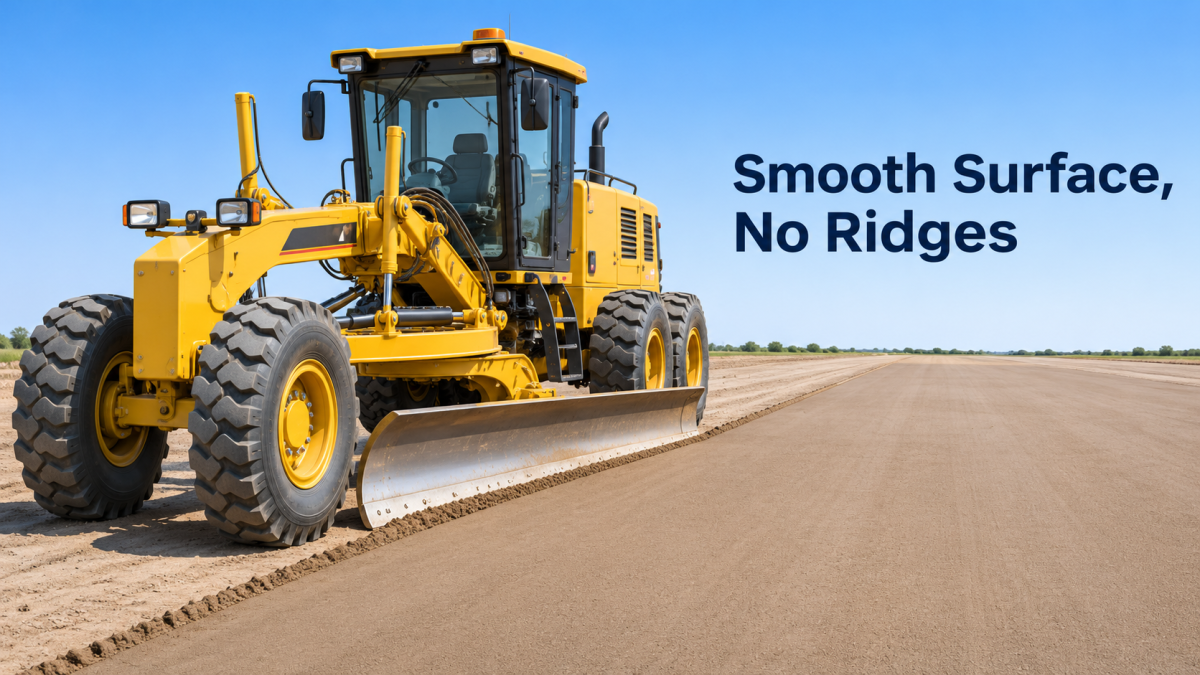
Blade, circle and mouldboard setup
Circle play is one of the most common reasons for a blade that will not stay where it is set. Worn circle shoes, a loose drawbar ball, or a worn slew bearing let the mouldboard shift sideways or rotate slightly when the load changes, for example when the blade meets a harder patch or a larger stone. The shift may be small, but it is enough to change the cutting depth at one end and leave a step in the surface. The movement often shows up as a ridge that appears and disappears along the pass, rather than a constant line, because the load on the blade is not constant either.
Blade angle and pitch interact with that play. A steep mouldboard angle cuts more aggressively and carries less material, which suits hard or dry ground but can leave a torn surface if the edge is dull. A flatter angle carries more material and leaves a smoother finish on loose material, but it also increases the load on the circle and makes the blade more sensitive to changes in speed and moisture. Pitch matters in the same way. Too much forward pitch makes the edge dig and then release, creating short waves. Too little pitch lets material roll under the edge instead of being cut, leaving loose windrows that later compact unevenly.
Hydraulic drift adds another layer. If the lift cylinders creep down during a long pass, the cutting depth increases gradually and the surface becomes deeper at the end of the run than at the start. If one side responds more slowly than the other, the blade tilts during lift and lower commands and leaves a diagonal step. On machines where the hydraulic supply is part of the fault, a component such as SEM MACHINERY SPARE PARTS 5338057 W067500000B PUMP [blocked] can be relevant to the diagnosis, because inconsistent flow makes blade response uneven even when the controls and the blade itself are in good condition. Checking for drift with the blade held in position, and comparing the response of each side, separates a hydraulic issue from a mechanical wear issue.
Speed, moisture and pass technique
Speed changes the way the blade meets the ground. At low speed the edge has time to cut and the material flows steadily across the mouldboard. At higher speed the blade begins to ride over hard spots and skip, then dig in again, which produces the regular spacing seen in washboarding. The critical speed is not a fixed number. It changes with tyre condition, surface hardness, blade load, and the amount of loose material in front of the mouldboard. A pass that was smooth at one speed can become rough after the surface dries or after the blade load increases, so a setting that worked in the morning may need adjustment later in the day.
Moisture has a similar effect on the result. Material that is too dry breaks into loose particles that roll freely and refuse to hold a shape, leaving a soft, uneven finish that ruts under the first tyre pass. Material that is too wet sticks to the mouldboard, builds up behind the edge, and then drops in clumps. Both conditions make the same blade setting look wrong, even though the blade itself has not changed. The correction is not always more passes. Extra passes on dry material grind it finer and make it looser, while extra passes on wet material smear the surface and seal water underneath, where it later creates soft spots.
The way material is carried across the blade also decides whether the finish is even. Carrying a full windrow across the full width puts a heavy, uneven load on the circle and makes the blade harder to control. Spreading the load in thinner layers, and moving excess material to the side before the finishing pass, leaves the blade with less to carry and a more consistent cutting depth. Overlapping passes by a small amount, rather than trying to cover the full width in one cut, also helps. The overlap hides the blade-end ridge and gives the edge a chance to blend the joint between passes instead of leaving a hard line where two passes meet.
When the surface is still uneven after the blade, circle, tyres, hydraulics, speed and moisture have been checked, the remaining variable is usually the sequence of passes. A finishing pass made in the opposite direction to the previous cut can expose a tilt that was hidden before, because the blade meets the high spots from the other side. A final light pass with the blade set to float, or with very light down pressure, will often show whether the problem is depth control or material flow. If the light pass removes the ridge, the cause was depth. If the ridge remains in the same place, the cause is still in the blade or the frame, and further passes will only repeat the same defect.
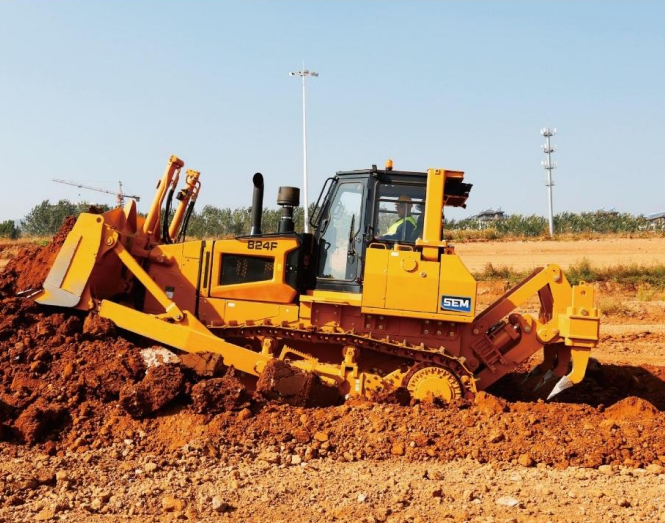
 SEM 824F ProductThe 824F features the new F Series design and is powered by a Weichai WD12T2 engine, delivering a gross power output of up to 185 kW (248 hp). The machine utilizes an electronically controlled hydrostatic transmission system, enhancing productivity and maneuverability. It offers various track shoe widths from 560 mm to 915 mm, as well as multiple blade options, including SU, S, U, Waste Handling, and Forest blades. Rear equipment options include a multi-shank ripper, single-shank ripper, and winch to meet diverse customer needs.
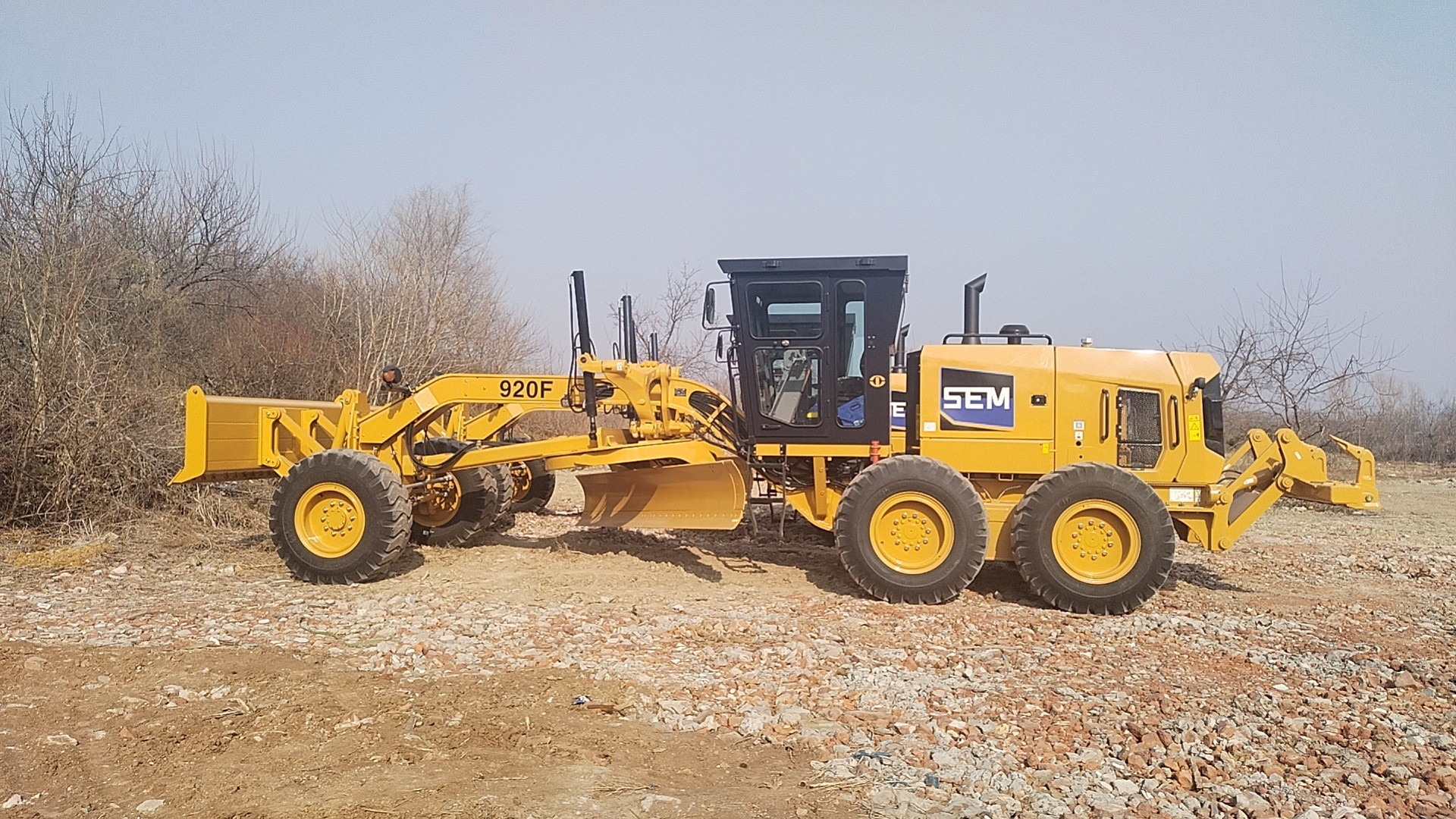
 SEM 920F Motor GraderThe SEM F Series Tier 2 Motor Grader is equipped with an SDEC engine and a PPC load-sensing hydraulic system for consistent, precise blade movement and reduced fuel consumption. The rear tandem drive is manufactured by Caterpillar and incorporates Caterpillar’s proven tandem axle design, delivering differentiated reliability, longer service life, and lower ownership and operating costs.
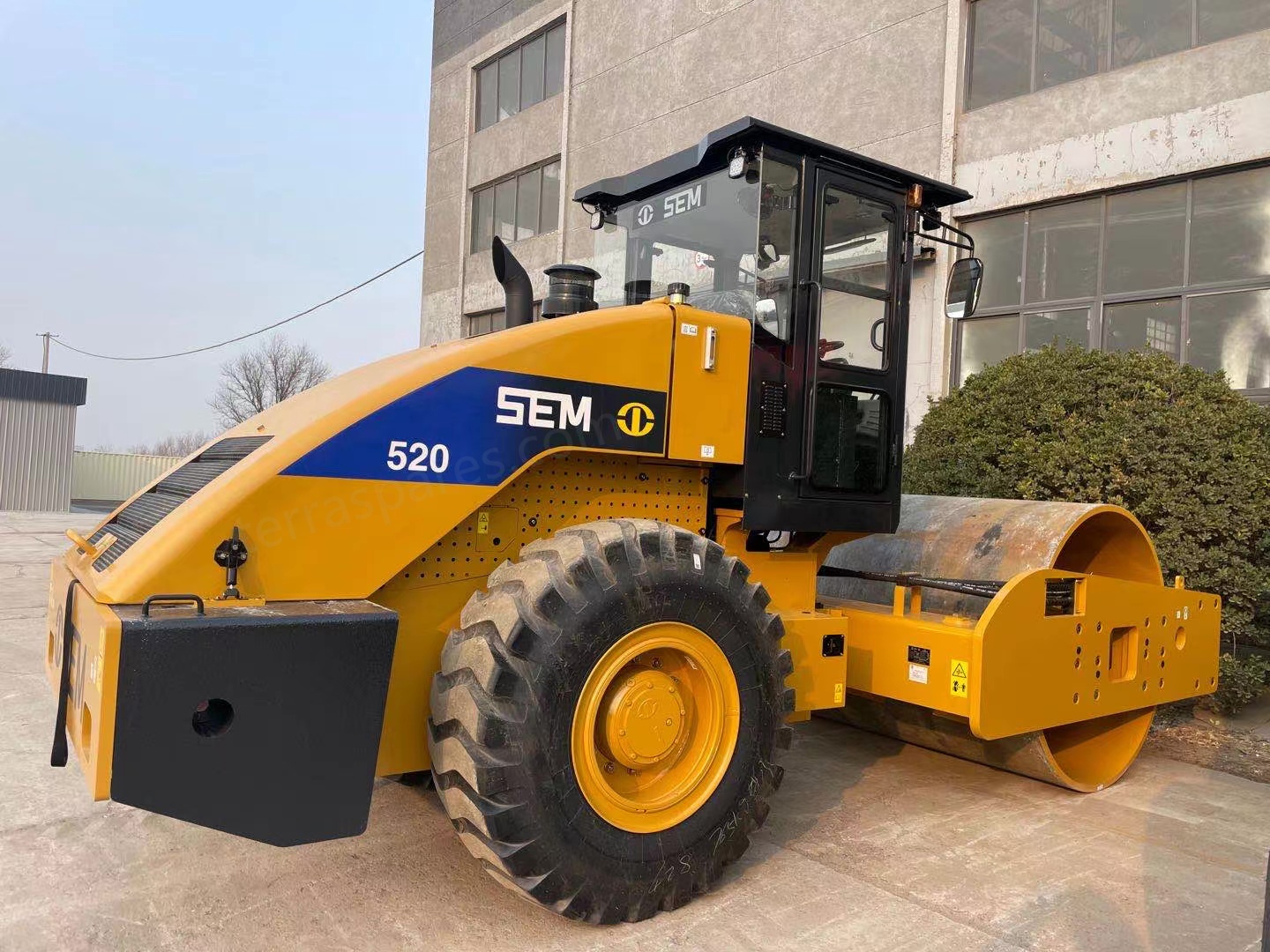
 SEM Road Roller Machines SEM 520The SEM 520 Single Drum Vibratory Road Roller is a heavy-duty compaction machine designed for large-scale road construction, highway projects and heavy earthwork tasks. Powered by a high-performance Weichai engine, it delivers steady and sufficient power for long-hour continuous operation. Equipped with the advanced pod-type sealed vibration system, it effectively resists dust and water intrusion, greatly extending the service life of core components. With powerful excitation force, optimized vibration frequency and amplitude, it achieves outstanding compaction results on soil, gravel and asphalt layers. The reinforced body structure and reliable wet brake system ensure superior stability and operational safety on various terrains. As an export-ready National II / Tier 2 model, it works well with regular fuel and features a service-friendly layout for easy daily upkeep.
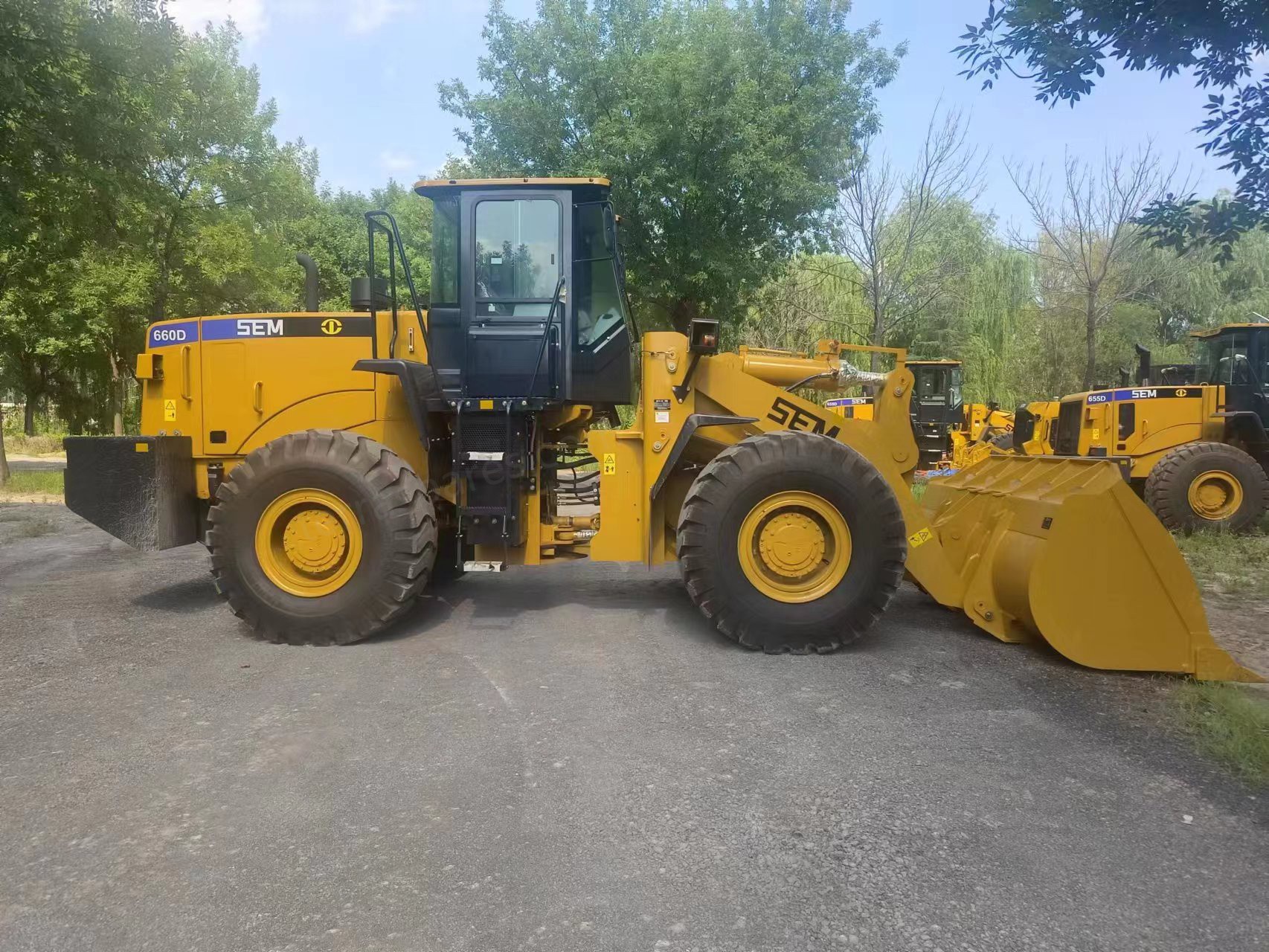
 SEM Wheel Loader Machines SEM 660D 6 Ton Wheel LoaderThe SEM 660D 6 Ton Wheel Loader is a heavy-duty, high-performance machine built to tackle the most demanding loading, stockpiling, and material handling tasks. Powered by a robust 178kW Weichai engine and paired with a durable countershaft transmission, it delivers consistent power and reliable torque for its 6-ton rated load. Equipped with advanced load-sensing hydraulics, the 660D ensures smooth, responsive operation and fast cycle times, boosting productivity on every shift. With a bucket capacity ranging from 2.8 to 5.5 m³, it adapts to a wide variety of applications, including mining, quarries, ports, and construction sites. Designed with operator comfort and low maintenance in mind, this export-ready National II / Tier 2 model runs reliably on low-quality fuel and features a simple, service-friendly layout.