-News Center-
How to Evaluate 5332638 Alternatives When OEM Parts Are Out of Stock
How to Evaluate 5332638 Alternatives When OEM Parts Are Out of Stock
When OEM stock runs dry, choosing the right 5332638 alternative becomes a critical business decision. For procurement and evaluation teams in the machinery parts sector, the goal is not only to restore equipment availability but also to balance compatibility, quality, lifecycle cost, and supplier reliability. This guide outlines practical criteria to help assess replacement options with greater confidence and lower operational risk.
The biggest mistake in this situation is treating 5332638 as just a number match. In the field, an alternative part can look acceptable on paper and still create fitment problems, premature wear, weak sealing, unstable performance, or extra downtime during installation. If your team is evaluating replacement options under time pressure, slow down just enough to verify the points that actually affect operating risk.
Start with the equipment context, not the catalog
Before comparing suppliers, confirm exactly where the 5332638 part sits in the machine and what failure would mean in real use. Is it tied to a critical hydraulic, engine, drivetrain, or structural function? Does the machine work in quarry conditions, municipal construction, roadwork, or general excavation? A replacement that is acceptable for light-duty use may be a poor decision for high-hour equipment in dust, heat, or continuous load cycles.
For business evaluators, this changes the whole buying logic. If the part affects uptime directly, the cheapest alternative usually stops being the cheapest once labor, rework, and equipment idling are included.
- Record machine model, serial number, and any product variation tied to production year.
- Check whether the part has superseded numbers or regional variants.
- Confirm whether surrounding components have already been modified or replaced with non-OEM parts.
Compatibility needs proof, not supplier reassurance
A vendor saying a part is “suitable for” or “interchangeable with” 5332638 is only a starting point. Ask what that claim is based on. A proper evaluation usually includes dimensional drawings, material specification where relevant, interface details, and installation references. If the supplier cannot provide any technical backing, you are taking more risk than most teams realize.
Pay particular attention to tolerances, sealing surfaces, connection points, hardness, coatings, and heat treatment where applicable. Even small deviations can show up later as vibration, leakage, poor alignment, or accelerated wear. This is where experienced suppliers matter. Companies working across major machinery brands tend to recognize the practical differences between nominal interchangeability and field-ready compatibility. That is part of why buyers often work with established parts specialists such as TerraMech, which has long experience supporting equipment from Caterpillar, Komatsu, Volvo, SEM, Shantui, XCMG, SDLG, Weichai, and SDEC.
Check the quality trail behind the part
This is where many evaluations become too shallow. A part may pass visual inspection and still come from a weak manufacturing chain. Ask for what can realistically be provided: origin details, batch traceability, inspection process, and any available quality records tied to that product category. Do not ask for paperwork just to fill a file. Ask for documents that help you decide whether the supplier controls consistency.
If there are references to standards or certifications, verify relevance. A general company certificate does not prove that the specific 5332638 alternative was tested for your use case. If test data is offered, review what was actually tested and under what conditions. If that cannot be confirmed, mark it as 【待核实】 and do not treat it as a decision-grade fact.
Price the replacement as a lifecycle decision
A low quote is easy to defend at purchase stage. It is harder to defend after a second installation, emergency freight, or machine stoppage. For procurement teams, the useful comparison is total cost over the expected service interval, not unit price alone.
Include these in your evaluation sheet:
- Part price and freight.
- Installation labor and planned downtime.
- Probability and cost of early replacement.
- Impact on neighboring components if the alternative underperforms.
- Warranty response time and supplier accountability.
If the machine is revenue-generating and heavily scheduled, reliability often deserves more weight than initial savings. That is especially true on equipment expected to deliver steady productivity and low operating cost, such as CAT Excavator 316 GC, where parts decisions affect more than a single repair event.
Supplier behavior is part of the product
Buyers sometimes separate “the part” from “the supplier.” In practice, they are linked. A technically acceptable alternative from a weak supplier can still become a bad buy if lead times move, claims drag on, or documentation arrives late and incomplete.
Look for signs that the supplier understands machinery operations, not just trading. Useful indicators include whether they ask for the machine serial number before quoting, whether they point out supersessions, and whether they clarify application differences instead of pushing immediate substitution. That kind of friction is usually healthy.
Also check practical items that affect execution:
- Can they maintain stable supply if the first order succeeds?
- Do they offer photos of actual stock, packaging, and markings?
- Is there a clear return or claim process for fitment disputes?
- Can they support other related parts if you decide to bundle maintenance work?
Use a controlled trial when the risk is not obvious
Not every 5332638 alternative needs a full pilot program, but for higher-risk applications, a controlled first installation is worth the time. Monitor fitment, installation time, operator feedback, temperature or leakage signs where relevant, and early wear indicators after initial service hours. Keep the check simple and tied to actual failure modes.
This matters even more if you are evaluating parts for fleets that include machines working under different loads. A result from one site should not automatically be generalized across all jobs without review. Conditions vary. Duty cycle varies. Maintenance discipline varies too.
Common evaluation errors that cost time later
A few patterns come up again and again:
- Approving a substitute based only on photo similarity.
- Ignoring serial number breaks and assuming one part fits all versions.
- Using unit cost as the main ranking factor for high-consequence parts.
- Accepting technical claims without traceable support.
- Skipping post-installation review, so weak parts stay in the supply chain too long.
A more durable approach is to score alternatives against a short set of weighted criteria: fitment confidence, quality control visibility, supplier responsiveness, warranty clarity, and expected operating cost. Keep the framework tight enough that teams will actually use it.
If you are making the call under stock pressure, the practical move is this: verify machine-specific compatibility, demand evidence behind interchange claims, and compare suppliers on execution quality as much as price. That usually leads to better decisions than chasing the fastest quote. And on machines built for reliability and durability, including platforms like the CAT Excavator 316 GC, that discipline tends to pay for itself quickly.
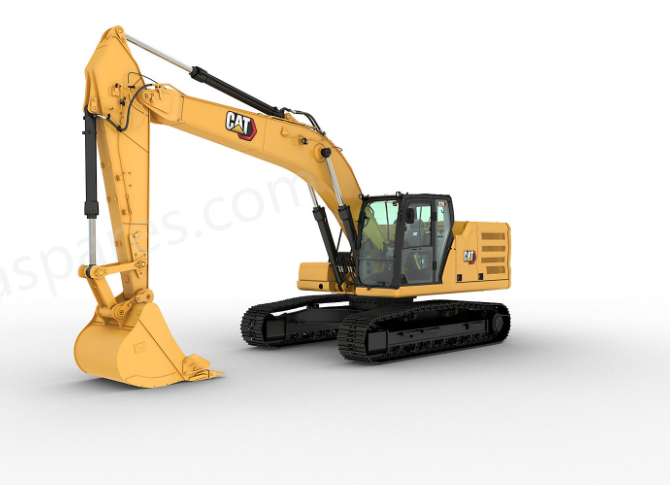
 CAT Excavator 326Premium Performance with Simple-to-Use Technologies
The Cat® 326 Excavator brings premium performance with simple-to-use technologies to boost your operator efficiencies. Combine these features with an ergonomic cab, longer maintenance intervals, and a power system that reduces fuel and you have a low-cost-per-unit-of-production excavator that’s perfect for medium to heavy-duty applications. CAT Excavator 324Heavy-Duty Muscle Built to Outperform
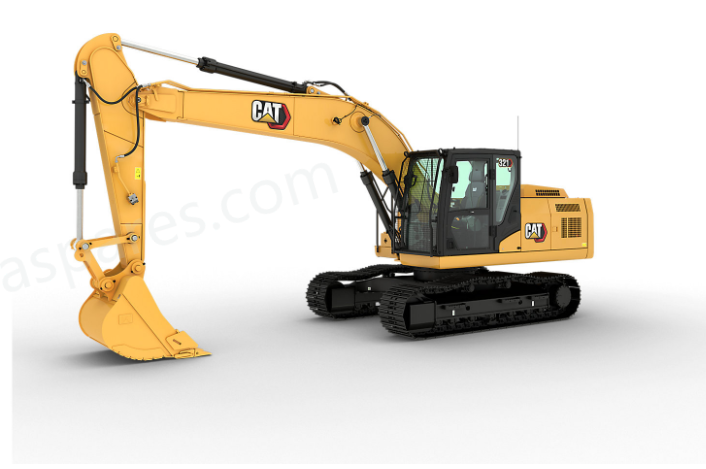
The Cat® 324 excavator is built to handle high-production workloads with the perfect balance of brute strength and refined control. Its powerful Cat® C7.1 engine, high-flow hydraulics, and advanced electrohydraulic system give you the muscle to move heavy material fast, without burning through your budget. With reinforced structures, field-proven durability, and easy-to-maintain components, the 324 is your go-to solution for tackling tough jobs with less downtime. CAT Excavator 322Profit-Driven Powerhouse for Heavy Loads
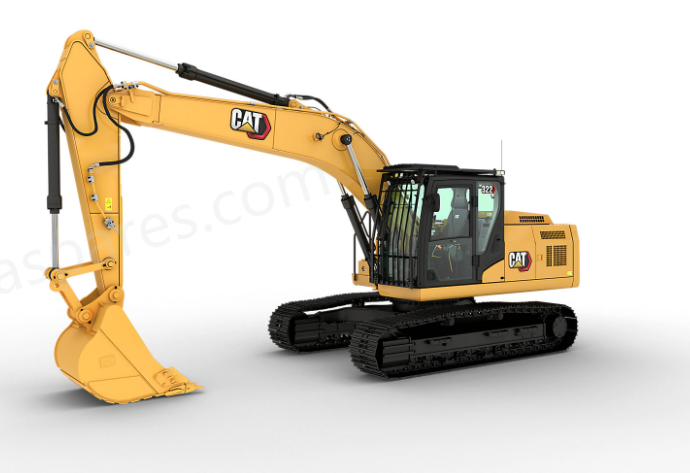
When you need muscle, precision, and cost control in one machine, the Cat® 322 excavator delivers. Purpose-built for high production, the 322 pairs fast cycle times with large bucket options to move more material in fewer passes. Its responsive electrohydraulic controls and rugged design keep you productive on the tough jobs, while smart fuel efficiency and streamlined maintenance help you stay profitable every step of the way. Whether you’re loading, trenching, or lifting, the 322 is a heavy-duty workhorse that pays you back. CAT Excavator 321Versatility at the Lowest Cost Per Hour
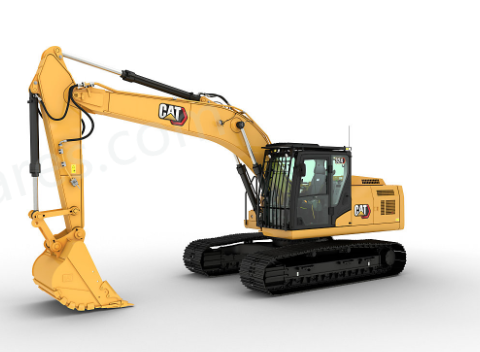
Powered by the reliable Cat® C3.6 engine, the Cat® 321 excavator delivers high torque and fast cycle times to maximize productivity. Reinforced Cat structures extend machine life and withstand the toughest conditions, while the latest cab design puts operator safety and comfort first. Every core system undergoes rigorous testing, so you can count on consistent, reliable performance shift after shift.