-News Center-
SEM Machinery Parts or Generic Parts: Which Fits Better?
Why the SEM Machinery Parts Decision Matters
Choosing between SEM machinery parts and generic alternatives can directly affect equipment reliability, maintenance cycles, and total operating cost.
The right choice is rarely about purchase price alone.
It also depends on fit accuracy, metallurgy, sealing quality, pressure tolerance, and predictable field performance.
In wheel loaders, braking systems, pumps, valves, radiators, and engine components all rely on stable part interaction.
A small mismatch can shorten service life across connected assemblies.
Why a Checklist Works Better Than a Price Comparison
A checklist makes SEM machinery parts evaluation more objective.
It reduces the risk of selecting parts that look similar but differ in tolerances, coating quality, rubber compounds, or internal flow design.
This is especially important in mechanical parts exposed to vibration, dust, heat, and repeated load cycles.
When the review method is standardized, replacement planning becomes faster and more consistent.
Checklist: How to Compare SEM Machinery Parts and Generic Parts
- Verify part numbers first. Match OEM references, revision codes, and machine serial data before comparing dimensions or materials.
- Check dimensional tolerance. Measure shaft diameter, flange thickness, bolt spacing, seal seat depth, and connection geometry.
- Review material specification. Confirm alloy grade, heat treatment, rubber hardness, corrosion coating, and wear-surface finishing.
- Assess working conditions. Compare temperature range, hydraulic pressure, dust exposure, vibration level, and duty cycle.
- Examine performance consistency. Ask for test data on flow rate, braking response, air tightness, electrical stability, or belt durability.
- Calculate lifecycle cost. Include replacement frequency, downtime risk, labor hours, lubricant loss, and possible damage to adjacent parts.
- Confirm supply continuity. Reliable SEM machinery parts sourcing matters when scheduled maintenance requires the same specification every cycle.
- Review after-sales support. Technical guidance, export handling, and cross-reference assistance often save more time than a lower invoice price.
When SEM Machinery Parts Usually Fit Better
High-load hydraulic and engine systems
SEM machinery parts are often the safer choice for work pumps, gear pumps, control valves, alternators, and engine-related assemblies.
These positions demand stable pressure behavior and close tolerance control.
If flow balance or sealing performance drifts, wear can spread quickly through the system.
Braking and safety-related assemblies
Brake valves, air boost pumps, air compressors, and pilot valves should be selected with strict caution.
In these applications, SEM machinery parts usually provide stronger confidence in compatibility and response consistency.
That matters in wheel loader operation where control lag or leakage directly affects safety.
When Generic Parts Can Be a Practical Option
Non-critical wear items
Generic parts may work well for selected filters, mufflers, multiple V-belts, or basic service items.
The key is proving equivalent fit and service performance, not assuming similarity from appearance alone.
Budget-controlled maintenance windows
Where machines operate under lighter duty cycles, qualified generic alternatives can support cost control.
However, every substitution should still pass a technical screening checklist.
That is the only way to avoid hidden downtime costs.
A Practical Example from SEM Spare Parts Supply
For components used in wheel loader parts and braking system service, exact matching is essential.
An example is SEM SPARE PARTS 5217534 W110000160 GOVERNOR , supplied alongside related model references used across multiple maintenance scenarios.
This reflects a broader supply approach covering engine parts, valves, pumps, radiators, alternators, and other key assemblies.
With extensive export experience, one-stop ODM and OEM support, and global customer service, TerraMech helps maintain specification clarity across branded parts programs.
Commonly Overlooked Risks
- Ignore coating and surface finish, and corrosion or premature seal wear may appear long before expected service intervals.
- Assume interchangeability by shape alone, and internal passage design may still cause pressure loss or unstable operation.
- Focus only on unit price, and labor repetition plus machine stoppage can erase any short-term savings.
- Mix specifications within one repair cycle, and troubleshooting later becomes slower and less accurate.
Execution Tips for Better Part Selection
Start by classifying each replacement item as safety-critical, performance-critical, or routine-consumable.
Use SEM machinery parts for critical systems where downtime or failure creates major operational loss.
Use approved generic parts only after checking reference numbers, materials, and operating limits.
Keep service records by part source, installation date, running hours, and failure mode.
That data quickly reveals which option performs better in real conditions.
Conclusion: Choose Fit, Stability, and Service Value
SEM machinery parts fit better when application demands precise compatibility, stable performance, and lower operational risk.
Generic parts can still be useful, but only when technical equivalence is verified with discipline.
The best next step is to build a comparison sheet using part number, material, duty condition, and lifecycle cost.
That approach leads to smarter sourcing, stronger uptime, and better long-term maintenance results.
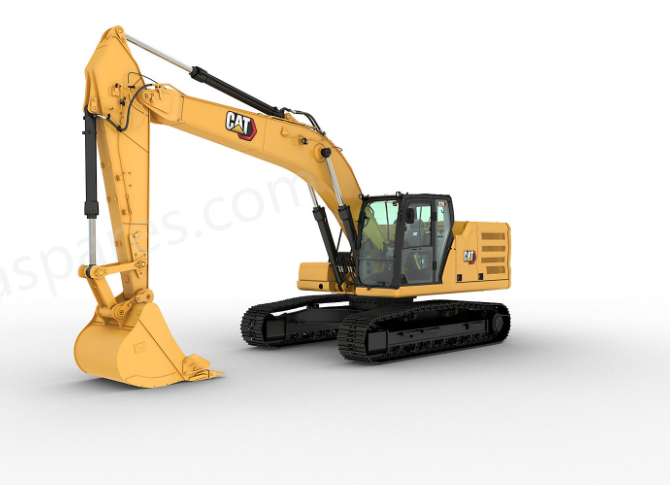
 CAT Excavator 326Premium Performance with Simple-to-Use Technologies
The Cat® 326 Excavator brings premium performance with simple-to-use technologies to boost your operator efficiencies. Combine these features with an ergonomic cab, longer maintenance intervals, and a power system that reduces fuel and you have a low-cost-per-unit-of-production excavator that’s perfect for medium to heavy-duty applications. CAT Excavator 324Heavy-Duty Muscle Built to Outperform
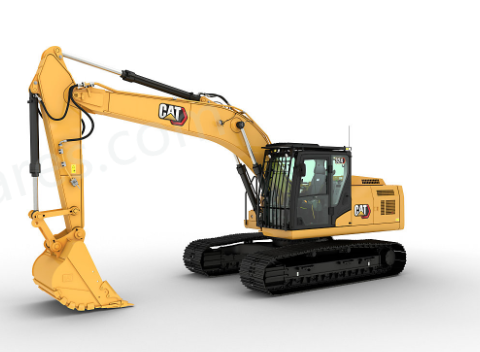
The Cat® 324 excavator is built to handle high-production workloads with the perfect balance of brute strength and refined control. Its powerful Cat® C7.1 engine, high-flow hydraulics, and advanced electrohydraulic system give you the muscle to move heavy material fast, without burning through your budget. With reinforced structures, field-proven durability, and easy-to-maintain components, the 324 is your go-to solution for tackling tough jobs with less downtime. CAT Excavator 322Profit-Driven Powerhouse for Heavy Loads
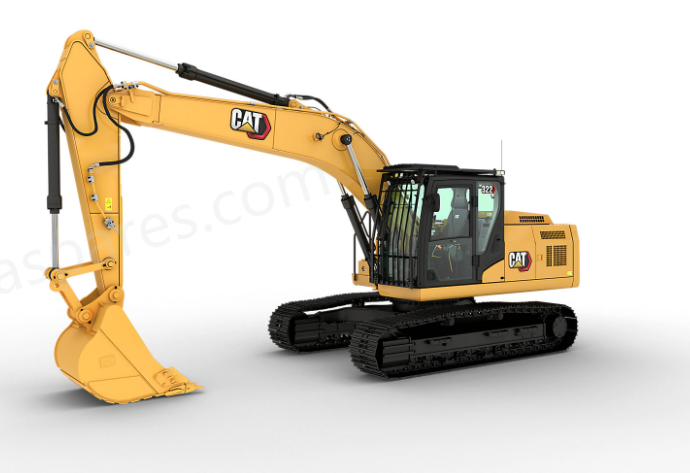
When you need muscle, precision, and cost control in one machine, the Cat® 322 excavator delivers. Purpose-built for high production, the 322 pairs fast cycle times with large bucket options to move more material in fewer passes. Its responsive electrohydraulic controls and rugged design keep you productive on the tough jobs, while smart fuel efficiency and streamlined maintenance help you stay profitable every step of the way. Whether you’re loading, trenching, or lifting, the 322 is a heavy-duty workhorse that pays you back. CAT Excavator 321Versatility at the Lowest Cost Per Hour
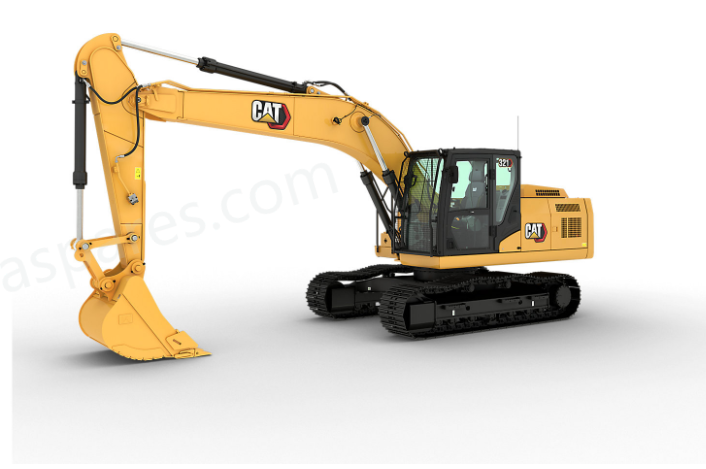
Powered by the reliable Cat® C3.6 engine, the Cat® 321 excavator delivers high torque and fast cycle times to maximize productivity. Reinforced Cat structures extend machine life and withstand the toughest conditions, while the latest cab design puts operator safety and comfort first. Every core system undergoes rigorous testing, so you can count on consistent, reliable performance shift after shift.