-News Center-
How Does a Wheel Loader Gear GP Work in Power Transmission Systems?
How Does a Wheel Loader Gear GP Work in Power Transmission Systems?
In wheel loader power transmission systems, the MACHINERY WHEEL LOADER GEAR GP is one of those parts people often notice only after something starts slipping, heating up, or making noise. But if you are comparing components, studying drivetrain layouts, or trying to understand why one machine delivers smoother push power than another, this gear group deserves a closer look. In practical terms, it helps take engine output and turn it into controlled torque that the transmission, axles, and wheels can actually use under load.
From TerraMech’s experience with construction machinery parts across Caterpillar, Komatsu, Volvo, SEM, Shantui, XCMG, SDLG, Weichai, and SDEC platforms, the same pattern shows up again and again: when buyers understand how the gear assembly works inside the power path, they make better decisions about compatibility, maintenance timing, and failure risk. If you are in the research stage, use the checklist below as a working way to evaluate the part, not just define it.
Start with the job it is actually doing
A wheel loader Gear GP is not just “a gear.” In most machine documentation, “GP” usually refers to a grouped assembly rather than a single tooth wheel, though naming conventions can vary by brand and parts catalog. Its job in the transmission system is to transfer rotational energy from one stage to another while adjusting speed, torque, or direction according to the drivetrain design.
That matters because a wheel loader does not work under light, steady passenger-vehicle conditions. It digs, reverses, pushes into piles, carries shock loads, and spends a lot of time in start-stop cycles. The gear assembly has to support power flow under changing resistance, not just rotate cleanly on paper.
- It receives power from the engine side, often through a torque converter or transmission input stage depending on machine design.
- It changes the torque/speed relationship so the loader can move heavy loads without stalling easily.
- It passes that power onward to output shafts, differentials, final drives, and ultimately the wheels.
If you remember only one thing, remember this: the value of the MACHINERY WHEEL LOADER GEAR GP is not in motion alone, but in controlled power transfer under stress.
Check how torque is being multiplied, not just transmitted
A common research mistake is to think of the gear assembly as a neutral connector. It is not. Gear ratios influence whether the machine feels responsive, labored, or overly harsh in loading cycles. Lower output speed paired with higher torque is what allows a wheel loader to break into material piles and keep traction while carrying weight.
When reviewing a parts breakdown or drivetrain diagram, ask a simple question: is this Gear GP sitting at a stage where it mainly passes power through, or at a stage where it meaningfully changes the torque available downstream? That distinction affects how critical tooth strength, heat management, and lubrication quality become.
In field discussions, users often describe the symptom before the cause: weak push force, delayed response on grade, or unusual gear noise under bucket load. Those are clues that the issue may involve torque transfer efficiency rather than complete mechanical failure.
Look at load path and shock resistance
Wheel loaders live on impact. Every hard entry into aggregate, every abrupt directional change, and every overloaded carry puts stress into the drivetrain. So when evaluating a gear assembly, do not stop at dimensions and part numbers. Think about whether the part is built for repeated shock loading in actual site conditions.
Useful checks include material quality, heat treatment information if available, matching brand specification, and whether the assembly is intended for the exact machine model and duty cycle. Specific metallurgy and hardness values should be verified against OEM or supplier documentation; if a listing does not provide them, treat performance claims cautiously.
This is also where experienced parts suppliers matter. TerraMech typically sees fewer fitment disputes when buyers bring the full machine model, serial information, and operating scenario instead of ordering by appearance alone.
Do not separate gear performance from lubrication
A Gear GP can be correctly specified and still fail early if lubrication is poor. In power transmission systems, the oil film is part of the working condition, not an accessory detail. It reduces metal-to-metal contact, controls heat, and helps carry away wear particles.
If you are researching component life, keep an eye on these warning signs:
- Abnormal whining or grinding that increases with load
- Discolored oil, metallic debris, or burnt smell during inspection
- Rising operating temperature without another clear cause
- Uneven tooth wear patterns when the assembly is opened up
None of those symptoms automatically proves the gear is the only fault point, but all of them justify a broader drivetrain inspection.
Compatibility is usually where research turns into a costly mistake
The term MACHINERY WHEEL LOADER GEAR GP sounds broad, and that is exactly why buyers need to slow down. Similar-looking assemblies may differ in tooth count, spline profile, mounting geometry, or transmission pairing. One mismatch can create noise, accelerated wear, or complete installation failure.
That same discipline applies across other machine systems too. For example, buyers sourcing hydraulic parts such as SHANTUI CYLINDER SPARE PARTS 16Y-62-60000 SD16 SD32 usually get better results when they verify model family, application, and system role before price-shopping. Transmission and hydraulic components fail differently, but the purchasing mistake is often the same: incomplete identification.
Pay attention to system interaction, not just the isolated part
A gear assembly does not work alone. The surrounding bearings, shafts, seals, converter behavior, clutch packs, axle loads, and even tire traction affect what it experiences in service. This is why a replacement part can seem “good” on inspection but still underperform after installation.
If a machine has repeat failures in the same area, widen the scope. Misalignment, contaminated oil, overloaded operation, or upstream transmission issues may be the real driver. In research terms, that means you should evaluate the Gear GP as part of a power transmission chain, not as a standalone commodity item.
What experienced buyers usually ask before they commit
The smartest early-stage questions are not complicated:
- Where exactly is this Gear GP located in the loader drivetrain?
- Is it primarily a reduction stage, transfer stage, or part of a directional/planetary arrangement?
- What are the known failure modes for this model family?
- Does the supplier provide traceable compatibility support, or only a generic description?
- What related parts should be inspected or replaced at the same time?
Those questions save time because they move the discussion from catalog language to working conditions.
So, how does a wheel loader Gear GP work in a power transmission system? It receives and redirects engine-derived rotational power, adjusts the torque-speed relationship needed for loader work, and helps the machine keep moving smoothly under changing load. When researching one, focus less on the label and more on torque path, fitment accuracy, lubrication condition, and the surrounding drivetrain. That is usually where the real answer is.
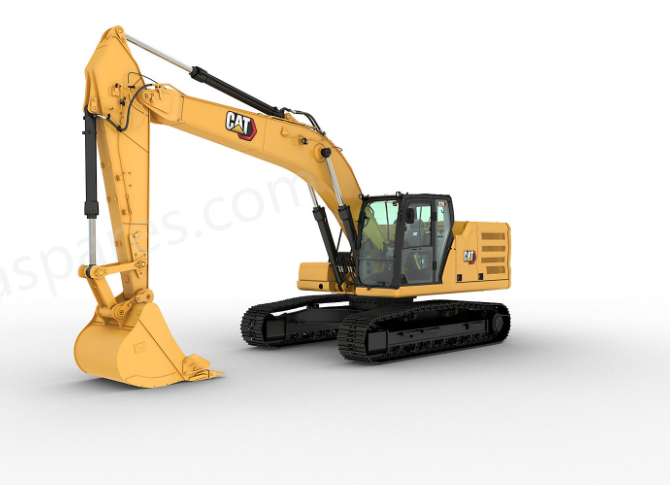
 CAT Excavator 326Premium Performance with Simple-to-Use Technologies
The Cat® 326 Excavator brings premium performance with simple-to-use technologies to boost your operator efficiencies. Combine these features with an ergonomic cab, longer maintenance intervals, and a power system that reduces fuel and you have a low-cost-per-unit-of-production excavator that’s perfect for medium to heavy-duty applications. CAT Excavator 324Heavy-Duty Muscle Built to Outperform
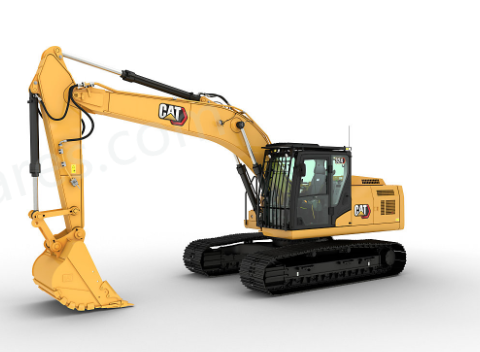
The Cat® 324 excavator is built to handle high-production workloads with the perfect balance of brute strength and refined control. Its powerful Cat® C7.1 engine, high-flow hydraulics, and advanced electrohydraulic system give you the muscle to move heavy material fast, without burning through your budget. With reinforced structures, field-proven durability, and easy-to-maintain components, the 324 is your go-to solution for tackling tough jobs with less downtime. CAT Excavator 322Profit-Driven Powerhouse for Heavy Loads
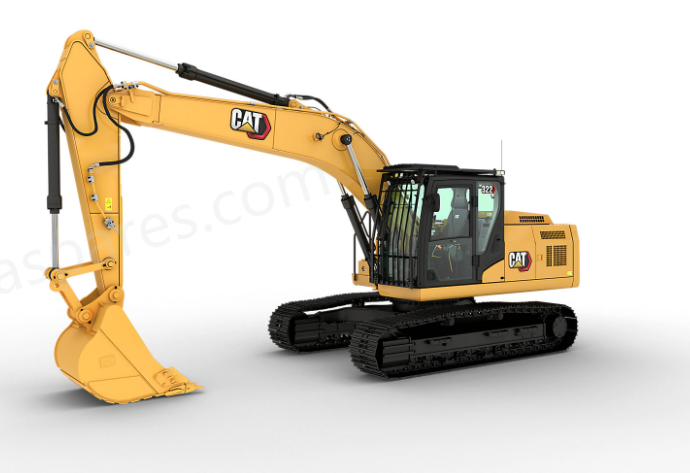
When you need muscle, precision, and cost control in one machine, the Cat® 322 excavator delivers. Purpose-built for high production, the 322 pairs fast cycle times with large bucket options to move more material in fewer passes. Its responsive electrohydraulic controls and rugged design keep you productive on the tough jobs, while smart fuel efficiency and streamlined maintenance help you stay profitable every step of the way. Whether you’re loading, trenching, or lifting, the 322 is a heavy-duty workhorse that pays you back. CAT Excavator 321Versatility at the Lowest Cost Per Hour
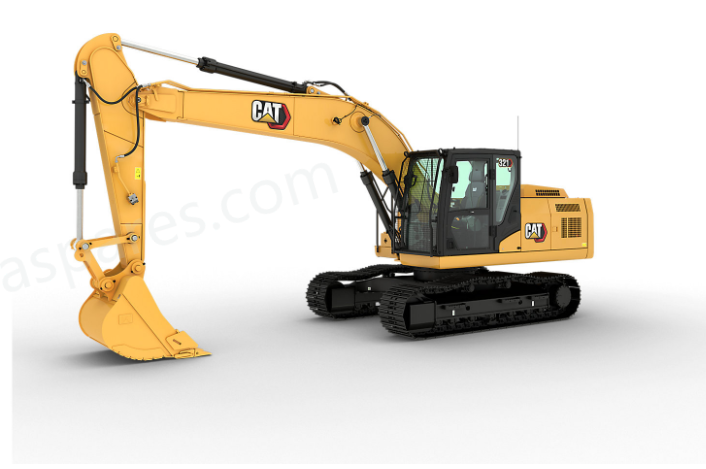
Powered by the reliable Cat® C3.6 engine, the Cat® 321 excavator delivers high torque and fast cycle times to maximize productivity. Reinforced Cat structures extend machine life and withstand the toughest conditions, while the latest cab design puts operator safety and comfort first. Every core system undergoes rigorous testing, so you can count on consistent, reliable performance shift after shift.