-News Center-
Troubleshooting Unstable Speed Issues with the 5217534 W110000160 Governor
Troubleshooting Unstable Speed Issues with the 5217534 W110000160 Governor
Unstable engine speed can quickly turn a productive machine into a costly interruption.
When the 5217534 W110000160 governor stops holding speed steadily, fuel use rises, response becomes inconsistent, and shutdown risk increases.
In field service, the real challenge is not only finding the fault, but finding it fast enough to avoid secondary damage.
That is why the 5217534 W110000160 deserves a structured inspection process rather than guesswork.
Drawing on practical machinery support experience across brands such as SEM, Caterpillar, Komatsu, Volvo, Shantui, XCMG, SDLG, Weichai, and SDEC, TerraMech generally treats governor instability as a system problem first.
The governor may be the visible symptom point, but the root cause often sits in linkage wear, fuel quality, wiring resistance, sensor drift, or poor maintenance habits.
What does unstable speed usually look like in the 5217534 W110000160?
The signs are rarely identical from one machine to another, but a few patterns appear again and again.
Sometimes idle hunts up and down in small waves.
In other cases, rated speed drops under a normal load, then suddenly overshoots when the load releases.
A faulty 5217534 W110000160 may also cause delayed throttle recovery, uneven acceleration, or irregular exhaust sound during steady operation.
A useful early judgment is this: if fluctuation changes with vibration, temperature, or connector movement, suspect electrical or mechanical instability before replacing the unit.
If the problem appears only after warm-up, internal wear, expansion-related sticking, or heat-sensitive electronics become more likely.
If it starts immediately after fuel service, contamination or air entry should move near the top of the checklist.
A quick symptom guide helps narrow the search
Where should diagnosis start when the governor seems unstable?
Start with the simplest checks that can prove or eliminate common causes quickly.
That usually means confirming fuel supply, linkage movement, mounting condition, and input voltage before opening the governor or ordering parts.
The 5217534 W110000160 depends on stable surrounding conditions.
A governor cannot compensate for restricted fuel flow, poor grounding, or misadjusted throttle hardware.
- Check fuel filters for blockage, water, or recent contamination.
- Inspect harness plugs for loose pins, corrosion, and heat discoloration.
- Move the linkage by hand and feel for drag, backlash, or delayed return.
- Measure supply voltage during idle and load change, not only with the engine stopped.
- Verify mounting fasteners, because vibration can create intermittent governor behavior.
This order matters because many unstable speed complaints come from support systems rather than a failed 5217534 W110000160 itself.
Replacing the governor too early often delays the real repair.
Could the problem come from outside the 5217534 W110000160?
Very often, yes.
In actual service work, the governor is blamed more often than it is truly defective.
Fuel aeration, worn injector performance, inaccurate speed sensors, and damaged throttle cables can all create the same unstable speed impression.
A useful comparison is to separate control failure from delivery failure.
If the 5217534 W110000160 sends a correct response but engine output still fluctuates, the issue may be downstream.
If command and output both move erratically, the control side deserves closer attention.
This is also where machine-wide maintenance condition matters.
On wheel loaders and similar equipment, poor bucket penetration or extra rolling resistance may be mistaken for power instability.
For example, worn ground engaging parts can increase load variation at the working face.
In those cases, components such as 5217288 Z420010681 TEETH SEM WHEEL LOADER PARTS help maintain predictable bucket behavior on SEM655D, SEM656D, SEM658D, SEM653D, and SEM660D applications.
That does not repair a governor, but it reduces load spikes that can hide the true control problem.
When is adjustment enough, and when is replacement the better choice?
This is usually the most important cost decision.
Adjustment is worth trying when the 5217534 W110000160 still responds consistently, but the setpoint has drifted, linkage travel is slightly off, or external fasteners have loosened.
Replacement becomes more reasonable when instability remains after fuel, wiring, and mechanical checks have been confirmed.
The same is true when response is delayed, internal sticking appears temperature-related, or wear marks suggest long-term mechanical degradation.
A few signals usually point toward replacement:
- Stable voltage and clean fuel, but unstable speed continues.
- Manual movement reveals rough internal feel or inconsistent return.
- Repeat adjustment temporarily improves operation, then drift returns quickly.
- The governor body shows wear, contamination ingress, or vibration damage.
The better judgment method is to compare repair time, failure recurrence risk, and machine downtime cost together.
A cheap adjustment is not really cheap if the loader stops again next week.
What mistakes make unstable speed harder to fix?
One common mistake is tuning around the fault.
If the 5217534 W110000160 is adjusted repeatedly without confirming sensor input and fuel quality, the final setting may mask the original issue and create a new one.
Another mistake is testing only at idle.
Many governors behave acceptably with no load, then lose control once hydraulic demand rises.
There is also the habit of replacing parts one by one without recording measurements.
That approach consumes time and makes trend analysis impossible on repeat failures.
More avoidable errors include:
- Ignoring ground resistance because battery voltage looked normal.
- Assuming all speed fluctuation comes from the governor instead of the load side.
- Skipping hot-condition testing after a cold-condition pass.
- Reusing worn linkage parts after installing a new 5217534 W110000160.
In tougher operating conditions, the same disciplined thinking applies to other wear parts as well.
Abrasion-resistant components like 5217288 Z420010681 TEETH SEM WHEEL LOADER PARTS are often chosen because predictable wear behavior helps reduce downtime and makes troubleshooting more precise overall.
How can future 5217534 W110000160 speed problems be reduced?
Preventing repeat instability is usually easier than diagnosing it under pressure.
The most effective approach is to build a short inspection routine into regular service intervals.
That routine does not need to be complicated.
It only needs to catch drift before it turns into uncontrolled fluctuation.
A practical prevention checklist
- Record actual idle and rated speed values after each major service.
- Inspect governor connectors whenever vibration-related complaints appear.
- Replace filters on schedule and investigate any water or debris immediately.
- Lubricate or renew linkage components before free play becomes excessive.
- Test response both cold and fully warmed, especially after seasonal changes.
- Keep a failure history by machine serial number to spot repeat patterns.
For mixed fleets, this record-based method is especially useful because the same 5217534 W110000160 complaint can come from different root causes on different machines.
Reliable maintenance is less about one perfect adjustment and more about consistent evidence.
Final check before returning the machine to service
Before closing the job, confirm that the 5217534 W110000160 holds steady speed at idle, during controlled acceleration, and under a realistic working load.
Listen for smooth recovery after load release and verify that no new overspeed or lag has appeared.
A good repair is not just a stable reading in the workshop.
It is stable behavior in the same operating conditions that originally caused the complaint.
If unstable speed returns, go back to measured inputs, load conditions, and wear points instead of repeating the same adjustment.
That process usually leads to a faster answer, lower downtime, and a more dependable machine in the field.
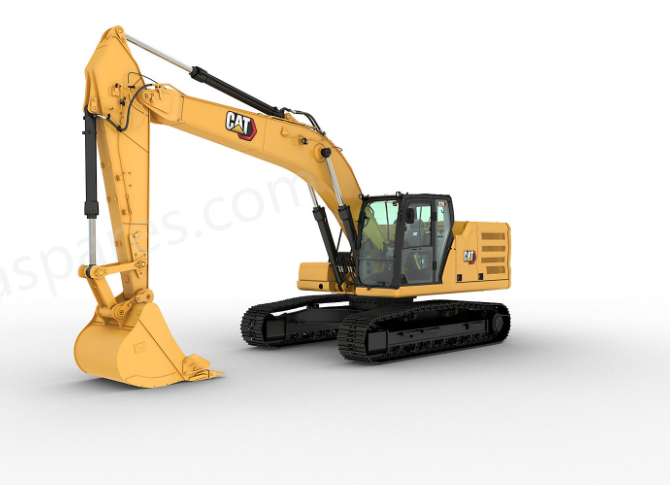
 CAT Excavator 326Premium Performance with Simple-to-Use Technologies
The Cat® 326 Excavator brings premium performance with simple-to-use technologies to boost your operator efficiencies. Combine these features with an ergonomic cab, longer maintenance intervals, and a power system that reduces fuel and you have a low-cost-per-unit-of-production excavator that’s perfect for medium to heavy-duty applications. CAT Excavator 324Heavy-Duty Muscle Built to Outperform
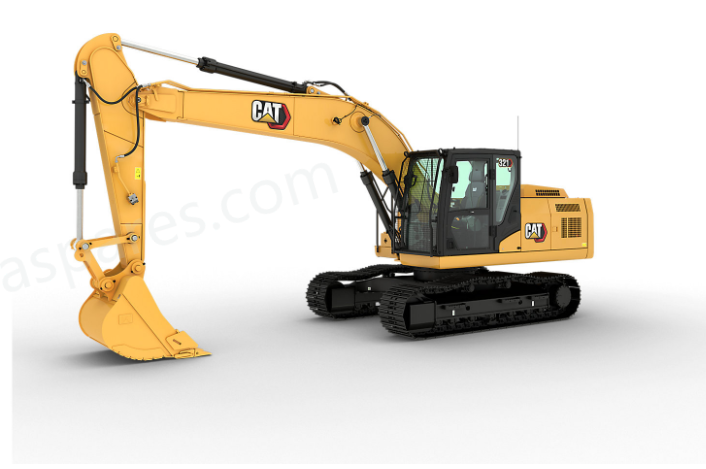
The Cat® 324 excavator is built to handle high-production workloads with the perfect balance of brute strength and refined control. Its powerful Cat® C7.1 engine, high-flow hydraulics, and advanced electrohydraulic system give you the muscle to move heavy material fast, without burning through your budget. With reinforced structures, field-proven durability, and easy-to-maintain components, the 324 is your go-to solution for tackling tough jobs with less downtime. CAT Excavator 322Profit-Driven Powerhouse for Heavy Loads
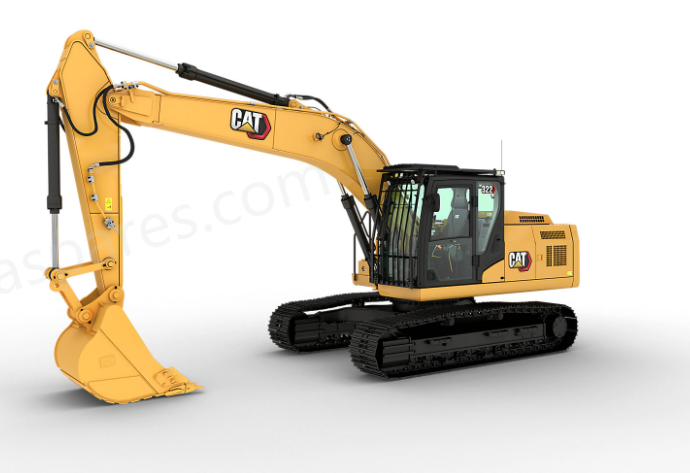
When you need muscle, precision, and cost control in one machine, the Cat® 322 excavator delivers. Purpose-built for high production, the 322 pairs fast cycle times with large bucket options to move more material in fewer passes. Its responsive electrohydraulic controls and rugged design keep you productive on the tough jobs, while smart fuel efficiency and streamlined maintenance help you stay profitable every step of the way. Whether you’re loading, trenching, or lifting, the 322 is a heavy-duty workhorse that pays you back. CAT Excavator 321Versatility at the Lowest Cost Per Hour
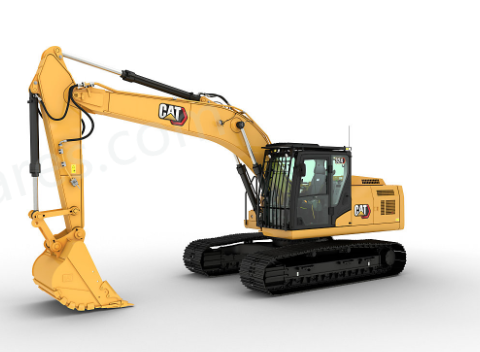
Powered by the reliable Cat® C3.6 engine, the Cat® 321 excavator delivers high torque and fast cycle times to maximize productivity. Reinforced Cat structures extend machine life and withstand the toughest conditions, while the latest cab design puts operator safety and comfort first. Every core system undergoes rigorous testing, so you can count on consistent, reliable performance shift after shift.