-News Center-
5332638 Specification Review: Dimensions, Material, and Performance Factors
5332638 Specification Review: What Actually Matters in Technical Evaluation
For technical evaluators, the main risk with a part number like 5332638 is assuming that identification equals interchangeability. It does not. A specification review is useful only when it goes beyond the label and checks the three things that decide field performance: dimensional accuracy, material behavior under load, and the way the part responds over time in a real machine environment. That is where fit, service life, and reliability are actually determined.
In heavy machinery parts, dimensional compliance is not just about whether a component can be assembled. A part may install without visible resistance and still create long-term trouble if bore size, flange thickness, spline geometry, offset, or tolerance stack-up differs from the original design intent. Evaluators who work on drivetrain, transmission, or axle-related components usually pay close attention to these details because slight deviation can shift load paths, change contact patterns, or accelerate wear in adjacent assemblies. A review of 5332638 should therefore begin with interface dimensions rather than marketing descriptions or generic compatibility claims.
The next issue is material, and this is where many assessments become too superficial. A specification sheet may describe a part as “high-strength steel” or “durable alloy,” but those terms alone do not tell you enough. In machinery applications exposed to shock loading, directional changes, and repeated torque transfer, material selection must be understood together with heat treatment, hardness distribution, and resistance to fatigue or surface deformation. If 5332638 is used in a power transmission context, the evaluator should be asking whether the material characteristics match the operational stress pattern, not simply whether the base metal sounds adequate.
This distinction matters because parts fail in different ways. Some fail by sudden fracture when impact resistance is insufficient. Others remain intact but lose dimensional stability at wear surfaces, causing noise, backlash, poor engagement, or premature damage elsewhere. In practical terms, a technically acceptable replacement is one that preserves the working relationship of the assembly, not merely one that survives initial installation.
Reading Specifications in Context
A specification review of 5332638 should always be tied to machine function. For example, a part associated with the transmission system will be judged differently from a bracket, cover, or low-load housing element. Transmission-related components operate under repeated torque transfer, shifting loads, and occasional impact events from variable terrain or operator input. In that setting, dimensional precision affects alignment, while material properties affect both strength and wear life. The two cannot be separated.
This is also why cross-reference practice needs caution. In the construction machinery trade, equivalent part numbers may circulate across brands, suppliers, and aftermarket catalogs, but technical equivalence still has to be checked against drawing logic, operating position, and machine variant. TerraMech’s long experience with branded construction equipment and parts across Caterpillar, Komatsu, Volvo, SEM, Shantui, XCMG, SDLG, Weichai, and SDEC reflects a common pattern in the field: the closer a part sits to the machine’s power path, the less room there is for assumption.
A useful evaluation framework for 5332638 usually includes the following points:
- Critical dimensions at mounting, locating, and load-bearing interfaces
- Material grade where available, together with any stated hardness or treatment condition
- Surface finish or machining quality on contact and wear areas
- Application environment, including shock load, contamination, lubrication, and temperature exposure
- Compatibility with adjacent components rather than part-only comparison
None of these points is exotic, but missing even one can distort the decision. A replacement may look cost-effective at purchase and still become expensive if it affects uptime, alignment, or maintenance intervals.
Where Misunderstandings Usually Start
One common misunderstanding is to treat dimensions as a pass-fail checklist and material as a secondary concern. In reality, material and geometry are linked. A hub, shaft-related part, or transmission interface may need a specific balance between toughness and hardness. If hardness is pushed too high without adequate toughness, the part can become vulnerable under impact. If the material is too soft, deformation and accelerated wear may appear well before visible cracking. Evaluators looking at 5332638 should avoid reducing the review to nominal size alone.
Another misunderstanding is assuming that a heavier or more rigid part is automatically better. In machinery assemblies, excess material can change fit behavior, stress concentration, or installation tolerance. What matters is whether the specification preserves the intended operating mechanics. Better performance is not the same as bigger section thickness or harder material across the board.
This is where product context can help. In transmission-system applications such as SHANTUI SPARE PARTS HUB 198-21-11490 SD16 SD22 SD32, buyers typically focus on strength and durability because torque transfer and directional shifts place repeated stress on the drivetrain. That is a reasonable starting point, but it only becomes a sound technical judgment when those claims are backed by correct interface dimensions and manufacturing consistency.
How to Judge 5332638 Beyond the Catalog
A strong review process asks what failure mode would be most costly if the specification is wrong. In some cases, the immediate risk is assembly mismatch. In others, the more serious risk is hidden: abnormal wear, uneven load transfer, or reduced transmission efficiency that shows up only after service hours accumulate. That is why evaluators often compare not just basic measurements, but also contact surfaces, machining transitions, and the operational role of the part inside the assembly.
When documentation is incomplete, it is better to describe the assessment as conditional than to force certainty. A responsible conclusion might be that 5332638 appears suitable for a given application if key dimensions align with the original component and if the material condition is appropriate for the machine’s load profile. That kind of language is more useful than a blanket statement of compatibility, because it reflects how real technical decisions are made.
Supplier capability also affects evaluation. A part built for branded construction machinery needs more than nominal similarity; it requires stable manufacturing control. Companies with long export and OEM/ODM experience tend to understand this pressure well, especially when supplying parts used across machines such as SD16, SD22, SD32, D65, D85, or D155 platforms. The point is not that every related model uses the same component logic, but that experienced suppliers are more likely to recognize where interchangeability ends and application-specific verification begins.
For 5332638, the most practical approach is to read the specification as a performance document, not a sales label. Check whether the dimensions preserve assembly integrity. Check whether the material characteristics suit the actual load case. Then consider the service environment the part will face once installed. If those three layers line up, the part is far more likely to deliver reliable maintenance value than one chosen on number matching alone.
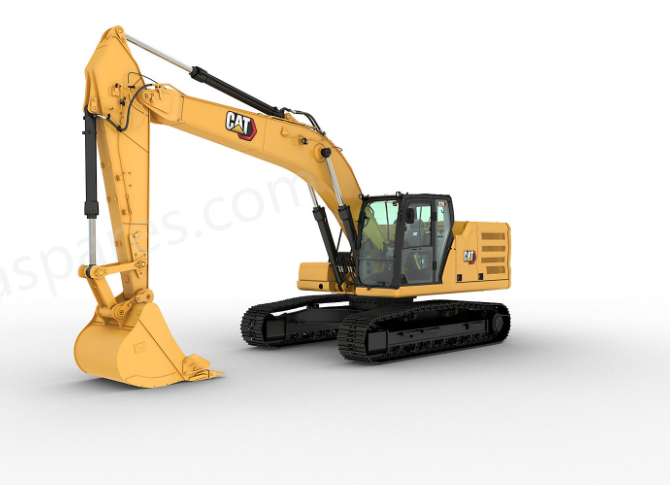
 CAT Excavator 326Premium Performance with Simple-to-Use Technologies
The Cat® 326 Excavator brings premium performance with simple-to-use technologies to boost your operator efficiencies. Combine these features with an ergonomic cab, longer maintenance intervals, and a power system that reduces fuel and you have a low-cost-per-unit-of-production excavator that’s perfect for medium to heavy-duty applications. CAT Excavator 324Heavy-Duty Muscle Built to Outperform
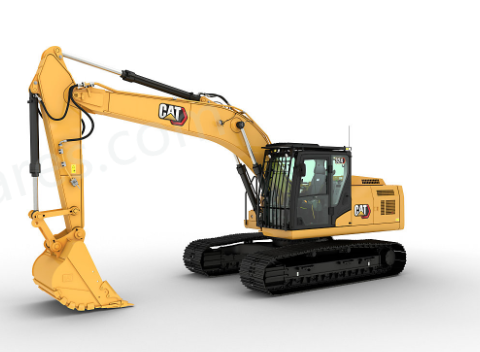
The Cat® 324 excavator is built to handle high-production workloads with the perfect balance of brute strength and refined control. Its powerful Cat® C7.1 engine, high-flow hydraulics, and advanced electrohydraulic system give you the muscle to move heavy material fast, without burning through your budget. With reinforced structures, field-proven durability, and easy-to-maintain components, the 324 is your go-to solution for tackling tough jobs with less downtime. CAT Excavator 322Profit-Driven Powerhouse for Heavy Loads
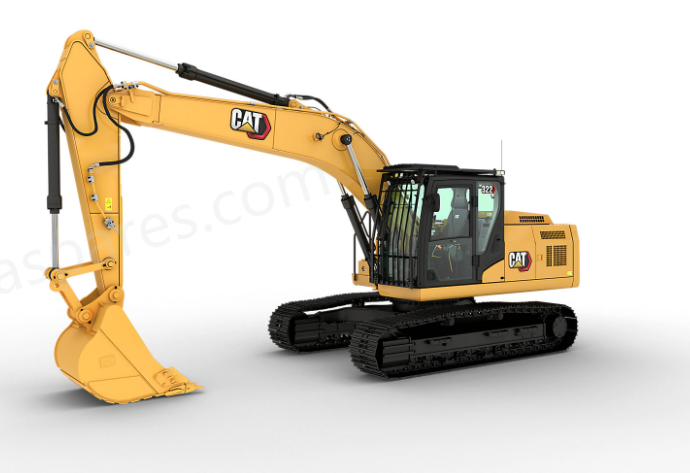
When you need muscle, precision, and cost control in one machine, the Cat® 322 excavator delivers. Purpose-built for high production, the 322 pairs fast cycle times with large bucket options to move more material in fewer passes. Its responsive electrohydraulic controls and rugged design keep you productive on the tough jobs, while smart fuel efficiency and streamlined maintenance help you stay profitable every step of the way. Whether you’re loading, trenching, or lifting, the 322 is a heavy-duty workhorse that pays you back. CAT Excavator 321Versatility at the Lowest Cost Per Hour
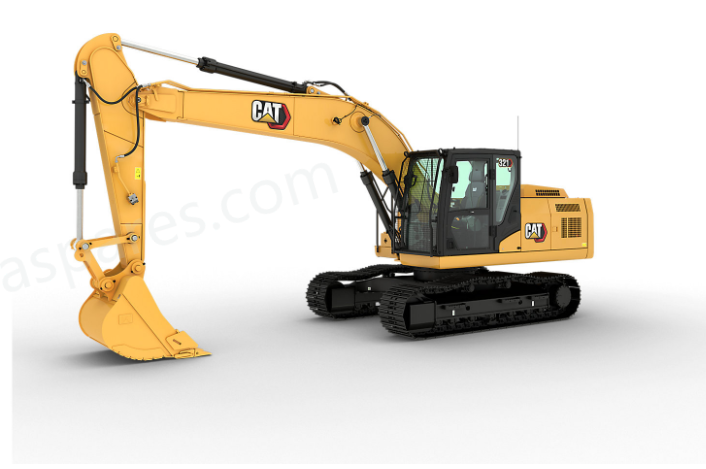
Powered by the reliable Cat® C3.6 engine, the Cat® 321 excavator delivers high torque and fast cycle times to maximize productivity. Reinforced Cat structures extend machine life and withstand the toughest conditions, while the latest cab design puts operator safety and comfort first. Every core system undergoes rigorous testing, so you can count on consistent, reliable performance shift after shift.