-News Center-
How to Avoid Ordering Errors When Sourcing 5224345 Replacement Parts
How to Avoid Ordering Errors When Sourcing 5224345 Replacement Parts
Sourcing the right 5224345 replacement part can be more complicated than it seems, especially for procurement teams managing cost, uptime, and supplier reliability. A small ordering mistake can lead to compatibility issues, delivery delays, and unnecessary expenses. In this guide, we’ll show how buyers can reduce risk, verify part details, and make more accurate purchasing decisions when sourcing construction machinery components.
If you buy construction machinery parts regularly, you already know the expensive mistakes are usually not dramatic. They are small: one digit copied from an old sheet, a supplier quoting by model family instead of exact serial range, or a buyer comparing price without checking what is actually included. That is how a low-cost order becomes a high-cost delay.
Start with the machine identity, not the part number alone
Many buyers search 5224345 and stop there. That is not enough. A part number may look clear on paper, but procurement should still verify the machine brand, equipment model, serial number, and application point on the machine. In heavy equipment, running changes happen. Two machines with the same model name may use different versions of a component depending on production batch or market configuration.
A practical rule: do not release a PO until your internal request includes at least these four items.
- Exact part number requested: 5224345
- Machine model and serial number
- Where the part is installed or used
- Photo of the old part or nameplate if available
That last item saves time more often than people expect. Photos will not replace technical validation, but they often expose obvious mismatches before the order ships.
Check whether 5224345 is the current number, an old number, or a cross-reference
This is where purchasing teams lose money quietly. A quoted 5224345 replacement part may be an original reference, a superseded reference, or a supplier’s internal interchange number. Those are not the same thing.
Ask the supplier one direct question: “Is this quotation based on the exact current OEM number, or a replacement/cross-reference?” If it is a cross-reference, request the basis for interchangeability. If they cannot explain it clearly, treat the quote as higher risk even if the price looks attractive.
This matters even more when you are comparing multiple offers. One vendor may quote the exact part. Another may quote an alternative that fits only certain machines. On a spreadsheet, both lines can look identical.
Do not compare price until you compare scope
A low unit price is often missing something. Packaging standard, sealing kit, hardware, country of origin, lead time, and warranty terms all affect the real purchase cost. If a 5224345 quote is 12% lower but ships three weeks later, causes one installation retry, or comes without supporting documents, it may not be cheaper in any useful sense.
Procurement teams that buy on “headline price” usually end up negotiating the same issue twice: once before payment, and again after the part reaches site.
Use the application context to filter risky substitutes
Some replacements are perfectly acceptable. Some are only acceptable in light-duty conditions. That distinction is often missing from a sales quote. If the 5224345 replacement part works in a hydraulic system, under shock load, or on equipment running long shifts, then material quality and build consistency matter more than they would for a low-stress item.
For example, suppliers offering parts for bulldozer and construction machinery platforms may list compatibility across models such as SD16, SD22, SD32, D65, D80, or D155. That can be useful, but broad model coverage should be treated as a starting point for verification, not proof by itself. One example from the market is SHANTUI SPARE PARTS 16Y-40-11300 GEASE, which is presented for hydraulic system applications across multiple machine references. Listings like that can help buyers identify adjacent part families and platform overlap, but the final purchase still needs exact fit confirmation against the target machine.
Ask for the quote package you actually need
A vague RFQ produces vague offers. When buyers send only “Need 5224345, please quote,” suppliers fill in the blanks themselves. Better suppliers will ask questions. Weaker ones will guess.
A better RFQ package usually includes:
- Required brand level: genuine, OEM-equivalent, or aftermarket
- Target delivery window
- Destination country and shipping preference
- Machine details and part photos
- Whether you need packing list, origin data, or other import documents【待核实 based on destination requirements】
This reduces back-and-forth, but more importantly, it forces suppliers to quote against the same requirement set.
Watch for regional and supplier-side interpretation gaps
In global machinery parts trade, misunderstandings often happen around naming, not intent. One team says “replacement part” and means direct OEM-equivalent. Another hears “any workable substitute.” One buyer expects branded packaging. The supplier expects acceptance of neutral packaging.
Companies with long export experience, including multi-brand suppliers such as TerraMech working across Caterpillar, Komatsu, Volvo, SEM, Shantui, XCMG, SDLG, Weichai, and SDEC platforms, usually understand these gaps better than traders handling mixed inquiries casually. That does not remove the need for verification, but it often improves the quality of the pre-shipment check and part identification process.
One useful habit: ask the supplier to restate your requirement in their own words before order confirmation. If they describe the part, machine, and delivery expectation correctly, the chance of an ordering error drops fast.
Before payment, run one last mismatch check
This takes five minutes and prevents a surprising number of claims.
- Match the quoted 5224345 number against your internal request.
- Confirm machine model and serial range are shown on the order record or email trail.
- Check quantity, unit, currency, and trade term.
- Confirm whether the item is exact replacement, substitute, or cross-reference.
- Ask for final product photos or label photos when the order is high-risk or urgent.
If any one of those is missing, the order is not ready. Simple as that.
The buyers who make fewer mistakes are usually not doing anything fancy. They are just disciplined about verification before the part leaves the warehouse. When sourcing 5224345 replacement parts, accuracy beats speed at the quotation stage, because speed is expensive once the wrong part is in transit. Keep the checks tight, compare offers on full scope, and make suppliers prove compatibility instead of assuming it.
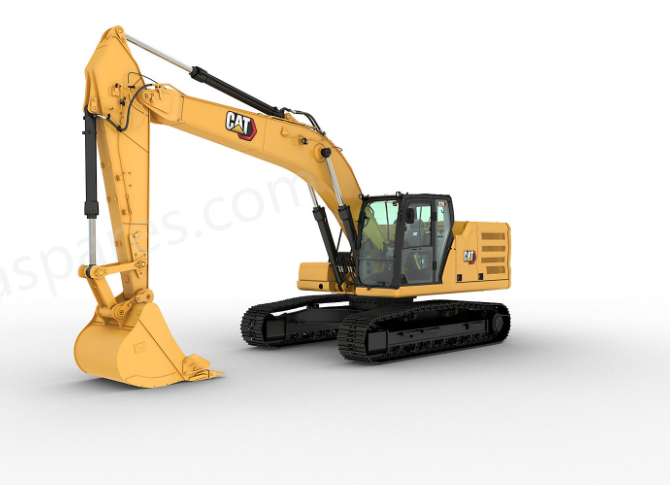
 CAT Excavator 326Premium Performance with Simple-to-Use Technologies
The Cat® 326 Excavator brings premium performance with simple-to-use technologies to boost your operator efficiencies. Combine these features with an ergonomic cab, longer maintenance intervals, and a power system that reduces fuel and you have a low-cost-per-unit-of-production excavator that’s perfect for medium to heavy-duty applications. CAT Excavator 324Heavy-Duty Muscle Built to Outperform
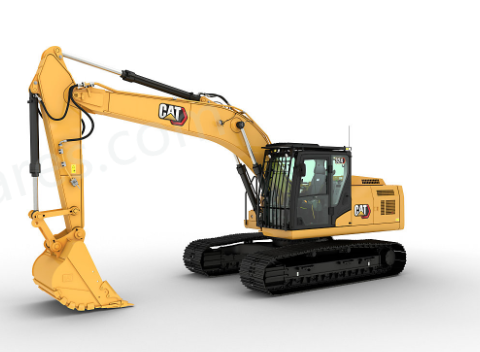
The Cat® 324 excavator is built to handle high-production workloads with the perfect balance of brute strength and refined control. Its powerful Cat® C7.1 engine, high-flow hydraulics, and advanced electrohydraulic system give you the muscle to move heavy material fast, without burning through your budget. With reinforced structures, field-proven durability, and easy-to-maintain components, the 324 is your go-to solution for tackling tough jobs with less downtime. CAT Excavator 322Profit-Driven Powerhouse for Heavy Loads
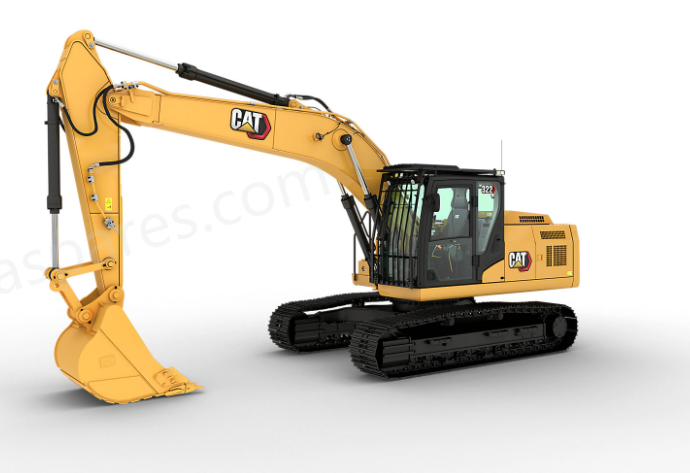
When you need muscle, precision, and cost control in one machine, the Cat® 322 excavator delivers. Purpose-built for high production, the 322 pairs fast cycle times with large bucket options to move more material in fewer passes. Its responsive electrohydraulic controls and rugged design keep you productive on the tough jobs, while smart fuel efficiency and streamlined maintenance help you stay profitable every step of the way. Whether you’re loading, trenching, or lifting, the 322 is a heavy-duty workhorse that pays you back. CAT Excavator 321Versatility at the Lowest Cost Per Hour
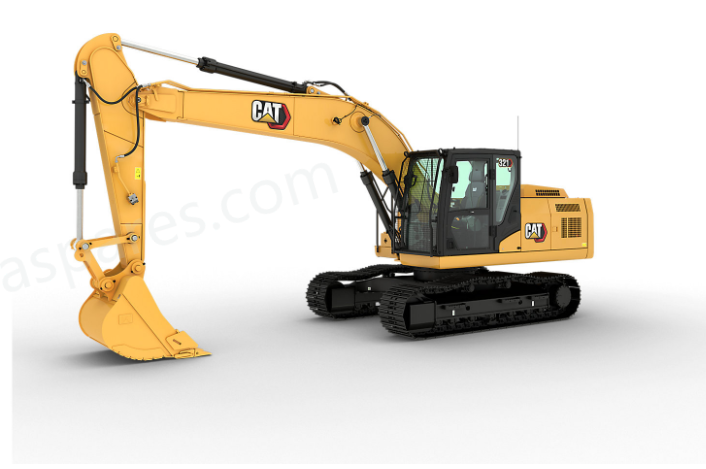
Powered by the reliable Cat® C3.6 engine, the Cat® 321 excavator delivers high torque and fast cycle times to maximize productivity. Reinforced Cat structures extend machine life and withstand the toughest conditions, while the latest cab design puts operator safety and comfort first. Every core system undergoes rigorous testing, so you can count on consistent, reliable performance shift after shift.