-News Center-
5217288 Supplier Evaluation: Which Certifications and Test Reports Matter Most?
Choosing a 5217288 supplier is rarely a simple sourcing exercise. In mechanical parts procurement, the real question is not only whether a component fits, but whether it performs safely, repeatedly, and under load. Certifications and test reports give that answer. They help separate a compliant 5217288 supply chain from one that only looks acceptable on paper.
That matters even more in construction machinery. Parts often work in dust, vibration, heat, shock, and long service cycles. A weak document trail can hide inconsistent materials, unstable tolerances, or poor process control. A strong one supports traceability, maintenance planning, and lower operational risk.
What supplier evaluation should really confirm
A reliable 5217288 evaluation checks three things at once: system control, product conformity, and field suitability. Price can influence the shortlist, but documents decide whether a supplier deserves approval.
System control shows whether production is managed consistently. Product conformity confirms that the delivered part matches drawings, material requirements, and performance targets. Field suitability proves the part can survive actual working conditions.
For companies handling branded machinery and replacement components, this layered review is standard practice. TerraMech, with long experience across Caterpillar, Komatsu, Volvo, SEM, Shantui, XCMG, SDLG, Weichai, and SDEC product lines, operates in a market where documentation quality directly influences trust.
The certifications that deserve early attention
Not every certificate carries the same weight. Some prove a management framework exists. Others are closer to real product risk. In a 5217288 supplier review, the following usually matter most.
Quality management certification
ISO 9001 is often the first checkpoint. It does not guarantee a perfect 5217288 part, but it shows that corrective action, document control, inspection flow, and nonconformance handling are defined.
If the supplier produces high-volume mechanical parts, review whether the certificate scope actually covers machining, assembly, casting, or remanufacturing. A certificate outside the real process scope is a warning sign.
Environmental and safety certifications
ISO 14001 and ISO 45001 are not always mandatory for 5217288 sourcing, yet they can reveal operational maturity. Suppliers with structured environmental and occupational safety controls often maintain better shop discipline and lower process variability.
Brand or market-specific compliance records
Some mechanical parts require proof of alignment with OEM drawings, regional import rules, or restricted substance expectations. Depending on destination market, RoHS, REACH declarations, or country-specific conformity documents may become necessary.
Which test reports carry the most decision value
Certificates show structure. Test reports show evidence. For 5217288, the most useful reports are those tied to material integrity, dimensional accuracy, and durability under stress.
Usually, the best report set includes traceable batch data, test date, equipment reference, acceptance criteria, and inspector signoff. Reports without these details are difficult to trust during a 5217288 audit.
How documents connect to actual machinery use
Mechanical parts are not judged in isolation. Their documentation must make sense in the application. A steering, drivetrain, or hydraulic component faces load variation, contamination, and repeated motion. That is why performance reports often matter as much as factory certificates.
For example, when reviewing wheel loader parts, a steering pump must do more than match a part number. It should demonstrate stable flow behavior, resistance to impact loads, and compatibility with frequent directional changes.
A good reference point is 5227802 STEERING PUMP SEM655D SEM656D SEM660D WHEEL LOADER PARTS. In this type of application, documentation should support fitment across models such as SEM650B, 652D, 655D, 656D, 658D, and ZL50F-Ⅱ, while also confirming durability for demanding drivetrain and steering duties.
That context helps a 5217288 review move beyond paperwork. It shifts the focus to whether the supplier understands the operating environment and validates the component accordingly.
Common gaps that increase sourcing risk
Several warning signs appear repeatedly in 5217288 supplier screening:
- Certificates are valid, but the production site on the document does not match the actual factory.
- Test reports look complete, yet no batch number links them to shipped goods.
- Inspection only covers dimensions, while material and endurance checks are missing.
- Reports are outdated and do not reflect current tooling, process changes, or revised drawings.
- The supplier cannot explain rejection criteria or corrective action history.
These gaps do not always mean the 5217288 part is poor. They do mean the evidence is weak, and weak evidence raises approval risk.
A practical review approach for better decisions
A useful method is to rate suppliers in layers. Start with certificate validity. Then review sample test reports. After that, verify traceability on recent production batches. Finally, compare the documents against actual application loads and maintenance expectations.
If two suppliers offer similar 5217288 pricing, the stronger choice is usually the one with cleaner traceability, more relevant functional testing, and faster response to technical clarification. That combination tends to reduce field failures and dispute costs later.
Where the application involves critical steering or power transmission functions, asking for one more level of evidence is reasonable. That may include first article inspection, endurance testing, or a limited pilot order with incoming verification.
The next step is straightforward: define the operating conditions of 5217288, list the mandatory certificates, identify the must-have test reports, and compare suppliers against those same criteria. A structured document review will often reveal more than a low quotation ever can.
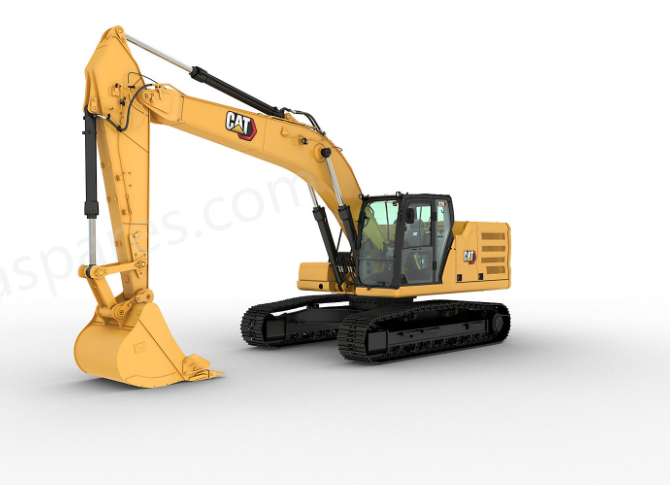
 CAT Excavator 326Premium Performance with Simple-to-Use Technologies
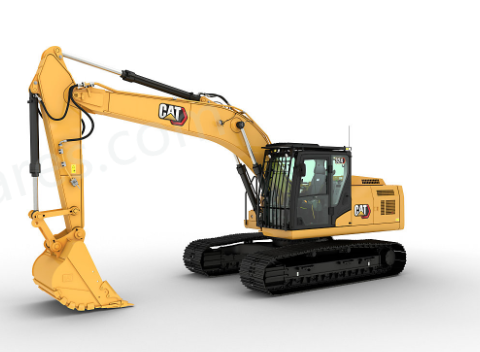
The Cat® 326 Excavator brings premium performance with simple-to-use technologies to boost your operator efficiencies. Combine these features with an ergonomic cab, longer maintenance intervals, and a power system that reduces fuel and you have a low-cost-per-unit-of-production excavator that’s perfect for medium to heavy-duty applications. CAT Excavator 324Heavy-Duty Muscle Built to Outperform
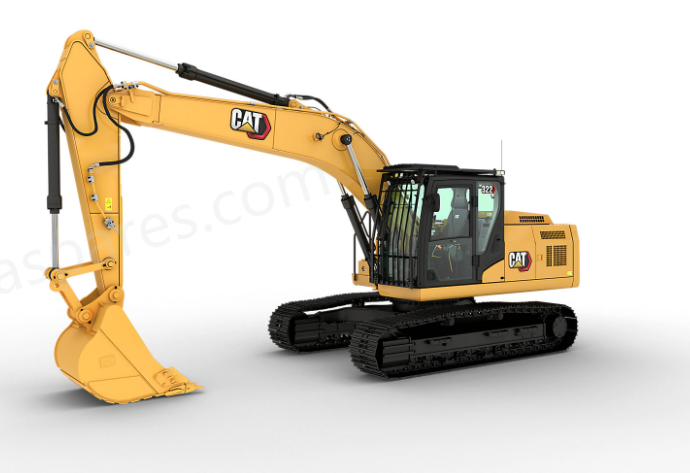
The Cat® 324 excavator is built to handle high-production workloads with the perfect balance of brute strength and refined control. Its powerful Cat® C7.1 engine, high-flow hydraulics, and advanced electrohydraulic system give you the muscle to move heavy material fast, without burning through your budget. With reinforced structures, field-proven durability, and easy-to-maintain components, the 324 is your go-to solution for tackling tough jobs with less downtime. CAT Excavator 322Profit-Driven Powerhouse for Heavy Loads
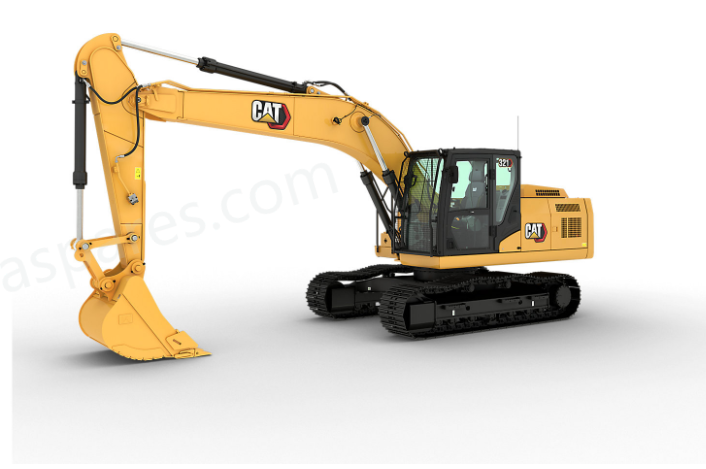
When you need muscle, precision, and cost control in one machine, the Cat® 322 excavator delivers. Purpose-built for high production, the 322 pairs fast cycle times with large bucket options to move more material in fewer passes. Its responsive electrohydraulic controls and rugged design keep you productive on the tough jobs, while smart fuel efficiency and streamlined maintenance help you stay profitable every step of the way. Whether you’re loading, trenching, or lifting, the 322 is a heavy-duty workhorse that pays you back. CAT Excavator 321Versatility at the Lowest Cost Per Hour
Powered by the reliable Cat® C3.6 engine, the Cat® 321 excavator delivers high torque and fast cycle times to maximize productivity. Reinforced Cat structures extend machine life and withstand the toughest conditions, while the latest cab design puts operator safety and comfort first. Every core system undergoes rigorous testing, so you can count on consistent, reliable performance shift after shift.