-News Center-
Shantui Spare Parts: How to Compare OEM and Aftermarket Options for Uptime
Shantui Spare Parts: How to Compare OEM and Aftermarket Options for Uptime
Choosing the right Shantui spare parts can directly affect machine uptime, maintenance costs, and procurement risk.
When OEM and aftermarket choices look similar on paper, the real difference appears in service life, fit accuracy, and supply stability.
For procurement decisions, the goal is not simply to buy cheaper parts.
The stronger approach is to compare total operating impact, then match each part category to the right sourcing strategy.
Why Shantui Spare Parts Selection Matters
Shantui machines often work in demanding conditions, including earthmoving, roadbuilding, quarry work, and mixed fleet operations.
In these environments, part failure rarely stays limited to one component.
A low-cost seal, roller, filter, or undercarriage item can trigger larger downtime, labor cost, or secondary equipment damage.
That is why Shantui spare parts should be evaluated through uptime risk, not unit price alone.
The Core Comparison Framework
A practical comparison usually comes down to four points:
- Quality consistency across batches
- Availability and lead time
- Performance under actual load and duty cycles
- Total cost over the maintenance interval
This framework keeps sourcing decisions grounded in operational outcomes.
OEM Shantui Spare Parts: Where They Usually Win
OEM Shantui spare parts are typically chosen for fit precision, warranty confidence, and predictable material standards.
This matters most for engine systems, hydraulic assemblies, electronic controls, and safety-related components.
OEM parts also reduce technical uncertainty when maintenance teams need a straightforward replacement path.
For critical machines with high daily revenue impact, that predictability often justifies the premium.
Common OEM Advantages
- Lower compatibility risk
- Clearer traceability and documentation
- More stable quality across repeated orders
- Better support for warranty-sensitive repairs
The tradeoff is usually higher purchase cost and, in some regions, longer supply cycles.
Aftermarket Shantui Spare Parts: Where They Make Sense
Aftermarket Shantui spare parts can create strong value when the supplier has proven manufacturing control and export experience.
They are often used for wear parts, routine service items, and selected chassis or undercarriage components.
In cost-focused procurement, aftermarket options become attractive when they deliver acceptable life at a meaningfully lower price.
The key issue is variation. Good aftermarket parts can perform well, but weak sourcing controls quickly erase the savings.
Questions to Ask an Aftermarket Supplier
- Are materials, tolerances, and production standards documented?
- Is there batch consistency across repeat orders?
- Can the supplier support urgent replenishment?
- Is the part already validated in similar operating conditions?
Without these checks, aftermarket Shantui spare parts become a price gamble rather than a procurement strategy.
How to Compare Cost Beyond the Price Tag
The purchase price is only one line in the real cost equation.
A better method is to compare the cost per operating hour, expected replacement interval, and downtime exposure.
This kind of side-by-side review makes Shantui spare parts easier to rank by business impact.
It also helps avoid false savings created by premature failure or unstable delivery.
Part Categories Should Not Be Treated the Same
One common sourcing mistake is applying a single rule to every replacement item.
In practice, different categories of Shantui spare parts need different buying logic.
- Use OEM first for hydraulic, engine, and control-system parts.
- Evaluate aftermarket carefully for rollers, filters, selected seals, and wear items.
- For undercarriage parts, compare hardness, weld quality, fatigue resistance, and field history.
This is where supplier capability becomes more visible.
For example, some buyers reviewing chassis-related alternatives also look at adjacent product lines such as 5183479 SEM MACHINERY BULLDOZER ROLLER TTT SEM SPARE PARTS.
That product supports SEM816 and SEM816D applications in underground chassis parts.
Its published features highlight robust construction, low-stress weld seam placement, and dependable tool compatibility.
Those are exactly the details worth checking when comparing wear-related Shantui spare parts from non-OEM channels.
Supplier Evaluation Is as Important as Part Evaluation
Even strong products fail procurement review when supplier execution is weak.
For Shantui spare parts, supplier assessment should include technical depth, response speed, and export handling capability.
TerraMech brings more than two decades of engineering machinery experience across branded equipment and replacement components.
Its portfolio covers global brands including Caterpillar, Komatsu, Volvo, SEM, Shantui, XCMG, SDLG, Weichai, and SDEC.
That breadth matters because mixed-fleet buyers often need one supplier that understands both part quality and cross-brand sourcing efficiency.
A Useful Supplier Checklist
- Request specifications, material details, and fitment confirmation.
- Check repeat-order stability, not just one sample batch.
- Ask about lead time, stock planning, and urgent shipment support.
- Review warranty handling and claim response process.
A Practical Buying Strategy for Better Uptime
The most effective strategy is usually hybrid sourcing.
Reserve OEM Shantui spare parts for high-risk systems where failure cost is unacceptable.
Use validated aftermarket options where wear is predictable and supplier quality is proven.
Build decisions around failure consequences, replacement frequency, and supply continuity.
That approach improves uptime while keeping maintenance budgets under control.
When evaluating Shantui spare parts, the best question is simple: which option reduces operational risk at the lowest realistic total cost?
Start with your critical part categories, compare suppliers with evidence, and let uptime drive the final purchasing decision.
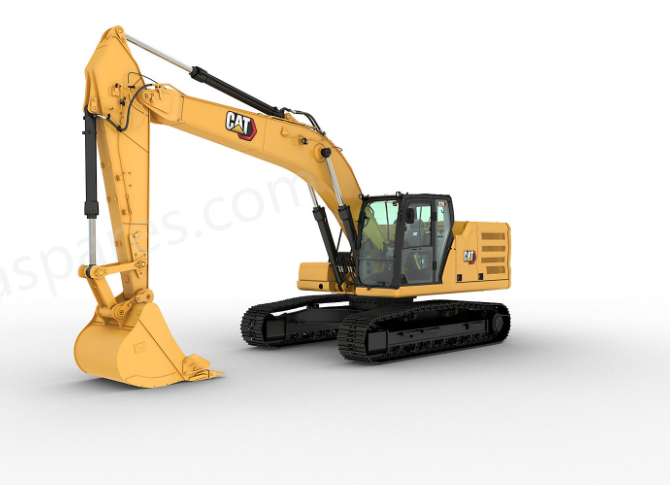
 CAT Excavator 326Premium Performance with Simple-to-Use Technologies
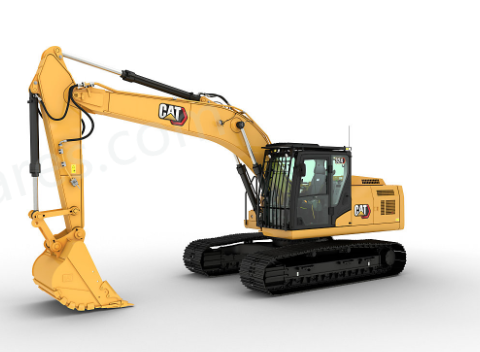
The Cat® 326 Excavator brings premium performance with simple-to-use technologies to boost your operator efficiencies. Combine these features with an ergonomic cab, longer maintenance intervals, and a power system that reduces fuel and you have a low-cost-per-unit-of-production excavator that’s perfect for medium to heavy-duty applications. CAT Excavator 324Heavy-Duty Muscle Built to Outperform
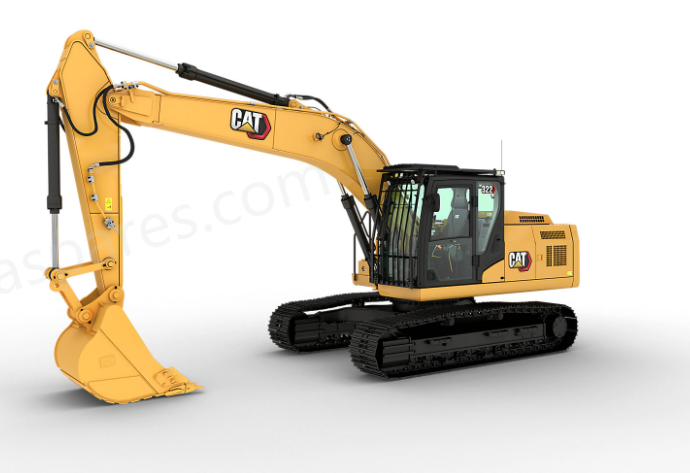
The Cat® 324 excavator is built to handle high-production workloads with the perfect balance of brute strength and refined control. Its powerful Cat® C7.1 engine, high-flow hydraulics, and advanced electrohydraulic system give you the muscle to move heavy material fast, without burning through your budget. With reinforced structures, field-proven durability, and easy-to-maintain components, the 324 is your go-to solution for tackling tough jobs with less downtime. CAT Excavator 322Profit-Driven Powerhouse for Heavy Loads
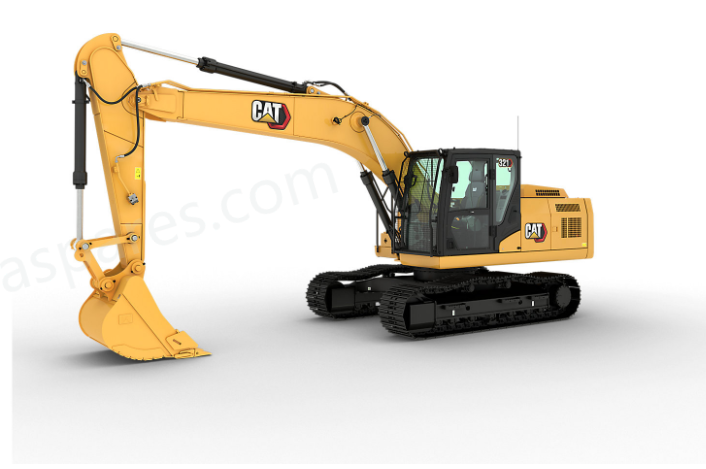
When you need muscle, precision, and cost control in one machine, the Cat® 322 excavator delivers. Purpose-built for high production, the 322 pairs fast cycle times with large bucket options to move more material in fewer passes. Its responsive electrohydraulic controls and rugged design keep you productive on the tough jobs, while smart fuel efficiency and streamlined maintenance help you stay profitable every step of the way. Whether you’re loading, trenching, or lifting, the 322 is a heavy-duty workhorse that pays you back. CAT Excavator 321Versatility at the Lowest Cost Per Hour
Powered by the reliable Cat® C3.6 engine, the Cat® 321 excavator delivers high torque and fast cycle times to maximize productivity. Reinforced Cat structures extend machine life and withstand the toughest conditions, while the latest cab design puts operator safety and comfort first. Every core system undergoes rigorous testing, so you can count on consistent, reliable performance shift after shift.