-News Center-
GPC Executives' Concentrated Stock Sales Signal Potential Q2 Inventory Adjustments
On May 1–3, 2026, executives and directors of Genuine Parts Company (GPC), a leading North American distributor of automotive and industrial replacement parts, executed eight concentrated stock sales—disclosed on May 6—totaling over $1.3 million. This activity coincides with the early phase of the Northern Hemisphere’s summer stocking period and may influence procurement timing, order sizing, and lead-time planning for overseas distributors sourcing auto parts from China—particularly those active in the automotive aftermarket and industrial MRO segments.
Event Overview
On May 6, 2026, Genuine Parts Company (GPC), a publicly traded U.S. company (NYSE: GPC), filed SEC Form 4 disclosures reporting eight separate sell transactions by officers and directors. All transactions occurred between May 1 and May 3, 2026. The total proceeds exceeded $1.3 million. No accompanying statements regarding rationale, future outlook, or operational changes were included in the filings.
Industries Affected
Direct Exporters to North America
Companies exporting automotive replacement parts—including brake components, filters, bearings, and electrical connectors—to GPC’s distribution network may face revised order patterns in late Q2 and early Q3. GPC’s internal trading activity is historically monitored by channel partners as an informal indicator of near-term inventory absorption capacity and demand visibility.
Contract Manufacturers Serving Tier-2/Tier-3 Suppliers
Manufacturers producing under private label or OEM-sourced specifications for North American aftermarket brands may observe shifts in release schedules or batch size requests from their U.S.-based intermediaries. Such adjustments often follow upstream inventory recalibration at major distributors like GPC.
Distribution & Channel Partners in China
Chinese-based export-oriented distributors managing multi-brand portfolios for North American clients may need to reassess forecast alignment and buffer stock levels. GPC’s actions could prompt secondary ripple effects across regional sub-distributors and e-commerce fulfillment hubs serving cross-border B2B platforms.
Logistics & Trade Compliance Service Providers
Firms offering customs brokerage, bonded warehousing, or shipment consolidation services for China–U.S. auto parts trade may see volatility in booking volume or documentation turnaround expectations during June–July, especially for air-freighted or expedited ocean LCL shipments tied to seasonal replenishment cycles.
What Stakeholders Should Monitor and Do Now
Track GPC’s upcoming earnings call and Q1 2026 financial commentary
The company’s scheduled Q1 earnings release (expected mid-May 2026) and subsequent investor call may include forward-looking remarks on inventory turns, end-market demand trends, and regional replenishment cadence—providing context to interpret the insider sales.
Review open purchase orders and delivery commitments for Q2–Q3 2026
Exporters and manufacturers should audit current order books with GPC-affiliated buyers—including subsidiaries such as NAPA Auto Parts and Motion Industries—to identify any recent downward revisions in volume forecasts or shipping windows.
Differentiate between signal and execution
While insider sales are often viewed as sentiment indicators, they do not constitute official guidance. Stakeholders should avoid overreacting to the transaction data alone and instead treat it as one input among broader demand signals—including U.S. light vehicle SAAR data, industrial PMI readings, and port import statistics.
Prepare contingency plans for mid-June production and shipping adjustments
Given the timing—occurring just before peak summer ordering—manufacturers and logistics providers may consider reviewing capacity buffers, raw material safety stock, and carrier contract terms to accommodate potential acceleration or deferral of shipments beginning in mid-June.
Editorial Observation / Industry Perspective
Observably, this series of insider transactions is best understood as a potential early signal—not a confirmed outcome—of inventory normalization ahead of the traditional summer restocking cycle. Analysis shows that GPC’s internal trading behavior has historically preceded shifts in its quarterly inventory-to-sales ratio by 4–8 weeks. From an industry perspective, the relevance lies less in the dollar amount sold and more in the concentration (eight trades within three days) and timing (immediately prior to Q2’s critical ordering window). Current monitoring remains warranted, but no structural change in North American demand or supply chain posture can be inferred solely from these filings.
Concluding, this event reflects a procedural market signal rather than an operational inflection point. It underscores how insider trading disclosures—though non-binding and individually motivated—can serve as one observable proxy for downstream inventory positioning among key North American distribution channels. Stakeholders are advised to integrate this information into broader demand sensing frameworks, rather than act on it in isolation.
Source: U.S. Securities and Exchange Commission (SEC) Form 4 filings for Genuine Parts Company (GPC), published May 6, 2026. Note: Further interpretation depends on forthcoming Q1 2026 earnings disclosures and related management commentary, which remain pending as of publication.
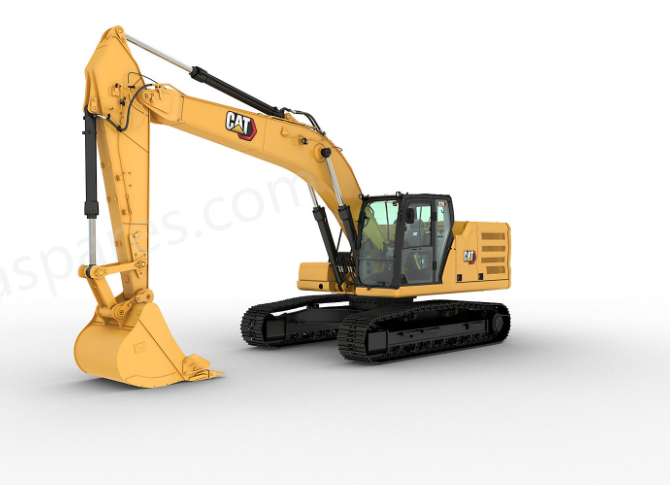
 CAT Excavator 326Premium Performance with Simple-to-Use Technologies
The Cat® 326 Excavator brings premium performance with simple-to-use technologies to boost your operator efficiencies. Combine these features with an ergonomic cab, longer maintenance intervals, and a power system that reduces fuel and you have a low-cost-per-unit-of-production excavator that’s perfect for medium to heavy-duty applications. CAT Excavator 324Heavy-Duty Muscle Built to Outperform
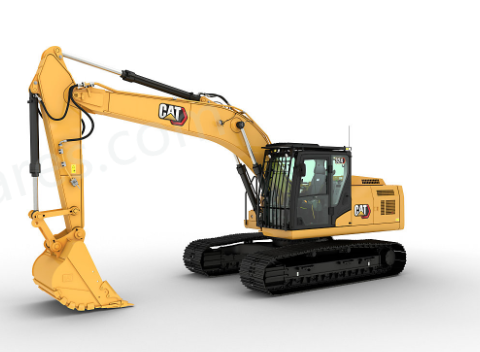
The Cat® 324 excavator is built to handle high-production workloads with the perfect balance of brute strength and refined control. Its powerful Cat® C7.1 engine, high-flow hydraulics, and advanced electrohydraulic system give you the muscle to move heavy material fast, without burning through your budget. With reinforced structures, field-proven durability, and easy-to-maintain components, the 324 is your go-to solution for tackling tough jobs with less downtime. CAT Excavator 322Profit-Driven Powerhouse for Heavy Loads
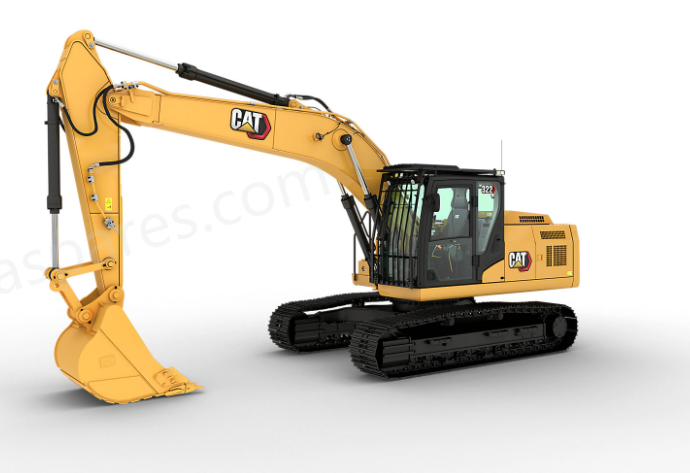
When you need muscle, precision, and cost control in one machine, the Cat® 322 excavator delivers. Purpose-built for high production, the 322 pairs fast cycle times with large bucket options to move more material in fewer passes. Its responsive electrohydraulic controls and rugged design keep you productive on the tough jobs, while smart fuel efficiency and streamlined maintenance help you stay profitable every step of the way. Whether you’re loading, trenching, or lifting, the 322 is a heavy-duty workhorse that pays you back. CAT Excavator 321Versatility at the Lowest Cost Per Hour
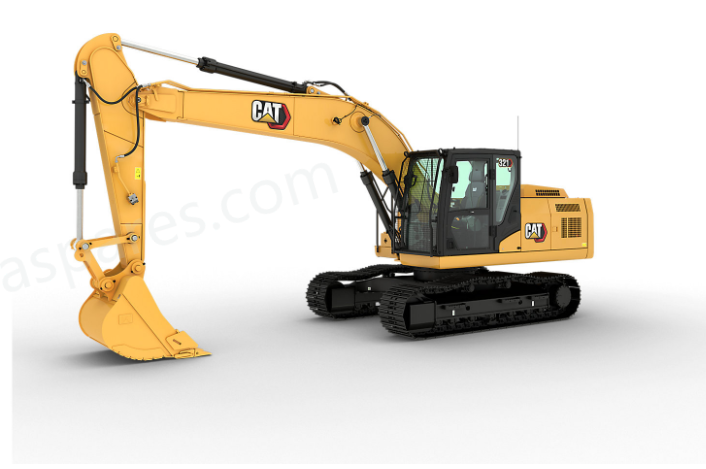
Powered by the reliable Cat® C3.6 engine, the Cat® 321 excavator delivers high torque and fast cycle times to maximize productivity. Reinforced Cat structures extend machine life and withstand the toughest conditions, while the latest cab design puts operator safety and comfort first. Every core system undergoes rigorous testing, so you can count on consistent, reliable performance shift after shift.