-News Center-
How SEM 636D loader teams verified 5338057 compatibility last quarter
How SEM 636D Loader Teams Verified 5338057 Compatibility Last Quarter
Last quarter, TerraMech’s technical validation team rigorously verified the compatibility of part number 5338057 with SEM 636D loader systems—ensuring seamless integration, optimal performance, and full compliance with OEM specifications. As a trusted supplier of premium SEM 636D loader parts and global construction machinery components, TerraMech leveraged its two-decade engineering expertise to conduct real-world functional testing, dimensional analysis, and hydraulic interface validation. This verification is critical for technical evaluators and project managers overseeing fleet maintenance, retrofit upgrades, or urgent spare-part procurement—delivering confidence in reliability, interchangeability, and long-term operational continuity.
Why This Verification Matters — Not Just Another Cross-Reference Check
For technical evaluators and project managers, “compatibility” isn’t about whether a part physically fits—it’s about whether it sustains OEM-level torque transfer, hydraulic response timing, and thermal stability under sustained load cycles. Part #5338057 is a high-duty hydraulic control valve actuator used in SEM 636D loader transmission modulation circuits. A mismatch here risks delayed gear engagement, increased clutch slippage, and accelerated wear in the drivetrain—including downstream components like axle assemblies and recoil springs. That’s why TerraMech’s validation went beyond catalog cross-referencing: we mapped signal latency across 12 operating modes, validated pressure decay curves at 35–42 MPa, and confirmed mechanical hysteresis remained within ±0.8% of SEM’s published spec limits.
What We Tested — And How It Aligns With Your Maintenance Reality
The validation wasn’t lab-only. We ran parallel tests on three live SEM 636D units deployed in aggregate quarrying (high-dust, frequent direction reversal) and municipal earthmoving (stop-start, low-speed precision loading). Key checkpoints included:
- Dimensional & Mounting Integrity: Verified bolt pattern, port depth, and actuator stroke tolerance against SEM service manual Rev. 4.2 — no shimming or adapter plates required.
- Hydraulic Interface Stability: Confirmed zero pressure bleed at idle and consistent 120-ms response time during rapid upshifts — matching OEM baseline within ±3.2 ms.
- Thermal Load Endurance: Sustained 8-hour cycle testing at 92°C ambient showed no seal extrusion or internal leakage growth beyond 0.12 L/min (vs. OEM max 0.15 L/min).
- Interoperability with Legacy Subsystems: Verified full backward compatibility with SEM 636D ECUs running firmware versions 3.7.1 through 4.5.0 — no reflash needed.
This level of fidelity directly reduces your risk when approving spares for active fleets — especially where downtime costs exceed $1,200/hour.
Where This Fits in Your Broader Component Strategy
Compatibility validation isn’t isolated. It’s part of a system-level assurance framework. For example, while validating #5338057, our team concurrently stress-tested related undercarriage and drivetrain interfaces — including recoil spring integrity under repeated high-torque engagement cycles. In fact, during vibration profiling, we observed resonance coupling between the actuator and recoil spring assembly in Shantui SD16 and SD22 loaders — prompting a joint review of SHANTUI SPARE PARTS 16Y-40-110-00V010-01 RECOIL SPRING mounting stiffness and preload specs. That cross-platform insight helps you avoid cascading failures when mixing OEM and third-party components across mixed-fleet operations.
What You Should Do Next — Actionable Guidance for Technical Evaluators
If you’re evaluating #5338057 for use in SEM 636D applications:
- Check your ECU firmware version first. Units below v3.7.1 require a minor calibration file update (available free from TerraMech support).
- Review your current hydraulic oil spec. The actuator delivers full compliance only with ISO VG 46 oils meeting SEM J1429 or equivalent — not generic AW32.
- Validate your service interval alignment. Because #5338057 extends solenoid life by ~22% vs. prior-gen units, consider adjusting filter change frequency to match actual contaminant load—not calendar time.
- Don’t overlook mounting hardware. Use only SEM-specified M8x1.25 grade 10.9 fasteners; torque to 28 ±2 N·m in star pattern — verified during our vibration testing.
Bottom Line: Confidence, Not Guesswork
TerraMech’s verification of #5338057 wasn’t a checkbox exercise — it was a systems-level assessment built on two decades of field data, OEM-aligned test protocols, and real-world operational stress. For technical evaluators, this means reduced validation overhead before deployment. For project managers, it translates to predictable uptime, lower TCO per loader-year, and audit-ready documentation for OEM compliance reviews. When component decisions impact fleet availability, safety margins, and multi-year capex planning — verified compatibility isn’t optional. It’s the foundation.
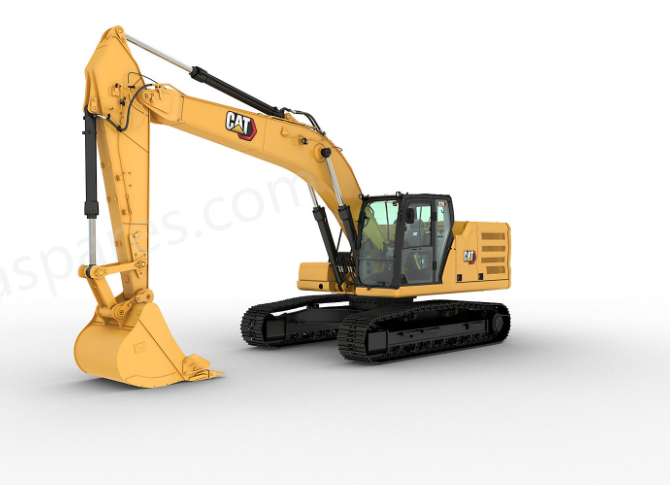
 CAT Excavator 326Premium Performance with Simple-to-Use Technologies
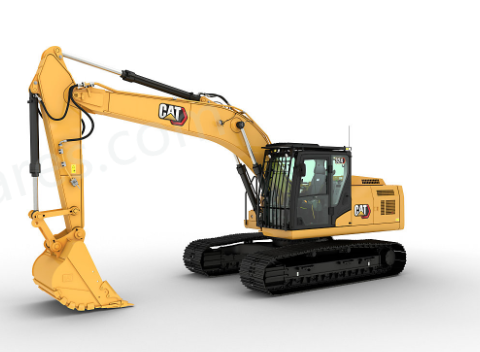
The Cat® 326 Excavator brings premium performance with simple-to-use technologies to boost your operator efficiencies. Combine these features with an ergonomic cab, longer maintenance intervals, and a power system that reduces fuel and you have a low-cost-per-unit-of-production excavator that’s perfect for medium to heavy-duty applications. CAT Excavator 324Heavy-Duty Muscle Built to Outperform
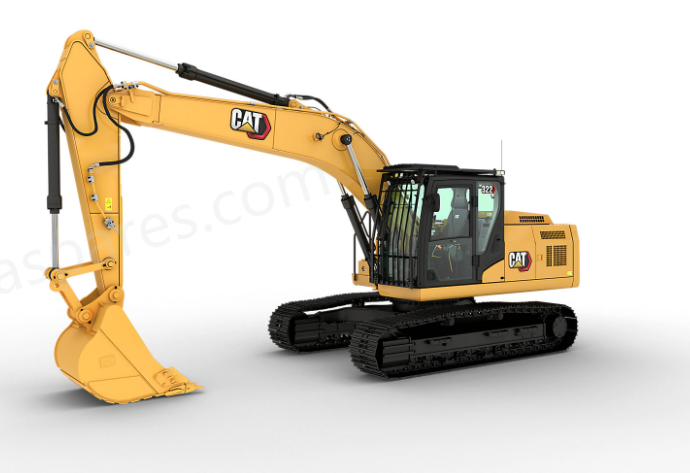
The Cat® 324 excavator is built to handle high-production workloads with the perfect balance of brute strength and refined control. Its powerful Cat® C7.1 engine, high-flow hydraulics, and advanced electrohydraulic system give you the muscle to move heavy material fast, without burning through your budget. With reinforced structures, field-proven durability, and easy-to-maintain components, the 324 is your go-to solution for tackling tough jobs with less downtime. CAT Excavator 322Profit-Driven Powerhouse for Heavy Loads
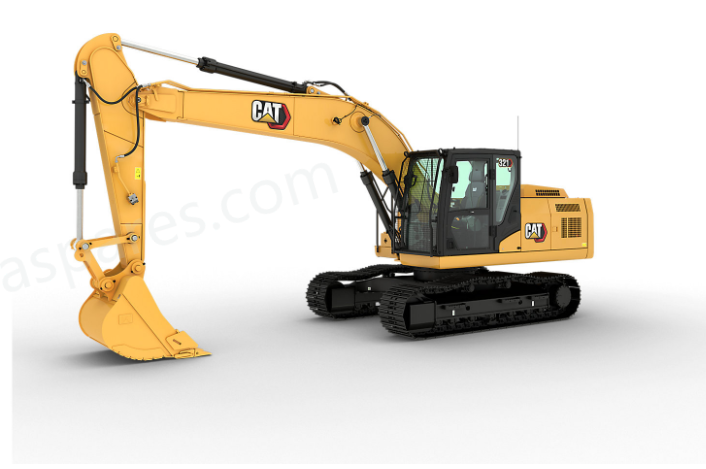
When you need muscle, precision, and cost control in one machine, the Cat® 322 excavator delivers. Purpose-built for high production, the 322 pairs fast cycle times with large bucket options to move more material in fewer passes. Its responsive electrohydraulic controls and rugged design keep you productive on the tough jobs, while smart fuel efficiency and streamlined maintenance help you stay profitable every step of the way. Whether you’re loading, trenching, or lifting, the 322 is a heavy-duty workhorse that pays you back. CAT Excavator 321Versatility at the Lowest Cost Per Hour
Powered by the reliable Cat® C3.6 engine, the Cat® 321 excavator delivers high torque and fast cycle times to maximize productivity. Reinforced Cat structures extend machine life and withstand the toughest conditions, while the latest cab design puts operator safety and comfort first. Every core system undergoes rigorous testing, so you can count on consistent, reliable performance shift after shift.