-News Center-
EU Mandates EN 15804+EPD for Mechanical Parts Exported to Construction Projects
Starting 1 May 2026, exporters of mechanical components—including transmission parts, fasteners, hydraulic manifold blocks, and gear housing units—intended for use in EU building or infrastructure projects must provide verified Environmental Product Declarations (EPDs) compliant with EN 15804:2019+A2:2023. This requirement directly affects manufacturers, suppliers, and importers engaged in the construction-related mechanical supply chain.
Event Overview
The European Commission officially published the Implementation Rules for the Revised Construction Products Regulation (CPR) on 18 April 2026. The regulation stipulates that, effective 1 May 2026, all mechanical structural components supplied into EU construction or infrastructure projects must be accompanied by a third-party-verified EPD conforming to EN 15804:2019+A2:2023. Compliance is now a mandatory prerequisite for CE marking. Importers failing to submit a valid EPD registration number and carbon data summary during customs clearance will be denied entry into the EU Construction Products Database (CPDB), resulting in procurement rejection for affected projects.
Which Subsectors Are Affected
Direct Exporters and Trade Enterprises
Companies exporting mechanical parts to EU construction projects are directly subject to the new CPR compliance gate. Their CE documentation packages must now include EPD verification evidence prior to shipment. Failure to do so may halt customs clearance and invalidate project-level procurement approvals.
Manufacturing and Component Producers
Producers of structural mechanical parts—including gearboxes, valve blocks, and fastener assemblies—must ensure their products undergo EPD development and third-party verification before export. Since EPDs require product-specific life cycle assessment (LCA) data, manufacturers need to align internal data collection (e.g., material inputs, energy use, transport emissions) with EN 15804 methodology requirements.
Supply Chain and Procurement Managers
Procurement teams sourcing mechanical components for EU infrastructure tenders must now verify EPD status at the supplier qualification stage—not just CE conformity. Absence of a valid EPD registration may disqualify bids or trigger contractual non-compliance risks post-award.
Distribution and Channel Partners
Importers, distributors, and authorized representatives acting as ‘economic operators’ under CPR bear joint responsibility for EPD compliance. They must retain and submit EPD documentation during CPDB registration, making them liable for omissions even if the EPD was originally generated by the manufacturer.
What Relevant Enterprises or Practitioners Should Focus On
Monitor official CPR guidance updates from CEN and the European Commission
The CPR revision includes transitional provisions and sector-specific interpretations still being clarified. Current implementation rules reference EN 15804:2019+A2:2023, but further technical guidance—especially regarding scope boundaries for ‘mechanical structural components’—may be issued ahead of May 2026.
Prioritize EPD development for high-volume, high-risk categories
Analysis来看, transmission parts, hydraulic valve blocks, and cast gear housing units are most likely to appear in public infrastructure tenders and face early scrutiny. Companies should prioritize EPD generation for these categories first, especially where standardized LCA data already exists or where common materials (e.g., ductile iron, alloy steel) dominate.
Distinguish between regulatory signal and operational readiness
From industry perspective, the 1 May 2026 date reflects formal enforcement timing—not necessarily full database or customs system readiness. Early adopters may encounter inconsistent application across Member States until CPDB integration stabilizes. Verification timelines with accredited EPD programme operators (e.g., EPD International, Institut Bauen und Umwelt) should therefore include buffer time.
Initiate internal alignment on data ownership and documentation flow
Current more suitable understanding is that EPD responsibility lies with the entity placing the product on the EU market (often the importer or authorized representative). Manufacturers must supply underlying LCA data and product specifications; importers must commission and register the EPD. Cross-border coordination on data sharing, confidentiality, and version control should begin now.
Editorial Observation / Industry Perspective
This requirement is better understood as a procedural hardening of existing sustainability expectations—not a standalone environmental policy shift. It formalizes carbon transparency as an administrative prerequisite for market access, moving beyond voluntary reporting toward enforceable documentation. Observation来看, it signals growing alignment between EU product regulations and broader climate accountability frameworks like CSRD and the upcoming Product Environmental Footprint (PEF) initiative. However, its immediate impact remains constrained to construction-linked mechanical supply chains—not general industrial exports. Industry should track whether similar EPD mandates extend to other CPR-covered sectors (e.g., HVAC components, lifting equipment) in future revisions.
Conclusion
This regulation marks a step toward embedding carbon data into core product compliance workflows for specific mechanical components entering EU construction markets. It does not represent a broad-based carbon tariff or upstream emission cap, but rather a documentation and traceability requirement tied to CE marking and CPDB registration. For affected stakeholders, the priority is operational preparedness—not strategic repositioning—within defined scope boundaries.
Information Source
Main source: European Commission, Implementation Rules for the Revised Construction Products Regulation (CPR), published 18 April 2026. Note: Further technical guidance from CEN/TC 350 and national market surveillance authorities remains pending and requires ongoing observation.
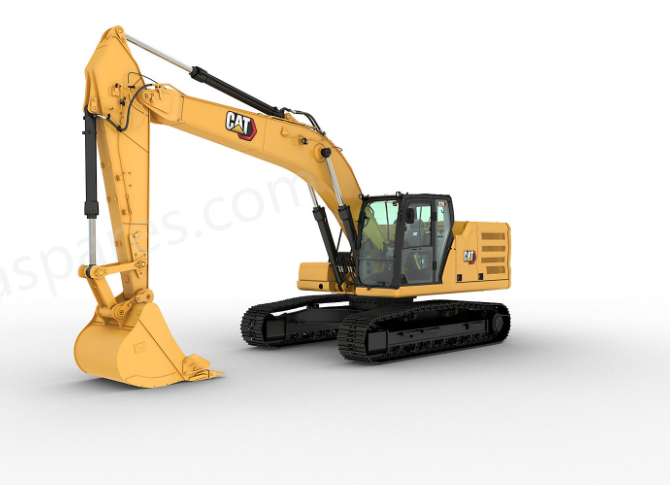
 CAT Excavator 326Premium Performance with Simple-to-Use Technologies
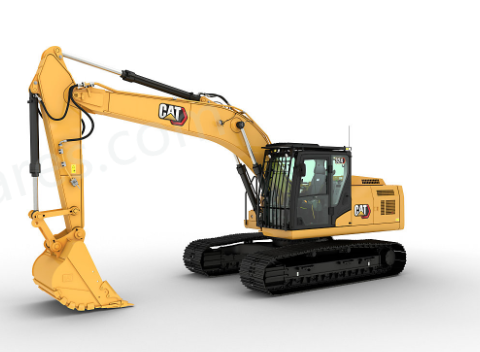
The Cat® 326 Excavator brings premium performance with simple-to-use technologies to boost your operator efficiencies. Combine these features with an ergonomic cab, longer maintenance intervals, and a power system that reduces fuel and you have a low-cost-per-unit-of-production excavator that’s perfect for medium to heavy-duty applications. CAT Excavator 324Heavy-Duty Muscle Built to Outperform
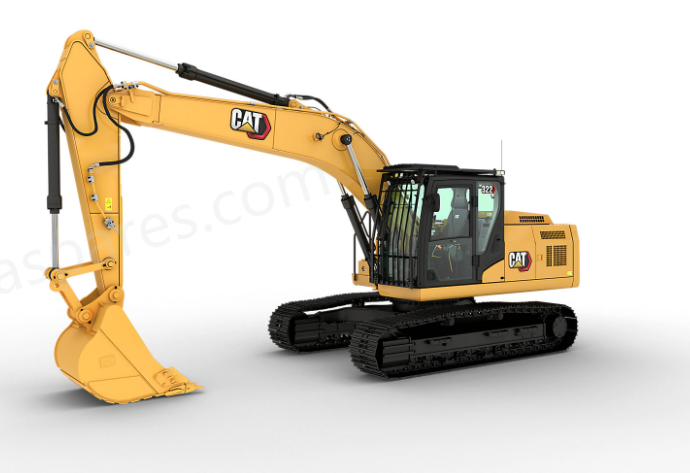
The Cat® 324 excavator is built to handle high-production workloads with the perfect balance of brute strength and refined control. Its powerful Cat® C7.1 engine, high-flow hydraulics, and advanced electrohydraulic system give you the muscle to move heavy material fast, without burning through your budget. With reinforced structures, field-proven durability, and easy-to-maintain components, the 324 is your go-to solution for tackling tough jobs with less downtime. CAT Excavator 322Profit-Driven Powerhouse for Heavy Loads
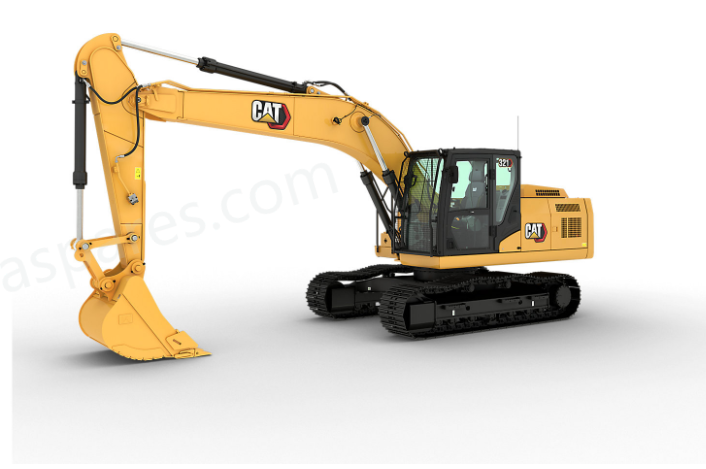
When you need muscle, precision, and cost control in one machine, the Cat® 322 excavator delivers. Purpose-built for high production, the 322 pairs fast cycle times with large bucket options to move more material in fewer passes. Its responsive electrohydraulic controls and rugged design keep you productive on the tough jobs, while smart fuel efficiency and streamlined maintenance help you stay profitable every step of the way. Whether you’re loading, trenching, or lifting, the 322 is a heavy-duty workhorse that pays you back. CAT Excavator 321Versatility at the Lowest Cost Per Hour
Powered by the reliable Cat® C3.6 engine, the Cat® 321 excavator delivers high torque and fast cycle times to maximize productivity. Reinforced Cat structures extend machine life and withstand the toughest conditions, while the latest cab design puts operator safety and comfort first. Every core system undergoes rigorous testing, so you can count on consistent, reliable performance shift after shift.