-News Center-
Shantui Spare Parts vs Aftermarket Options: Key Tradeoffs
Shantui spare parts decisions are shifting from price checks to lifecycle judgment
When evaluating Shantui spare parts against aftermarket alternatives, technical buyers must weigh more than price alone.
Fit accuracy, material consistency, lifecycle cost, equipment uptime, and warranty risk shape the real decision over time.
In heavy machinery parts, a cheaper component can create expensive downtime, accelerated wear, and unstable field performance.
That is why Shantui spare parts are increasingly assessed through total value, not only purchase price.
For construction fleets, earthmoving systems, and undercarriage maintenance, this shift has become more visible across recent replacement cycles.
Market signals show rising scrutiny of compatibility and uptime
The market for bulldozer and undercarriage components is changing under pressure from tighter project schedules and higher machine utilization.
Users now compare Shantui spare parts and aftermarket options with stronger attention to dimensional precision and service predictability.
This is especially true for wear-heavy assemblies such as rollers, idlers, sprockets, seals, and drivetrain-related parts.
Even where aftermarket availability is broader, uncertainty around hardness, heat treatment, and machining tolerance remains a concern.
As a result, Shantui spare parts often retain an advantage in applications where repeatable fit and stable operating life matter most.
Why this trend is gaining momentum
The key tradeoffs between Shantui spare parts and aftermarket options
1. Fit accuracy versus broader sourcing flexibility
Shantui spare parts are designed around original equipment geometry, making installation and alignment more predictable.
Aftermarket parts may offer wider sourcing choices, but dimensional variation can increase adjustment time and contact stress.
2. Material consistency versus lower upfront cost
Original Shantui spare parts usually provide better consistency in metallurgy, surface treatment, and wear resistance.
Some aftermarket components reduce purchase cost, yet service life may vary between batches or operating environments.
3. Warranty protection versus price-driven substitution
Using Shantui spare parts can reduce disputes related to warranty coverage and root-cause responsibility.
Aftermarket substitutions may work well, but they can complicate claims when adjacent assemblies fail unexpectedly.
4. Uptime reliability versus short-term budget relief
In high-load chassis systems, reliable uptime often outweighs the savings from the lowest quote.
This is where durable undercarriage options, including 5439476 6031610 SEM822D SEM816D TRACK ROLLER BULLDOZER PARTS, become relevant for cross-brand maintenance planning.
Impact is spreading across maintenance, inventory, and field performance
The Shantui spare parts decision does not affect only one repair event.
It influences maintenance scheduling, spare stocking logic, labor efficiency, and machine availability across the operating cycle.
- Installation teams face fewer correction steps when tolerances are stable.
- Inventory planning improves when part interchangeability is verified and traceable.
- Failure analysis becomes clearer when component quality history is documented.
- Operating cost models become more accurate when service life is consistent.
For mixed fleets, the issue becomes even more practical.
A supplier with broad brand coverage can help compare original and replacement solutions without losing technical continuity.
TerraMech supports this need with more than twenty years in engineering machinery parts and branded equipment distribution.
What deserves closer attention before choosing Shantui spare parts alternatives
- Check dimensional drawings, tolerance range, and installation references.
- Review hardness, forging or casting method, and heat-treatment consistency.
- Estimate lifecycle cost, not only unit price.
- Assess load profile, terrain condition, and duty cycle severity.
- Confirm warranty implications for linked assemblies.
- Verify supply continuity for future replacements and batch matching.
These checks help determine when Shantui spare parts are the safer option and when qualified aftermarket parts may be acceptable.
A practical framework for the next replacement cycle
This framework is useful when comparing Shantui spare parts with alternatives for bulldozer repairs and heavy chassis maintenance.
It also supports evaluation of related solutions, such as 510, 560, 560-42, and 950 specification rollers used in demanding undercarriage environments.
A smarter decision starts with verified data and reliable support
The real tradeoff between Shantui spare parts and aftermarket options is not original versus non-original alone.
It is predictable performance versus uncertain lifecycle outcomes.
Where uptime, heavy impact resistance, and drivetrain durability are critical, verified quality should lead the decision.
For technically reviewed substitutions, strong supplier documentation and export experience remain essential.
If you are reviewing Shantui spare parts, compare specifications, application fit, and long-term operating value before your next order.
A dependable source with global service capability can help align component choice with machine reliability and total cost targets.
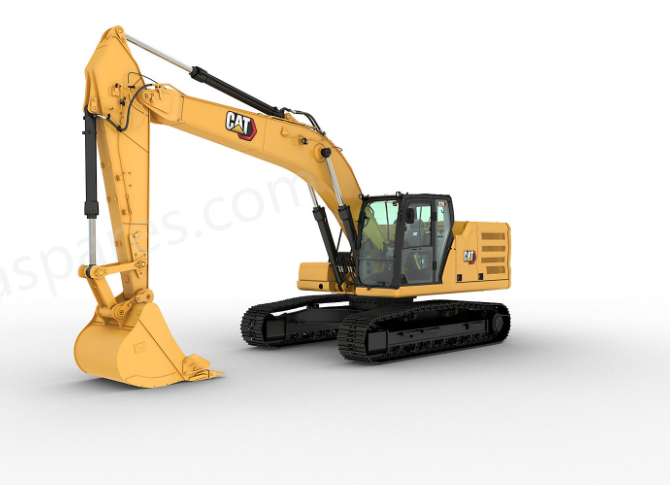
 CAT Excavator 326Premium Performance with Simple-to-Use Technologies
The Cat® 326 Excavator brings premium performance with simple-to-use technologies to boost your operator efficiencies. Combine these features with an ergonomic cab, longer maintenance intervals, and a power system that reduces fuel and you have a low-cost-per-unit-of-production excavator that’s perfect for medium to heavy-duty applications. CAT Excavator 324Heavy-Duty Muscle Built to Outperform
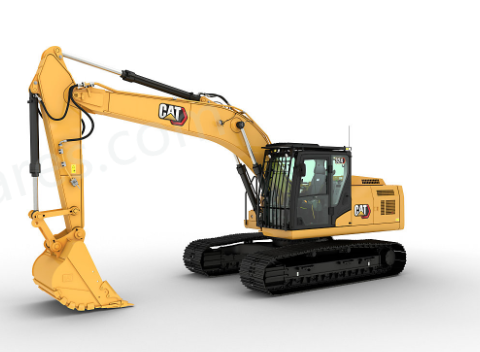
The Cat® 324 excavator is built to handle high-production workloads with the perfect balance of brute strength and refined control. Its powerful Cat® C7.1 engine, high-flow hydraulics, and advanced electrohydraulic system give you the muscle to move heavy material fast, without burning through your budget. With reinforced structures, field-proven durability, and easy-to-maintain components, the 324 is your go-to solution for tackling tough jobs with less downtime. CAT Excavator 322Profit-Driven Powerhouse for Heavy Loads
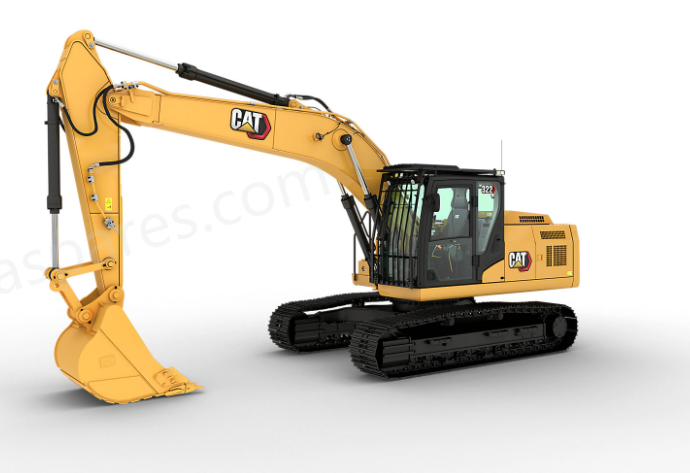
When you need muscle, precision, and cost control in one machine, the Cat® 322 excavator delivers. Purpose-built for high production, the 322 pairs fast cycle times with large bucket options to move more material in fewer passes. Its responsive electrohydraulic controls and rugged design keep you productive on the tough jobs, while smart fuel efficiency and streamlined maintenance help you stay profitable every step of the way. Whether you’re loading, trenching, or lifting, the 322 is a heavy-duty workhorse that pays you back. CAT Excavator 321Versatility at the Lowest Cost Per Hour
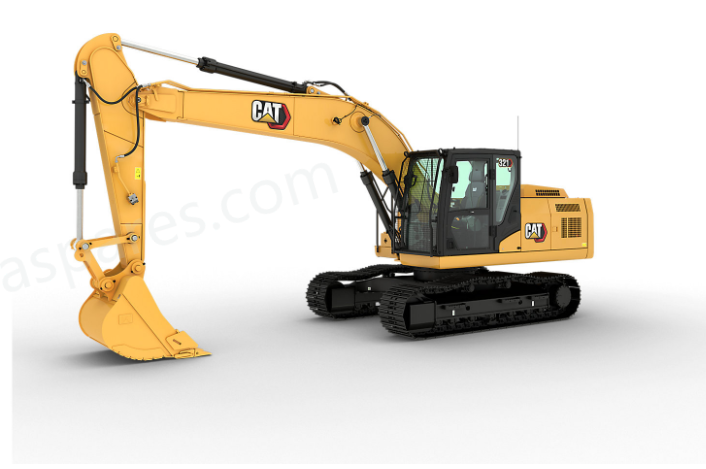
Powered by the reliable Cat® C3.6 engine, the Cat® 321 excavator delivers high torque and fast cycle times to maximize productivity. Reinforced Cat structures extend machine life and withstand the toughest conditions, while the latest cab design puts operator safety and comfort first. Every core system undergoes rigorous testing, so you can count on consistent, reliable performance shift after shift.