-News Center-
When Should You Replace a 5371024 Pulley Instead of Reusing the Old Assembly?
When Should You Replace a 5371024 Pulley Instead of Reusing the Old Assembly?
The biggest mistake with a reused pulley assembly is assuming that “still turning” means “still serviceable.” On a wheel loader, that is rarely the right standard. A 5371024 pulley may continue to rotate even after the bore has started to wear, the groove profile has changed, or the bearing support around the assembly has lost the stability needed for consistent belt tracking. For project managers trying to control downtime, that distinction matters more than the part’s remaining appearance.
In practical terms, the 5371024 PULLEY SEM WHEEL LOADER PULLEY SPARE PARTS should be judged by how reliably it can keep the drive system aligned under real operating load, not by whether it can survive another short maintenance cycle. Reuse is sometimes reasonable after a controlled inspection. Reuse without dimensional checks, noise checks, and fitment checks is usually where avoidable failures begin.
A pulley assembly on a SEM wheel loader is not just a passive wheel. It influences belt tension stability, accessory drive efficiency, and the stress carried by adjacent components. Once the running surface becomes polished unevenly, chipped, or slightly out of plane, the belt often starts telling the story before the pulley is removed: edge wear, glazing, wandering, intermittent squeal, or visible dust around the drive area. Those signs are often treated as belt problems first, but in field maintenance they frequently trace back to the pulley or the assembly supporting it.
What makes reuse risky
The reason old assemblies get reused is understandable. If the machine is needed back on site quickly and the pulley shows no catastrophic damage, keeping it in service can look like the lower-cost choice. The hidden cost is that pulley wear is often progressive rather than obvious. A shallow groove deformation or minor wobble may not stop the machine today, but it can shorten belt life, overload connected accessories, and create repeat service events that cost more than the replacement part.
This is especially relevant in loaders working in dusty, high-vibration, stop-start duty cycles. Dirt ingress, repeated shock loads, and heat cycling accelerate the kind of wear that does not always show up as a crack. It may show up as poor belt seating, a rough-running bearing, or a pulley face that no longer runs true. In that condition, reusing the assembly becomes a scheduling gamble rather than a maintenance decision.
A related point that experienced maintenance teams usually watch closely: the pulley should never be evaluated in isolation from the rest of the contamination-control chain. If debris is reaching the drive zone or critical rotating components elsewhere in the machine, repeat failures become more likely. That is one reason operators who standardize preventive maintenance also pay attention to supporting service items such as 5220793 W48000382 FILTER SEM MACHINERY , because clean systems and stable rotating assemblies tend to fail less often together than separately.
Replace it when these conditions appear
There is no honest universal hour limit that fits every loader and every site condition, so the replacement decision should come from condition and consequence. In most fleets, replacement is the better decision when one or more of the following shows up:
- Visible scoring, cracking, pitting, or deformation in the belt-contact surface.
- Noticeable wobble during rotation, suggesting runout or mounting wear.
- Abnormal noise after belt tension has been verified and the belt itself is known to be in acceptable condition.
- Repeated belt wear on one edge or unexplained belt dust accumulation.
- Looseness at the bore, key area, or mounting interface.
- Evidence that the old assembly has already been removed and reinstalled multiple times.
That last point is often underrated. Every disassembly and reinstall adds a chance of fit degradation, handling damage, or misalignment. Once an assembly has an uncertain service history, “it was working before removal” is not much of a technical argument for putting it back.
When reuse can still make sense
Reusing an old pulley assembly is not automatically wrong. It can be justified when the machine is being opened for an unrelated repair, the pulley has low service exposure, and inspection confirms that the running surface, alignment, fit, and rotation quality are still within acceptable condition for that equipment standard. The key is that “acceptable condition” should mean measured and observed condition, not a visual glance on the workshop floor.
For a project-facing maintenance decision, one useful question is simple: if this reused pulley fails early, what is the operational consequence? On a lightly utilized backup machine, the answer may support reuse. On a primary SEM loader assigned to critical earthmoving or material handling, the cost of unplanned stoppage usually changes the calculation. In those cases, replacement is often the more rational choice even when the old part has not fully failed.
Sourcing decisions matter as much as timing
A replacement decision is only as good as the part that follows it. For 5371024 PULLEY SEM WHEEL LOADER PULLEY SPARE PARTS, the buying question should not stop at nominal compatibility. Buyers should confirm machine model alignment, assembly configuration, material consistency, and supplier traceability. A pulley that fits dimensionally but carries poor machining quality or inconsistent balance can recreate the same symptoms you were trying to eliminate.
This is where experienced parts suppliers add value beyond catalog access. Companies with long exposure to construction machinery tend to understand the difference between theoretical interchangeability and dependable field fit. TerraMech, with more than twenty years in engineering machinery parts and supply for brands including SEM, Caterpillar, Komatsu, Volvo, Shantui, XCMG, SDLG, Weichai, and SDEC, operates in exactly that reality: uptime depends on correct part identification, not just part naming.
The same logic applies across maintenance categories. A fleet that is disciplined about replacing wear-sensitive rotating parts at the right moment usually treats filtration with the same seriousness. It is not accidental that genuine service items such as 5220793 W48000382 FILTER SEM MACHINERY remain common in structured maintenance programs; contamination control and component life are closely linked, especially in harsh loader environments.
The most defensible rule is this: replace the old 5371024 pulley assembly when its condition introduces uncertainty you cannot economically afford in operation. That threshold often arrives before complete failure. If the machine is mission-critical, if belt behavior has already become inconsistent, or if inspection cannot clearly support reuse, replacement is the better decision. It is easier to justify a planned parts cost than to explain an avoidable shutdown in the middle of a working schedule.
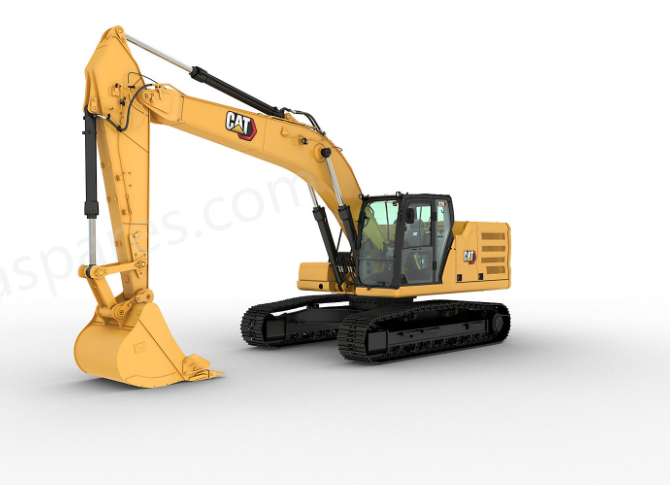
 CAT Excavator 326Premium Performance with Simple-to-Use Technologies
The Cat® 326 Excavator brings premium performance with simple-to-use technologies to boost your operator efficiencies. Combine these features with an ergonomic cab, longer maintenance intervals, and a power system that reduces fuel and you have a low-cost-per-unit-of-production excavator that’s perfect for medium to heavy-duty applications. CAT Excavator 324Heavy-Duty Muscle Built to Outperform
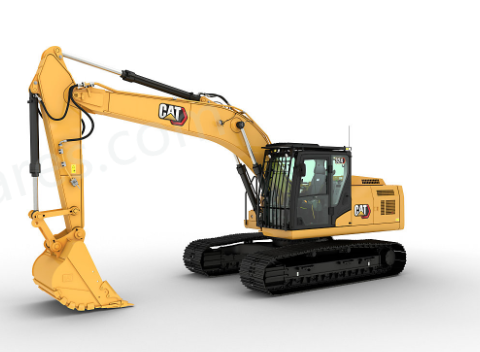
The Cat® 324 excavator is built to handle high-production workloads with the perfect balance of brute strength and refined control. Its powerful Cat® C7.1 engine, high-flow hydraulics, and advanced electrohydraulic system give you the muscle to move heavy material fast, without burning through your budget. With reinforced structures, field-proven durability, and easy-to-maintain components, the 324 is your go-to solution for tackling tough jobs with less downtime. CAT Excavator 322Profit-Driven Powerhouse for Heavy Loads
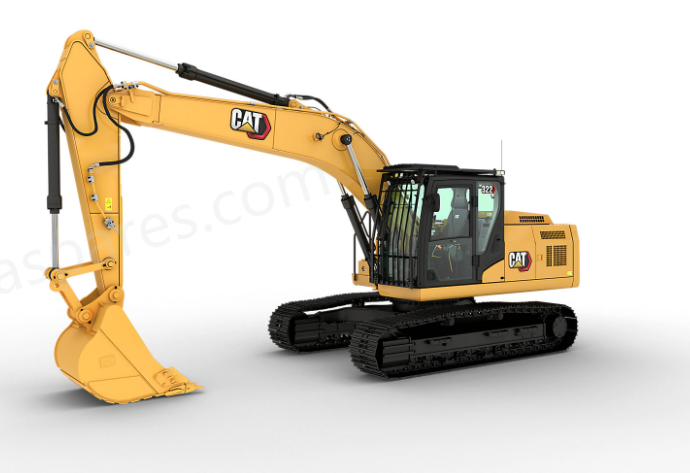
When you need muscle, precision, and cost control in one machine, the Cat® 322 excavator delivers. Purpose-built for high production, the 322 pairs fast cycle times with large bucket options to move more material in fewer passes. Its responsive electrohydraulic controls and rugged design keep you productive on the tough jobs, while smart fuel efficiency and streamlined maintenance help you stay profitable every step of the way. Whether you’re loading, trenching, or lifting, the 322 is a heavy-duty workhorse that pays you back. CAT Excavator 321Versatility at the Lowest Cost Per Hour
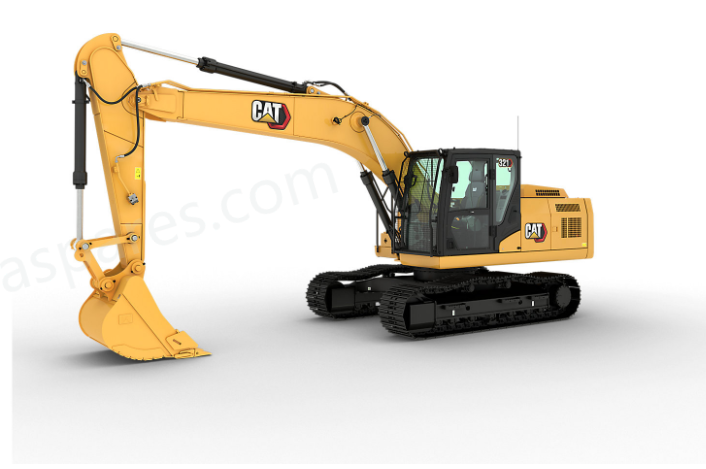
Powered by the reliable Cat® C3.6 engine, the Cat® 321 excavator delivers high torque and fast cycle times to maximize productivity. Reinforced Cat structures extend machine life and withstand the toughest conditions, while the latest cab design puts operator safety and comfort first. Every core system undergoes rigorous testing, so you can count on consistent, reliable performance shift after shift.