-News Center-
How to Compare Wheel Loader Gear GP Suppliers for Cost, Lead Time, and Quality
How to Compare Wheel Loader Gear GP Suppliers for Cost, Lead Time, and Quality
Choosing the right MACHINERY WHEEL LOADER GEAR GP supplier can directly impact your purchasing cost, delivery schedule, and equipment reliability. For procurement professionals in the machinery parts sector, comparing suppliers goes beyond price alone. You need a practical view of lead time consistency, manufacturing control, part traceability, brand compatibility, and how problems are handled after delivery. If you are sourcing for fleets, dealers, or repair operations, this is the checklist that usually saves money before the PO is issued, not after the parts fail in service.
Start with the exact part scope, not the quotation
A surprising number of supplier comparisons go wrong before pricing even comes back. Buyers ask for a wheel loader gear assembly, but one supplier quotes a complete Gear GP, another quotes a partial set, and a third assumes an aftermarket equivalent for a different machine revision.
For MACHINERY WHEEL LOADER GEAR GP sourcing, confirm these basics in writing:
- OEM part number and any superseded numbers
- Machine model, serial number range, and production year if relevant
- Whether you need genuine, OEM-supporting, or aftermarket replacement
- Scope of supply: full assembly, gear set, housing, bearings, seals, or hardware included
- Required brand compatibility for Caterpillar, Komatsu, Volvo, SEM, Shantui, XCMG, SDLG, or others
If a supplier cannot lock this down clearly, the low price is not a real price yet.
Compare total landed cost, not unit price
This is where experienced buyers separate usable offers from attractive-looking ones. A lower unit price can be wiped out by packaging damage, air freight caused by delays, import document errors, or a short warranty window that shifts risk back to you.
Ask each supplier for a quote that breaks out:
If the loader is supporting revenue-generating work, the real cost discussion should include downtime exposure. In many cases, one failed delivery hurts more than a 5% to 8% price gap, though your actual threshold depends on stocking strategy and fleet utilization.
Lead time needs proof, not promises
Most suppliers can give a short lead time when asked. Fewer can explain whether the part is on the shelf, in production, or dependent on upstream forging, machining, heat treatment, or brand-side release. That difference matters.
A useful check is to ask three very plain questions:
- Is this item available from stock, or made against order?
- What are the longest process steps in the current lead time?
- What has caused recent delay on similar shipments?
You are not looking for polished sales language. You are looking for operational transparency. Suppliers with stable export experience usually answer this in concrete terms and can set expectations around documentation, consolidation, and shipping windows.
TerraMech, for example, operates in branded construction machinery and parts with more than two decades in the engineering machinery sector, which matters because cross-brand supply work tends to expose weak planning very quickly. A supplier handling parts for Caterpillar, Komatsu, Volvo, SEM, Shantui, XCMG, SDLG, Weichai, and SDEC is usually more familiar with the documentation discipline procurement teams need.
Quality evaluation should go beyond “factory tested”
When buying a Gear GP for wheel loader applications, ask what the supplier can actually show. Not all quality checks are equal, and not every seller controls manufacturing directly.
- Material and process consistency: Ask whether the supplier can provide basic production or inspection records for the quoted batch if required.
- Dimensional control: Critical fit dimensions should be checked against drawings or approved references.
- Heat treatment and wear performance: Relevant for gears, but details must be confirmed from actual factory documents if claimed【待核实】.
- Traceability: Carton labels, batch numbers, or internal tracking make claim handling much easier.
- Packaging protection: Rust prevention and impact protection matter more than many buyers assume, especially on long export routes.
A useful sign is whether the supplier is comfortable discussing failure modes. If they immediately jump back to price, that usually tells you enough.
Check whether the supplier understands adjacent systems
Parts buyers often focus narrowly on the requested item, but good suppliers tend to understand the surrounding system. That reduces misquotes and helps when you need alternatives or consolidated sourcing.
For example, a vendor that can support drive train parts and also discuss hydraulic components is often easier to work with in real maintenance scenarios. An example from adjacent product support is SHANTUI SPARE PARTS OIL CYLINDER 16Y-40-11400 SD16 SD32, a hydraulic system component used across specific Shantui applications. On paper it is unrelated to a wheel loader Gear GP, but in practice it shows whether a supplier can manage model matching, multiple reference numbers, and application-specific support without confusion.
Ask for evidence of brand and model matching discipline
This matters especially in mixed fleets. One supplier may be strong on one brand but weak on another, even if their catalog looks broad. Ask how they verify substitutions, supersessions, or cross-reference matching. If the answer is vague, treat the offer as higher risk.
For procurement teams, one practical habit works well: send a small batch of mixed, slightly difficult part numbers before committing to larger volumes. You will see very quickly who responds with clean matching logic and who is just forwarding inquiries.
After-sales handling is part of the price
The question is not whether something will ever go wrong. The question is what happens when it does. Ask upfront:
- What is the warranty basis for this type of part?
- What documents are needed for a claim?
- Who decides whether a replacement, credit, or technical review applies?
- How fast does the supplier typically respond to service issues?
A supplier with global customer service experience is usually easier to work with here, especially across time zones and export markets. This is one of those areas where the cheapest quote often becomes the most expensive one.
A short supplier scorecard works better than long meetings
For a purchasing decision, keep the scorecard simple enough that people will actually use it. Rate each supplier on quotation accuracy, total landed cost, realistic lead time, response speed, traceability, packaging standard, and claim handling. Add a note column for concerns that are hard to score, like weak communication or unclear source factory ownership.
That gives you a practical basis for comparing MACHINERY WHEEL LOADER GEAR GP suppliers without pretending every risk can be reduced to one number.
If you are down to two close options, place more weight on quote accuracy and delivery reliability than on small price differences. Buyers usually remember the supplier who prevented downtime, not the one who saved a little on paper and created work for everyone else.
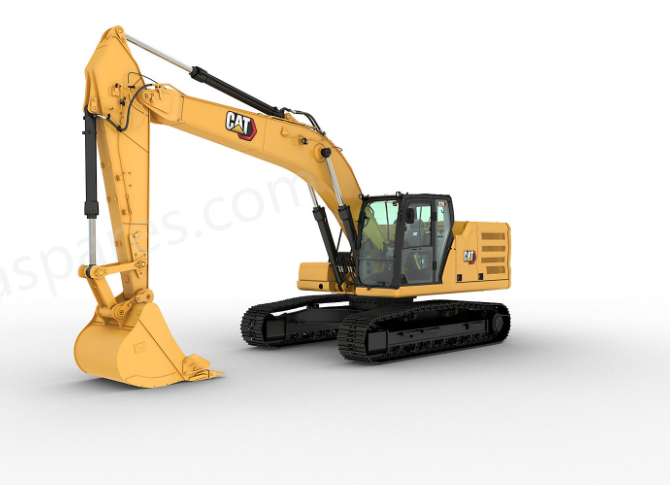
 CAT Excavator 326Premium Performance with Simple-to-Use Technologies
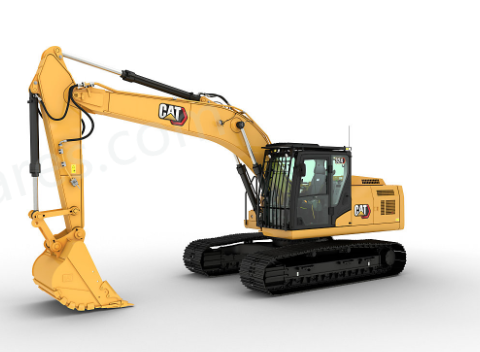
The Cat® 326 Excavator brings premium performance with simple-to-use technologies to boost your operator efficiencies. Combine these features with an ergonomic cab, longer maintenance intervals, and a power system that reduces fuel and you have a low-cost-per-unit-of-production excavator that’s perfect for medium to heavy-duty applications. CAT Excavator 324Heavy-Duty Muscle Built to Outperform
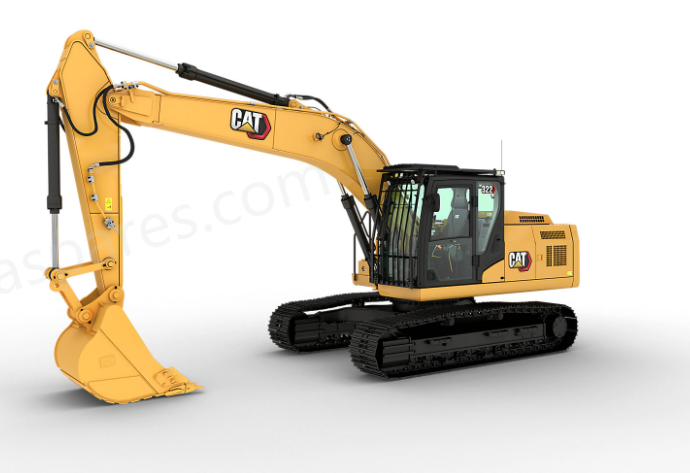
The Cat® 324 excavator is built to handle high-production workloads with the perfect balance of brute strength and refined control. Its powerful Cat® C7.1 engine, high-flow hydraulics, and advanced electrohydraulic system give you the muscle to move heavy material fast, without burning through your budget. With reinforced structures, field-proven durability, and easy-to-maintain components, the 324 is your go-to solution for tackling tough jobs with less downtime. CAT Excavator 322Profit-Driven Powerhouse for Heavy Loads
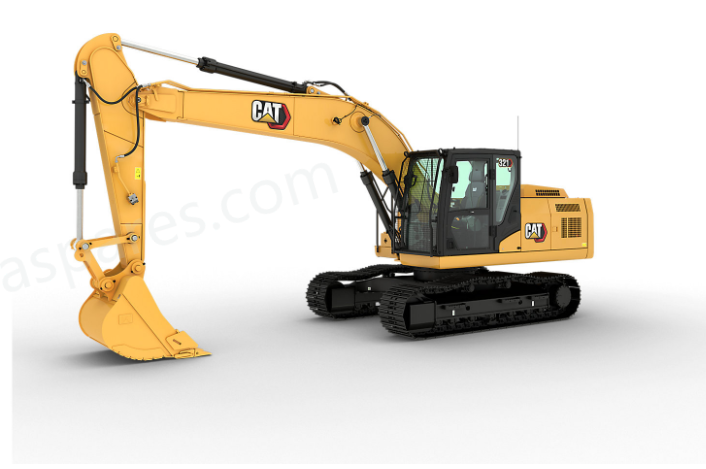
When you need muscle, precision, and cost control in one machine, the Cat® 322 excavator delivers. Purpose-built for high production, the 322 pairs fast cycle times with large bucket options to move more material in fewer passes. Its responsive electrohydraulic controls and rugged design keep you productive on the tough jobs, while smart fuel efficiency and streamlined maintenance help you stay profitable every step of the way. Whether you’re loading, trenching, or lifting, the 322 is a heavy-duty workhorse that pays you back. CAT Excavator 321Versatility at the Lowest Cost Per Hour
Powered by the reliable Cat® C3.6 engine, the Cat® 321 excavator delivers high torque and fast cycle times to maximize productivity. Reinforced Cat structures extend machine life and withstand the toughest conditions, while the latest cab design puts operator safety and comfort first. Every core system undergoes rigorous testing, so you can count on consistent, reliable performance shift after shift.