-News Center-
What Buyers Should Compare Before Purchasing Part Number 5332638
What Buyers Should Compare Before Purchasing Part Number 5332638
Before purchasing part number 5332638, buyers should compare more than just price. In the machinery parts industry, factors such as brand compatibility, material quality, supplier credibility, delivery speed, and after-sales support can directly affect equipment performance and long-term costs. For procurement professionals, understanding these key differences helps reduce risk and ensures a smarter, more reliable purchasing decision.
If you buy construction machinery parts regularly, you already know the cheapest quote is often the one that creates the most paperwork later. With part number 5332638, the real job is to compare what sits behind the quotation: where the part fits, how stable the quality is, what happens if the machine stops, and whether the supplier can support you after payment. That is where cost control actually happens.
Start with fitment, not the label
A part number match on paper is not enough. Buyers should confirm whether 5332638 is tied to a specific machine series, production batch, or component revision. In heavy equipment, one number may appear across different listings, but the actual application can still vary by brand family, hydraulic layout, or regional machine configuration.
Ask for three things before comparing price:
- the exact equipment model and serial range, if available
- OEM reference or cross-reference numbers
- clear product photos showing casting marks, ports, dimensions, or connector positions
This sounds basic, but many wrong-part disputes start because procurement worked only from a spreadsheet description. If your maintenance team can provide an old part photo and machine nameplate details, the verification gets much safer.
Compare quality level in commercial terms
For 5332638, the useful comparison is not just genuine versus aftermarket. You need to know what quality tier the supplier is actually offering. In practice, buyers usually see three broad categories: OEM or genuine branded supply, high-quality replacement from an established manufacturer, and low-cost market alternatives with limited traceability.
The purchase decision should reflect machine criticality. If 5332638 affects hydraulic performance, pressure control, sealing, or uptime-sensitive operation, a cheaper unverified source can become expensive quickly. A loader or excavator waiting in the yard costs more than the gap between two quotations.
When suppliers describe material or performance, keep it factual. If they claim testing, certification, or service life, ask for documents. If nothing verifiable is provided, treat those claims as sales language and evaluate accordingly. Do not fill in the gaps with assumptions.
Look at total landed cost, not unit price
This is where many purchasing decisions drift off track. Two offers for 5332638 can look close until you include freight mode, lead time, import duties, packaging standard, and failure risk. The lower quote may involve slower dispatch, weaker export packing, or no support if the part arrives incorrect.
For procurement teams managing overseas supply, this is often the difference between a good buy and a false saving.
Check whether the supplier understands the machine, not just the SKU
A serious parts supplier usually asks questions back. They want the machine model, usage environment, and whether the buyer is replacing a failed original part or preparing stock. That is a good sign. It means they are trying to avoid a mismatch.
Companies with long industry experience tend to be stronger here. TerraMech, for example, operates across branded construction machinery and parts with experience covering Caterpillar, Komatsu, Volvo, SEM, Shantui, XCMG, SDLG, Weichai, and SDEC product lines. That matters because cross-brand familiarity improves identification, especially when buyers only have partial references or mixed fleet records.
If the supplier can also suggest related checks around the same assembly, that is useful. In hydraulic systems, a single failed valve or control component may not be the only issue. Procurement can save time by confirming whether seals, hoses, or adjacent wear parts should be ordered together.
In some cases, buyers comparing 5332638 may also be reviewing nearby hydraulic components for SEM loaders, such as 5227905 Z5B314016 VALVE GP SEM WHEEL LOADER . That kind of cross-check is useful when the maintenance team is trying to solve a system issue rather than replace one isolated item.
Do not skip traceability
Traceability is one of the fastest ways to filter risky offers. Ask what the supplier can provide: packing labels, origin information, batch references, manufacturer details, or inspection photos before shipment. The point is not to create paperwork for its own sake. The point is to make sure a problem can be traced and resolved.
If 5332638 is being sourced for repeat use, traceability matters even more. You want the second order to perform like the first one. Consistency is often more valuable than squeezing a small discount out of every purchase order.
Measure delivery promises against your actual risk
A supplier saying “available” is not the same as confirmed ready stock. Ask whether 5332638 is physically in inventory, in production, or waiting on upstream supply. Then ask for the dispatch window in writing.
For urgent jobs, it is often worth paying more for immediate shipment. For planned maintenance, buyers can accept a longer lead time if the source is more reliable. The right decision depends on whether the machine is already down, about to go into service, or simply being stocked for preventive maintenance.
After-sales support is part of the purchase
This part gets ignored until something goes wrong. Before issuing the PO, ask how claims are handled if the part arrives damaged, incorrect, or performs abnormally after installation. Also ask what evidence the supplier would need: photos, video, installation report, retained packaging, or return of the failed unit.
Clear claim procedures save time. Vague answers usually become slow responses later. If the supplier supports one-stop parts sourcing and understands export business, the process is generally smoother, especially for international buyers dealing with time zones and freight coordination.
Another practical check: ask whether related alternatives are available if your preferred source is delayed. For fleets using SEM wheel loaders such as SEM656D, SEM655D, SEM660D, SEM653D, SEM668D, or SEM658D, that flexibility can reduce downtime when hydraulic components are on a tight schedule. One relevant example is 5227905 Z5B314016 VALVE GP SEM WHEEL LOADER , which is positioned for hydraulic system support in those applications.
A short buyer checklist before you approve 5332638
- Confirm machine model, serial range, and cross-reference numbers.
- Request actual product photos and key dimensional or interface details.
- Clarify whether the offer is genuine, OEM-level replacement, or general aftermarket.
- Compare freight, lead time, packing, and claim terms together with price.
- Check whether the supplier can provide traceability and shipment documents.
- Match the quality level to the machine’s downtime risk, not just the budget line.
- Get delivery commitment and after-sales handling in writing.
That is usually enough to separate a workable purchase from one that looks cheap and causes trouble later. When buying part number 5332638, the better decision is rarely the fastest quote comparison. It is the one that keeps the machine running, limits rework, and holds up when something needs to be checked after delivery.
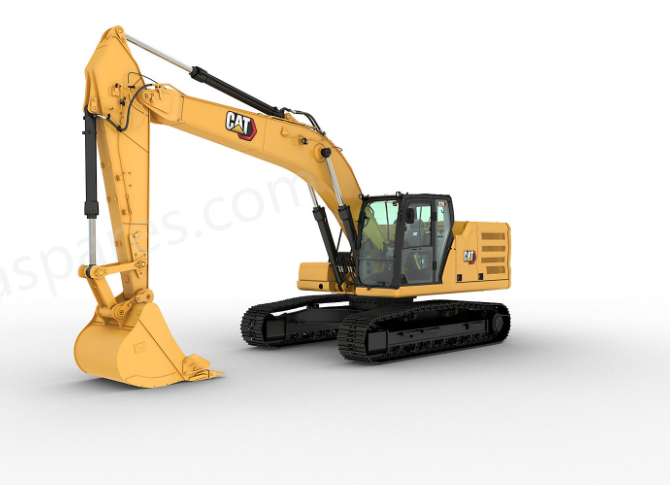
 CAT Excavator 326Premium Performance with Simple-to-Use Technologies
The Cat® 326 Excavator brings premium performance with simple-to-use technologies to boost your operator efficiencies. Combine these features with an ergonomic cab, longer maintenance intervals, and a power system that reduces fuel and you have a low-cost-per-unit-of-production excavator that’s perfect for medium to heavy-duty applications. CAT Excavator 324Heavy-Duty Muscle Built to Outperform
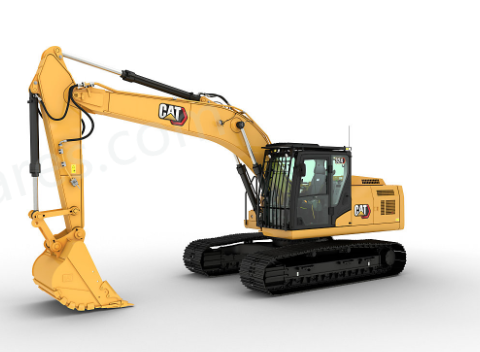
The Cat® 324 excavator is built to handle high-production workloads with the perfect balance of brute strength and refined control. Its powerful Cat® C7.1 engine, high-flow hydraulics, and advanced electrohydraulic system give you the muscle to move heavy material fast, without burning through your budget. With reinforced structures, field-proven durability, and easy-to-maintain components, the 324 is your go-to solution for tackling tough jobs with less downtime. CAT Excavator 322Profit-Driven Powerhouse for Heavy Loads
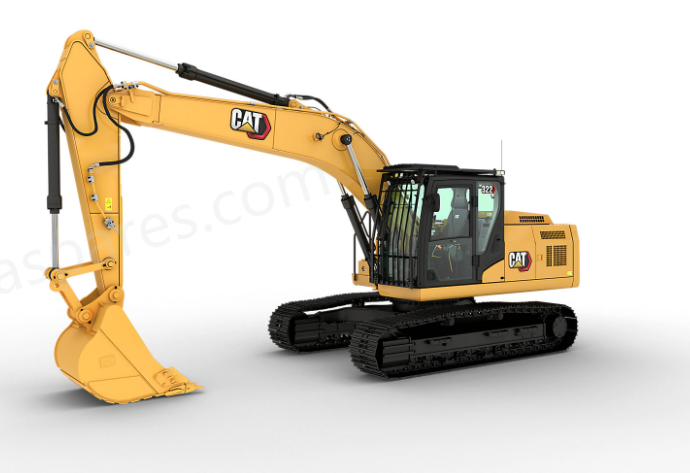
When you need muscle, precision, and cost control in one machine, the Cat® 322 excavator delivers. Purpose-built for high production, the 322 pairs fast cycle times with large bucket options to move more material in fewer passes. Its responsive electrohydraulic controls and rugged design keep you productive on the tough jobs, while smart fuel efficiency and streamlined maintenance help you stay profitable every step of the way. Whether you’re loading, trenching, or lifting, the 322 is a heavy-duty workhorse that pays you back. CAT Excavator 321Versatility at the Lowest Cost Per Hour
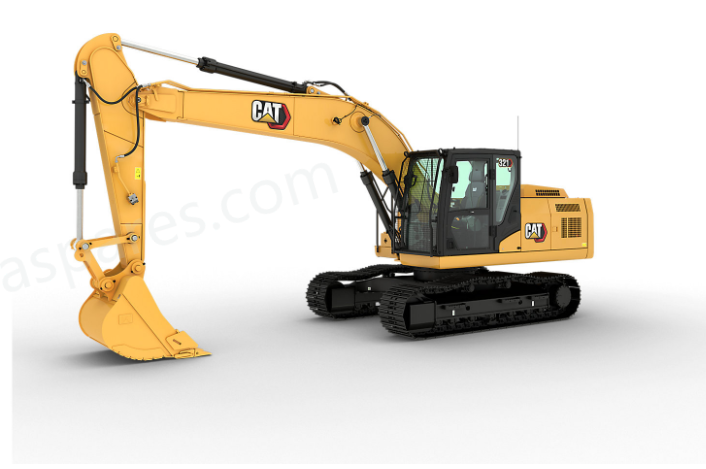
Powered by the reliable Cat® C3.6 engine, the Cat® 321 excavator delivers high torque and fast cycle times to maximize productivity. Reinforced Cat structures extend machine life and withstand the toughest conditions, while the latest cab design puts operator safety and comfort first. Every core system undergoes rigorous testing, so you can count on consistent, reliable performance shift after shift.