-News Center-
How to Build a Safer Replacement Plan Around Part Number 5224345
How to Build a Safer Replacement Plan Around Part Number 5224345
Building a safer replacement plan around 5224345 usually becomes urgent when a machine is already showing symptoms: abnormal vibration, inconsistent transmission response, rising operating temperature, or a maintenance team discovering wear during a scheduled teardown. At that point, the real question is not only whether a replacement can be sourced quickly. It is whether the new part will restore reliable performance without creating a second problem through poor fitment, mismatched load capacity, or shortened service life.
On construction sites, that distinction matters more than many procurement teams expect. A wheel loader working in quarry feed handling faces a different duty cycle from one moving stockpiled aggregate in a yard, even if the machine platform looks similar on paper. When teams build a replacement plan around 5224345, they need to judge the part in the context of shock loading, directional changes, contamination exposure, maintenance access, and the cost of unscheduled downtime. A part number is only the starting point. The application defines the risk.
Where Replacement Decisions Usually Go Wrong
The most common mistake is treating 5224345 as a simple one-to-one purchase item without checking assembly relationships. In mechanical parts work, especially around power transmission and load-bearing systems, interchangeability often depends on more than the visible geometry. A replacement may appear correct by outer dimensions while still creating issues in lubrication path, bearing preload, housing tolerance, or interaction with adjacent components. That is why experienced maintenance managers do not stop at the machine model and part number. They verify the subsystem position, serial range where possible, and the reason the original part failed.
Failure mode tells you whether the replacement plan is actually safe. If the removed component shows fatigue from long-cycle use, standard replacement may be enough. If it shows edge loading, heat discoloration, cracked race surfaces, or uneven wear, the problem may sit upstream or downstream. Replacing 5224345 without correcting alignment, contamination entry, or torque transfer issues can turn a repair into a short-interval repeat job.
Different Site Conditions Change the Replacement Standard
In high-hour earthmoving fleets, replacement planning is usually driven by availability and schedule pressure. That is understandable, but site conditions should still shape the decision. On muddy infrastructure projects, seal protection and contamination resistance often matter more than teams expect. In abrasive material handling, repeated shock loads can punish components that are technically compatible but not robust enough for the actual duty profile. On urban sites with tighter compliance and lower tolerance for stoppage, the safer plan is often the one with better traceability and documentation, even if the purchase price is not the lowest.
This is where supplier discipline becomes practical rather than theoretical. TerraMech has spent more than twenty years in engineering machinery parts supply across major brands including Caterpillar, Komatsu, Volvo, SEM, Shantui, XCMG, SDLG, Weichai, and SDEC. In that kind of environment, the useful question is rarely “Can you supply it?” The useful question is “Can you help confirm whether this replacement matches the machine’s operating reality?” That includes checking application context, brand platform differences, and whether a substitute is appropriate or introduces avoidable risk.
What to Verify Before Approving 5224345 for Service
A safer approval process does not have to be complicated, but it should be disciplined. The following points are usually worth confirming before installation:
Notice that none of these checks are abstract. They are the practical controls that keep maintenance teams from burning labor twice. In field conditions, the installation window is often narrower than the procurement window, so a bad decision tends to show up when the machine is already disassembled.
When a Related Assembly Tells You More Than the Part Number
Some replacement reviews benefit from looking at a comparable assembly family rather than isolating the target number. For example, in wheel loader transmission systems, bearing group performance often reveals what a durable replacement strategy should prioritize: power transfer stability, resistance to torque spikes, tolerance of directional changes, and survivability under repeated shock loading. A reference such as Shangong Machinery 5219959 B120400017 BEARING GP is relevant in that sense because it sits in a transmission-related wheel loader application and is associated with models such as SEM656D, SEM655D, SEM676D, SEM660D, SEM658D, and SEM668D.
That does not make it a substitute for 5224345 by assumption, and it should not be presented that way. What it does show is the type of operating demand that should guide replacement planning in similar machinery systems: components must withstand high strength requirements, exceptional torque, significant shock loads, and regular directional changes during work cycles. When procurement teams understand those mechanical realities, they ask better questions and avoid choosing purely on lead time or nominal compatibility.
Balancing Downtime Risk Against Inventory Risk
Not every fleet should hold the same parts strategy around 5224345. A contractor running a small number of machines may rely on responsive supply and careful identification rather than carrying deep stock. A large fleet on remote or continuous-duty work may justify keeping critical replacement items on hand, especially where access delays or weather windows turn a one-day stop into a week of disruption. The safer plan depends on exposure: machine criticality, replacement frequency, lead time certainty, and the cost of an idle crew or halted material flow.
This is also where experienced global supply support helps. A supplier with export experience and broad brand familiarity is usually better positioned to manage part identification, documentation consistency, and cross-border delivery issues than a source that only treats the request as a catalog lookup. Those differences are easy to ignore during normal operations and very expensive to ignore during a shutdown.
A sound plan around 5224345 usually ends with three confirmations: the part is correct for the machine and subsystem, the failure cause has been understood well enough to avoid repetition, and the source can support the job with dependable documentation and delivery. If one of those is missing, the replacement may still happen, but it is no longer a controlled maintenance decision. It becomes a gamble dressed up as urgency.
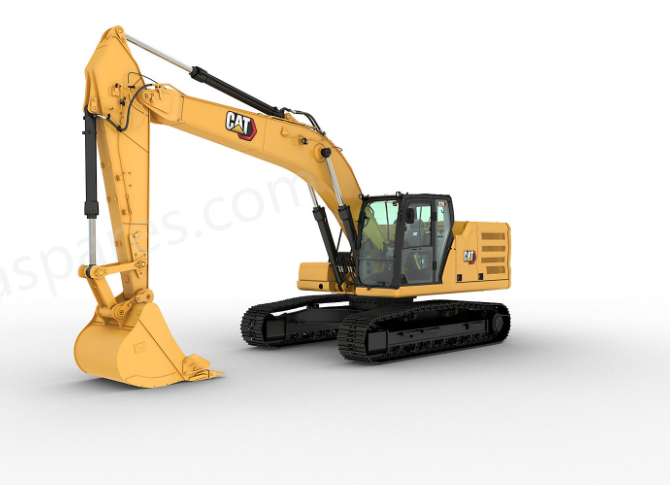
 CAT Excavator 326Premium Performance with Simple-to-Use Technologies
The Cat® 326 Excavator brings premium performance with simple-to-use technologies to boost your operator efficiencies. Combine these features with an ergonomic cab, longer maintenance intervals, and a power system that reduces fuel and you have a low-cost-per-unit-of-production excavator that’s perfect for medium to heavy-duty applications. CAT Excavator 324Heavy-Duty Muscle Built to Outperform
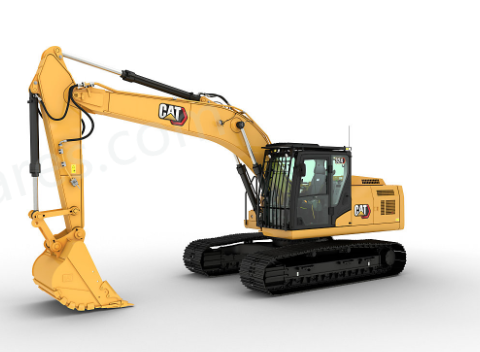
The Cat® 324 excavator is built to handle high-production workloads with the perfect balance of brute strength and refined control. Its powerful Cat® C7.1 engine, high-flow hydraulics, and advanced electrohydraulic system give you the muscle to move heavy material fast, without burning through your budget. With reinforced structures, field-proven durability, and easy-to-maintain components, the 324 is your go-to solution for tackling tough jobs with less downtime. CAT Excavator 322Profit-Driven Powerhouse for Heavy Loads
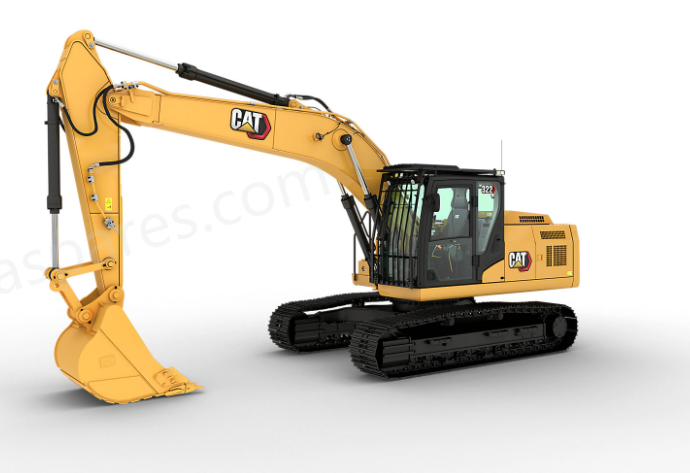
When you need muscle, precision, and cost control in one machine, the Cat® 322 excavator delivers. Purpose-built for high production, the 322 pairs fast cycle times with large bucket options to move more material in fewer passes. Its responsive electrohydraulic controls and rugged design keep you productive on the tough jobs, while smart fuel efficiency and streamlined maintenance help you stay profitable every step of the way. Whether you’re loading, trenching, or lifting, the 322 is a heavy-duty workhorse that pays you back. CAT Excavator 321Versatility at the Lowest Cost Per Hour
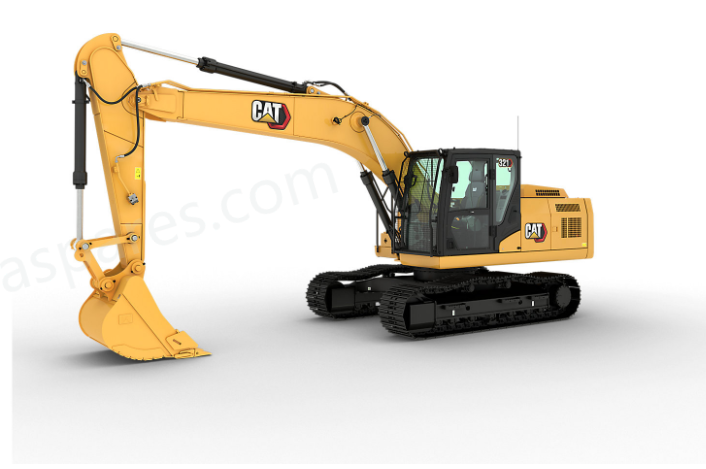
Powered by the reliable Cat® C3.6 engine, the Cat® 321 excavator delivers high torque and fast cycle times to maximize productivity. Reinforced Cat structures extend machine life and withstand the toughest conditions, while the latest cab design puts operator safety and comfort first. Every core system undergoes rigorous testing, so you can count on consistent, reliable performance shift after shift.