-News Center-
5224345 Part Number Guide: How to Confirm the Right Replacement Component
5224345 is not just a number
When people search for 5224345, the mistake is often assuming the part number alone is enough to place an order. In construction machinery service, that is rarely true. A part number is a reference point inside a larger machine configuration system. It may identify one exact component, but it may also depend on serial number range, production batch, attachment setup, regional specification, or a supplier revision that changed the original fit.
That is why a 5224345 replacement should be treated as a verification task, not a purchasing shortcut. If the component is installed in a drivetrain, hydraulic, filtration, or wear-related position, a mismatch may not show up immediately. The machine may start, move, or cycle normally at first, then develop abnormal wear, poor sealing, installation stress, or intermittent failure after real load is applied.
For after-sales maintenance teams, the practical question is not “Can I find a 5224345 part?” but “How do I confirm what 5224345 means on this exact machine?” That distinction avoids a lot of unnecessary returns and field delays.
What usually causes confusion
Part number errors rarely come from one big mistake. More often, they come from several small assumptions stacked together. A technician reads the worn marking incorrectly. A purchaser uses a number from an old parts list. A supplier matches by model name only. Someone treats a superseded number as interchangeable without checking dimensions or mating parts.
In machinery fleets, this gets more complicated because one loader or excavator model may have running changes during its service life. Two machines with the same model badge can carry different internal assemblies. That is common enough that experienced parts teams normally ask for more than the visible number on the failed component.
Another source of confusion is that replacement parts are sometimes identified through associated assemblies. A disc, shaft, filter element, carrier roller, or seal kit may appear in a subsystem list rather than as an isolated item. If 5224345 is being referenced from a maintenance note or old invoice, the original context matters. Without that context, the number can be technically correct and still commercially wrong.
How to verify 5224345 with fewer assumptions
The most reliable method is to cross-check three things at the same time: machine identity, component function, and physical match.
Machine identity means the full model and, where available, the serial number or product identification number. This is what tells you whether 5224345 belongs to a specific production range or whether it was later replaced by another ordering code. Function means understanding what the part actually does in the machine. A disc in a transmission-related application is judged very differently from a filter element or a bucket tooth. Physical match means dimensions, mounting points, spline or tooth profile, material expectations, load direction, and any visible design features that affect interchangeability.
If one of those three checks is missing, the confirmation is incomplete. In field service, technicians sometimes rely on “looks similar” because downtime is expensive. That can work for some wear parts, but it is risky for parts exposed to torque, impact loads, pressure sealing, or repeated directional change.
The role of application context
A part number only makes sense inside its working environment. In wheel loaders, for example, components linked to the axle and transmission must tolerate high torque, repeated gear changes, and shock loads from uneven ground and bucket work. In that context, confirming a replacement is not just about nominal fit. It is about whether the part can live under the same stress pattern as the original.
This is why experienced suppliers ask what system the part belongs to before promising compatibility. TerraMech has spent more than two decades supplying machinery and parts across brands such as Caterpillar, Komatsu, Volvo, SEM, Shantui, XCMG, SDLG, Weichai, and SDEC, and the repeated lesson is straightforward: the same procurement habit does not work equally well across all part categories. A filter can often be verified through media type, dimensions, and port details. A drivetrain component demands closer attention to load path and mating surfaces.
That same logic is visible in related SEM wheel loader parts. In applications such as 5224368 SEM WHEEL LOADER DISC SEM655D SEM656D PARTS, the part is expected to handle high strength requirements, significant impact loads, and regular shifts in direction and gear changes. Even though 5224368 is a different number from 5224345, the verification principle is the same: confirm where the component sits in the system before treating it as interchangeable.
What to ask before ordering
If you are trying to confirm 5224345 quickly, these checks usually produce a better answer than simply requesting a quote:
- What is the full machine model and serial number?
- Which system is the part from: drivetrain, hydraulic, filtration, undercarriage, bucket, or another assembly?
- Is the number taken from the old part, a catalog, or a prior order record?
- Has the original part failed by wear, fracture, leakage, overheating, or installation damage?
- Are there measurable features that can be checked against drawings or stock photos?
Those questions are not paperwork for its own sake. They help separate a true part match from a probable guess. In many maintenance situations, the failure mode itself gives useful evidence. Uneven wear may suggest misalignment. Broken edges may suggest overload or the wrong mating component. Premature seal failure may point to size mismatch or surface finish issues elsewhere in the assembly.
Common misunderstandings worth avoiding
One common misunderstanding is that branded and aftermarket options are judged only by price. In practice, the first question is whether the specification has been matched correctly. A high-quality replacement still fails if it is the wrong revision or intended for a different machine range.
Another is thinking that adjacent part numbers must be related or interchangeable. Sometimes they are from the same family, but numbering logic differs by manufacturer and product group. The nearby number may indicate a different material grade, geometry, or assembly role. That is especially relevant when teams work from partial lists containing items such as pin shafts, filter elements, blade plates, seal kits, or discs from the same equipment platform.
There is also a tendency to focus only on the failed component and ignore the assembly around it. If 5224345 belongs to a load-bearing or rotating system, checking associated wear surfaces can prevent repeat failure. Replacing one item without examining the mating part may restore operation briefly but not reliability.
A practical way to think about 5224345
The useful way to read 5224345 is as a maintenance clue. It points you toward a component identity, but it does not replace verification. In real service work, the right replacement is confirmed by combining the machine record, the subsystem function, and the physical characteristics of the removed part.
If you have only the number, start there, but do not stop there. If you also have the model, serial number, and a clear view of where the part sits in the machine, your accuracy improves sharply. That is the difference between ordering a part that can be installed and ordering one that will actually return the machine to dependable service.
For after-sales teams managing uptime, that is the real value of understanding 5224345 properly. It is not about decoding a catalog entry. It is about making sure the next replacement solves the problem once.
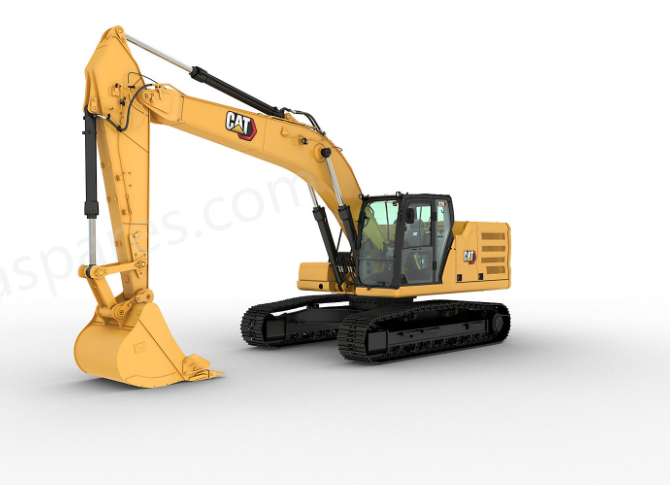
 CAT Excavator 326Premium Performance with Simple-to-Use Technologies
The Cat® 326 Excavator brings premium performance with simple-to-use technologies to boost your operator efficiencies. Combine these features with an ergonomic cab, longer maintenance intervals, and a power system that reduces fuel and you have a low-cost-per-unit-of-production excavator that’s perfect for medium to heavy-duty applications. CAT Excavator 324Heavy-Duty Muscle Built to Outperform
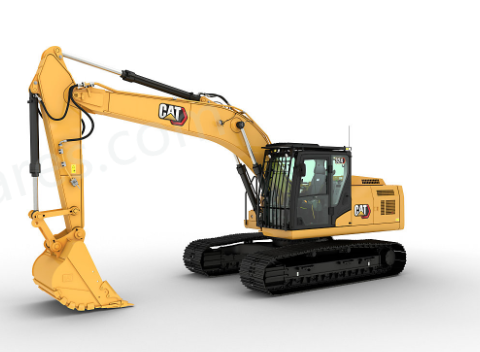
The Cat® 324 excavator is built to handle high-production workloads with the perfect balance of brute strength and refined control. Its powerful Cat® C7.1 engine, high-flow hydraulics, and advanced electrohydraulic system give you the muscle to move heavy material fast, without burning through your budget. With reinforced structures, field-proven durability, and easy-to-maintain components, the 324 is your go-to solution for tackling tough jobs with less downtime. CAT Excavator 322Profit-Driven Powerhouse for Heavy Loads
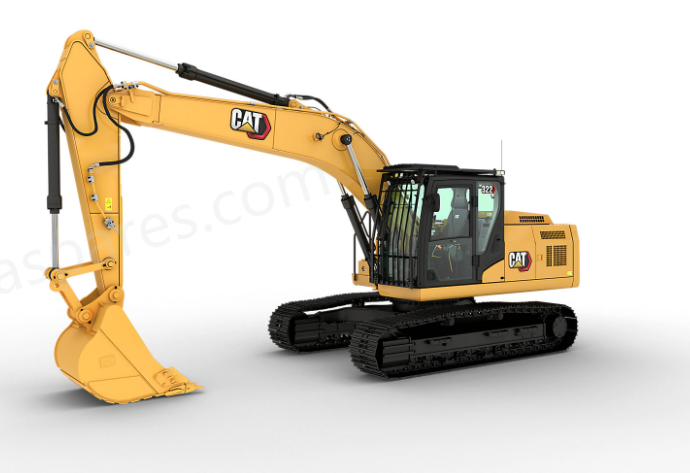
When you need muscle, precision, and cost control in one machine, the Cat® 322 excavator delivers. Purpose-built for high production, the 322 pairs fast cycle times with large bucket options to move more material in fewer passes. Its responsive electrohydraulic controls and rugged design keep you productive on the tough jobs, while smart fuel efficiency and streamlined maintenance help you stay profitable every step of the way. Whether you’re loading, trenching, or lifting, the 322 is a heavy-duty workhorse that pays you back. CAT Excavator 321Versatility at the Lowest Cost Per Hour
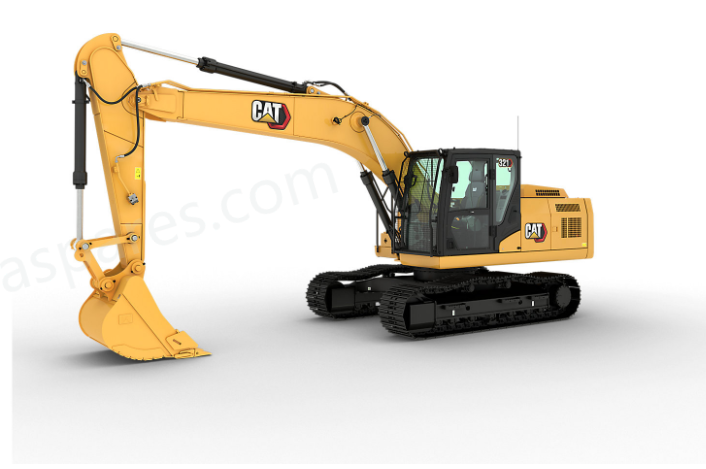
Powered by the reliable Cat® C3.6 engine, the Cat® 321 excavator delivers high torque and fast cycle times to maximize productivity. Reinforced Cat structures extend machine life and withstand the toughest conditions, while the latest cab design puts operator safety and comfort first. Every core system undergoes rigorous testing, so you can count on consistent, reliable performance shift after shift.