-News Center-
What Technical Specifications Should You Verify for Part Number 5224345?
What Technical Specifications Should You Verify for Part Number 5224345?
Before approving part number 5224345 for procurement or replacement, technical evaluators should confirm more than just the model reference. Critical checks such as dimensional accuracy, material grade, load compatibility, manufacturing tolerance, and brand-specific fitment can directly affect machine reliability and service life. For construction machinery parts, verifying 5224345 against equipment requirements helps reduce installation risks, prevent premature failure, and support more informed maintenance decisions.
In practice, the part number alone is never enough. A lot of field problems start with a part that was “close enough” on paper but wrong in one technical detail: a bore diameter slightly off, a hardness range not suitable for abrasive duty, or a mounting geometry that matches one machine series but not another. If you are evaluating 5224345 for a construction machine, use the checklist below the way an experienced parts engineer would: verify the fit, then the duty, then the source.
Start with exact fitment, not just cross-reference claims
The first thing to confirm for 5224345 is the equipment application range. Ask for the machine model, serial number break, and any revision notes tied to that machine family. In heavy equipment, one part number may be replaced, superseded, or used only after a certain production batch. A supplier saying “fits Shantui” or “works for crawler units” is not enough for technical approval.
- Check OEM part books or verified interchange records.
- Confirm whether 5224345 is an original number, an alternate number, or a distributor reference.
- Look for left/right-hand variation, front/rear position difference, and undercarriage location.
- Verify whether seals, bushings, bolts, or shims are part of the assembly or ordered separately.
This step sounds basic, but it saves the most trouble. Misfit parts often pass warehouse inspection and only fail when the machine is already opened up.
Measure the dimensions that actually control installation
For 5224345, request a drawing or inspection sheet whenever possible. Do not rely only on catalog photos. The critical dimensions depend on the part type, but for most mechanical spare parts used on construction machinery, the evaluation should include mounting centers, outer diameter, inner diameter, face width, shaft or pin size, flange thickness, and total assembly height.
If the part is involved in undercarriage or rolling contact service, small dimensional drift can cause side loading, seal wear, or uneven contact patterns. That is why tolerances matter almost as much as nominal size. If tolerance data is missing, mark it as 【待核实】 rather than approving from assumptions.
Material grade and heat treatment need real confirmation
When evaluators review 5224345, they should ask what the base material is, whether heat treatment is applied, and which working surfaces are hardened. For wear parts and undercarriage-related components, the wrong material choice can pass installation and still fail early in abrasive or impact-heavy conditions.
A useful comparison point is products like 8190-MH-D3000S1-03 SHANTUI CARRIER ROLLER SPARE PARTS, where abrasion-resistant material and high-strength service characteristics are part of the specification conversation. That does not mean 5224345 should match those properties exactly, only that evaluators should expect the same level of clarity: what material, what wear expectation, and what working environment the part was built for.
If the supplier cannot provide mill data, hardness range, or a basic process description, that is a risk flag. You do not need every proprietary detail, but you do need enough to judge whether the part suits mud, abrasive fines, high shock loads, or continuous travel duty.
Check load path, duty cycle, and operating environment
A part can be dimensionally correct and still be technically wrong for the machine’s workload. For 5224345, ask where the load comes from and how it cycles. Is the machine working in quarry dust, wet clay, underground conditions, or mixed contractor use? Is it intermittent or high-hour daily service?
Technical evaluators should look for these points:
- Static and dynamic load suitability.
- Impact exposure during travel or digging cycles.
- Wear environment: abrasive, corrosive, or high contamination.
- Temperature range if seals, grease, or elastomers are involved.
- Expected service interval compared with the machine owner’s maintenance schedule.
If those conditions are unclear, the safe move is to pause approval. Too many replacement decisions are made from stock availability rather than service profile.
Look closely at sealing, lubrication, and contamination control
This gets overlooked, especially when 5224345 is treated as a routine spare. But seal design, grease path, and contamination resistance often decide whether the part lasts or fails prematurely. For components exposed to dust, slurry, or track debris, ask what sealing arrangement is used and whether the grease specification is defined by the manufacturer or left open.
Even a good wear surface can be ruined by poor sealing. In field service, that shows up as leakage, rough rotation, noise, heat, and then a much bigger repair bill than the original part cost.
Manufacturing consistency matters more than one good sample
One inspected sample of 5224345 is useful, but repeatability is what protects your fleet. Ask whether the supplier has incoming material control, dimensional inspection records, and batch traceability. For branded construction machinery parts, especially across multiple export markets, consistency is often the line between acceptable and expensive.
At TerraMech, experience across brands such as Caterpillar, Komatsu, Volvo, SEM, Shantui, XCMG, SDLG, Weichai, and SDEC makes one thing clear: evaluators should judge the source as well as the part. A supplier familiar with engineering machinery usually knows which tolerances are sensitive, which substitutions are risky, and which applications need brand-specific confirmation before shipment.
Documentation to request before final approval
- Part drawing or critical dimension sheet
- Application list tied to machine model or serial range
- Material declaration or process summary
- Inspection report for key dimensions
- Packing identification and batch traceability details
- Any supersession note, interchange note, or brand-specific fitment warning
If you are comparing alternatives, it also helps to review whether a supplier handles related undercarriage and chassis components in the same product family, such as 8190-MH-D3000S1-03 SHANTUI CARRIER ROLLER SPARE PARTS. Not because the products are identical, but because strong category coverage often means better application knowledge and fewer blind spots during technical review.
For 5224345, the most reliable approval process is simple: confirm fitment against the exact machine, verify the critical dimensions and tolerances, check material and wear suitability, and make sure the supplier can support those claims with documents. If one of those pieces is missing, the part is not fully verified yet. That is usually the right point to stop and ask harder questions.
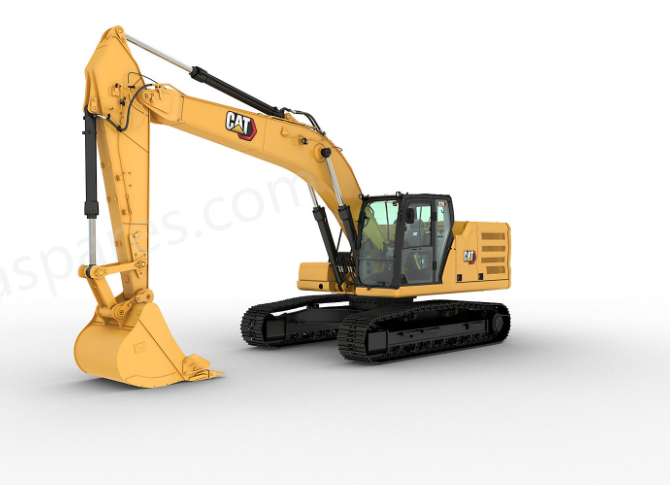
 CAT Excavator 326Premium Performance with Simple-to-Use Technologies
The Cat® 326 Excavator brings premium performance with simple-to-use technologies to boost your operator efficiencies. Combine these features with an ergonomic cab, longer maintenance intervals, and a power system that reduces fuel and you have a low-cost-per-unit-of-production excavator that’s perfect for medium to heavy-duty applications. CAT Excavator 324Heavy-Duty Muscle Built to Outperform
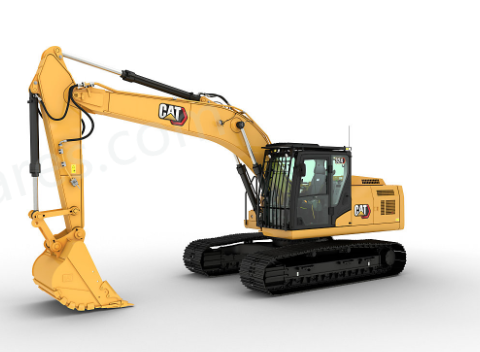
The Cat® 324 excavator is built to handle high-production workloads with the perfect balance of brute strength and refined control. Its powerful Cat® C7.1 engine, high-flow hydraulics, and advanced electrohydraulic system give you the muscle to move heavy material fast, without burning through your budget. With reinforced structures, field-proven durability, and easy-to-maintain components, the 324 is your go-to solution for tackling tough jobs with less downtime. CAT Excavator 322Profit-Driven Powerhouse for Heavy Loads
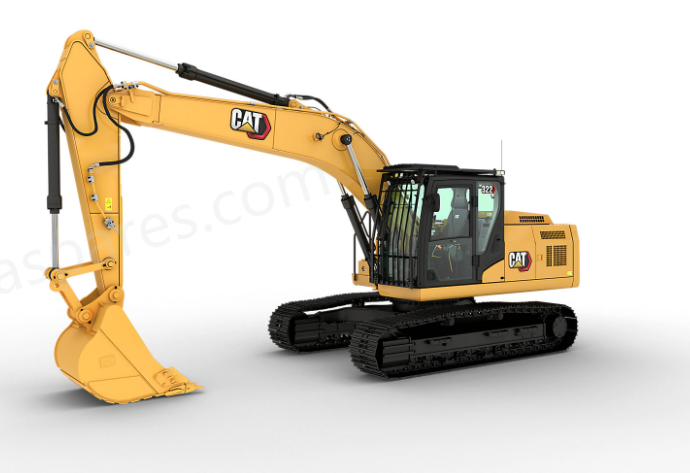
When you need muscle, precision, and cost control in one machine, the Cat® 322 excavator delivers. Purpose-built for high production, the 322 pairs fast cycle times with large bucket options to move more material in fewer passes. Its responsive electrohydraulic controls and rugged design keep you productive on the tough jobs, while smart fuel efficiency and streamlined maintenance help you stay profitable every step of the way. Whether you’re loading, trenching, or lifting, the 322 is a heavy-duty workhorse that pays you back. CAT Excavator 321Versatility at the Lowest Cost Per Hour
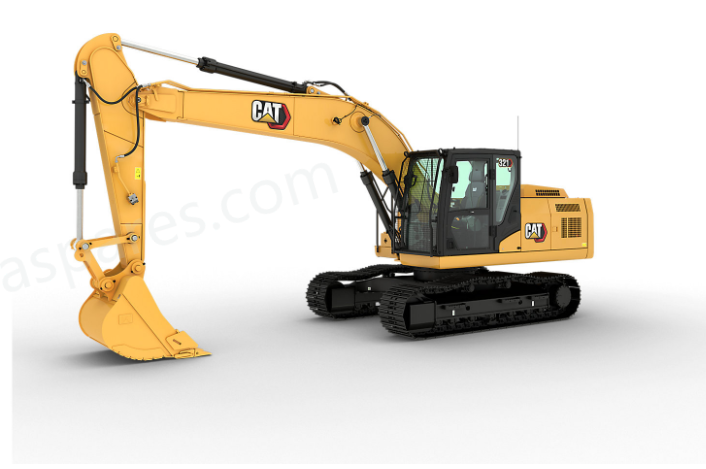
Powered by the reliable Cat® C3.6 engine, the Cat® 321 excavator delivers high torque and fast cycle times to maximize productivity. Reinforced Cat structures extend machine life and withstand the toughest conditions, while the latest cab design puts operator safety and comfort first. Every core system undergoes rigorous testing, so you can count on consistent, reliable performance shift after shift.