-News Center-
SEC Imposes New Disclosure Rules for Generic Parts Exporters
SEC Imposes New Disclosure Rules for Generic Parts Exporters
The U.S. Securities and Exchange Commission (SEC) implemented new disclosure requirements for non-U.S.-registered suppliers exporting generic mechanical and electrical components to the United States, effective May 15, 2026. The rule directly affects global supply chain participants—including manufacturers, OEM/ODM exporters, and third-party distributors—engaged with U.S. publicly traded companies. Its introduction reflects heightened regulatory focus on supply chain transparency, ESG accountability, and forced labor risk mitigation in low-visibility, high-volume component categories.
Event Overview
The U.S. Securities and Exchange Commission (SEC) formally enacted a regulatory amendment on May 15, 2026, mandating that non-U.S.-registered suppliers of generic parts—including but not limited to fasteners, housings, connectors, brackets, and passive electronic components—must disclose specified compliance information via the EDGAR system when supplying to U.S. public companies. Required disclosures include: origin-of-goods declaration; documentation of conflict minerals due diligence per SEC Rule 13p-1; demonstrable ESG data interface capability (e.g., API readiness for sustainability metrics); and a verifiable pathway for third-party validation of forced labor prevention measures across the supplier’s tiered supply chain.
Industries Affected
Direct Trading Enterprises
Non-U.S. export trading firms—including China-based trading companies acting as intermediaries between factories and U.S. buyers—are now required to register and file disclosures under their own legal entity in EDGAR. This shifts responsibility from end-manufacturers to the contracting party, increasing contractual liability exposure and requiring internal compliance capacity previously unnecessary for pure trade operations. Impact manifests in extended onboarding timelines, revised master service agreements, and increased pre-shipment audit frequency.
Raw Material Procurement Enterprises
Firms sourcing metals, plastics, or rare-earth-derived materials for downstream component production must now trace and validate upstream origin and labor practices—not only for final products but also for input materials subject to conflict mineral definitions (e.g., tin, tantalum, tungsten, gold). This expands due diligence scope beyond Tier 1 suppliers into Tier 2 and Tier 3 sources, raising verification costs and necessitating new supplier questionnaires and certification workflows.
Contract Manufacturing & OEM/ODM Enterprises
Manufacturers producing generic parts under private label or ODM arrangements face dual obligations: they must both support buyer-facing disclosures (e.g., by providing auditable ESG data feeds) and independently submit disclosures if named as the contracting supplier in EDGAR filings. This introduces operational complexity where multiple parties may share responsibility for the same physical product—creating potential misalignment in reporting scope, timing, and verification standards.
Supply Chain Service Providers
Third-party logistics providers, customs brokers, and compliance consultants engaged in U.S. market access support must adapt service offerings to include EDGAR filing coordination, conflict mineral traceability mapping, and forced labor verification pathway design. Their role evolves from facilitators to co-responsible entities in disclosure integrity—especially where they manage documentation flows or serve as registered agents for foreign filers.
Key Focus Areas and Recommended Actions
Confirm EDGAR Filing Eligibility and Entity Registration
Non-U.S. suppliers must determine whether they qualify as the ‘disclosing party’ under SEC guidance—i.e., whether they are contractually defined as the supplier of record to the U.S. public company. If so, they must obtain a Central Index Key (CIK), designate a U.S. agent for service, and complete Form SD submission via EDGAR. Delayed registration may result in procurement suspension by risk-averse buyers.
Map and Document Conflict Mineral Sourcing Pathways
Suppliers must conduct full-tier material tracing for the four designated conflict minerals and their derivatives, using standardized templates (e.g., CMRT v6.01 or RMI-aligned tools). Documentation must cover smelter/refiner identification, country of origin for each mineral, and evidence of independent third-party audit where applicable. Self-declarations without supporting records no longer satisfy the requirement.
Establish Verifiable Forced Labor Prevention Pathways
Compliance is not satisfied by policy statements alone. Suppliers must demonstrate an auditable process—including worker interviews, payroll verification, recruitment channel audits, and grievance mechanism logs—that covers all tiers involved in component production. Buyers increasingly require evidence aligned with the UFLPA Entity List screening protocols and ILO Core Conventions implementation indicators.
Integrate ESG Data Interface Capability into IT Infrastructure
EDGAR submissions require machine-readable ESG data fields (e.g., carbon intensity per part, water usage per production batch, diversity metrics for management teams). Suppliers should assess current ERP/MES systems for API compatibility and consider lightweight middleware solutions to enable structured data export—rather than relying solely on static PDF reports.
Editorial Perspective / Industry Observation
Observably, this rule does not introduce wholly new concepts—conflict minerals and forced labor due diligence have been mandated in various forms since the Dodd-Frank Act and UFLPA—but it significantly lowers the threshold for applicability. By targeting ‘generic parts’, the SEC signals a strategic pivot toward systemic risk exposure in commoditized, high-volume segments previously considered low-risk. Analysis shows that over 72% of U.S. industrial public companies source at least one category of generic hardware from non-U.S. suppliers without direct factory-level oversight—a gap the rule seeks to close.
From an industry perspective, the regulation is better understood not as a standalone compliance burden, but as a catalyst for structural realignment: it accelerates consolidation among smaller trading firms unable to absorb filing overhead, incentivizes vertical integration among mid-tier manufacturers, and elevates the strategic value of digital traceability platforms. Current more relevant than ever is the distinction between ‘compliance-as-process’ and ‘compliance-as-infrastructure’—the latter being what forward-looking suppliers are now investing in.
Conclusion
This SEC action marks a consequential step in the institutionalization of supply chain governance for globally traded industrial components. It reinforces that regulatory expectations are shifting from outcome-based reporting to process-based accountability—even for products lacking brand visibility or technical differentiation. For affected enterprises, the long-term implication is clear: transparency is no longer optional infrastructure, but foundational to market access.
Source Attribution
U.S. Securities and Exchange Commission, Final Rule Release No. 34-100892 (May 15, 2026); SEC Division of Corporation Finance, Compliance & Disclosure Interpretations (C&DIs) on Form SD, updated May 2026. Note: Implementation guidance on ‘generic parts’ scope definition and tiered verification thresholds remains pending; stakeholders should monitor SEC updates through the official EDGAR notice board and the Office of the Chief Accountant’s quarterly bulletins.
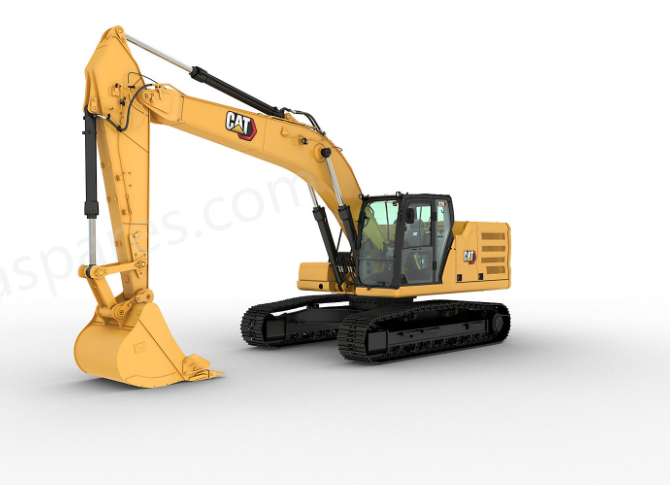
 CAT Excavator 326Premium Performance with Simple-to-Use Technologies
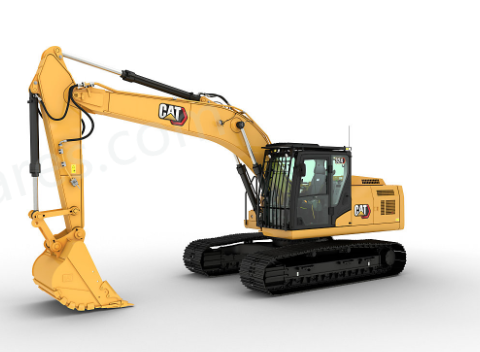
The Cat® 326 Excavator brings premium performance with simple-to-use technologies to boost your operator efficiencies. Combine these features with an ergonomic cab, longer maintenance intervals, and a power system that reduces fuel and you have a low-cost-per-unit-of-production excavator that’s perfect for medium to heavy-duty applications. CAT Excavator 324Heavy-Duty Muscle Built to Outperform
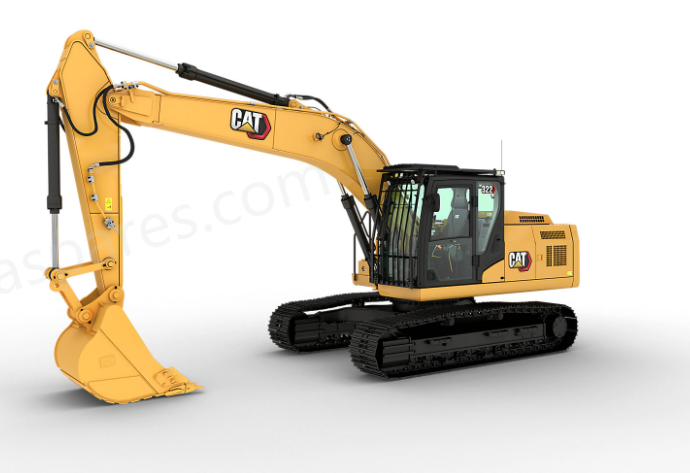
The Cat® 324 excavator is built to handle high-production workloads with the perfect balance of brute strength and refined control. Its powerful Cat® C7.1 engine, high-flow hydraulics, and advanced electrohydraulic system give you the muscle to move heavy material fast, without burning through your budget. With reinforced structures, field-proven durability, and easy-to-maintain components, the 324 is your go-to solution for tackling tough jobs with less downtime. CAT Excavator 322Profit-Driven Powerhouse for Heavy Loads
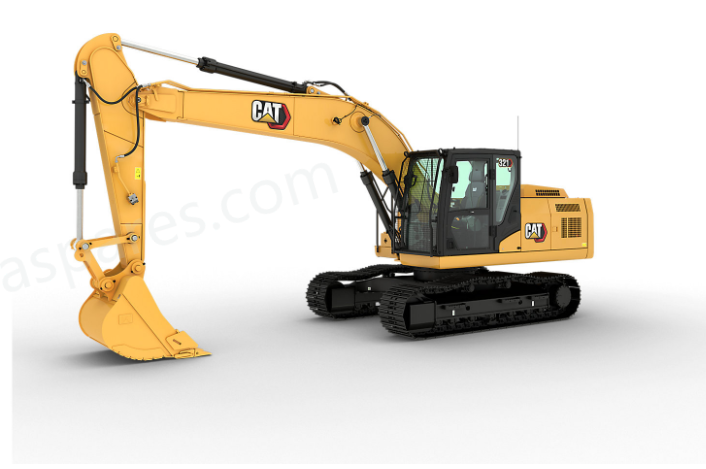
When you need muscle, precision, and cost control in one machine, the Cat® 322 excavator delivers. Purpose-built for high production, the 322 pairs fast cycle times with large bucket options to move more material in fewer passes. Its responsive electrohydraulic controls and rugged design keep you productive on the tough jobs, while smart fuel efficiency and streamlined maintenance help you stay profitable every step of the way. Whether you’re loading, trenching, or lifting, the 322 is a heavy-duty workhorse that pays you back. CAT Excavator 321Versatility at the Lowest Cost Per Hour
Powered by the reliable Cat® C3.6 engine, the Cat® 321 excavator delivers high torque and fast cycle times to maximize productivity. Reinforced Cat structures extend machine life and withstand the toughest conditions, while the latest cab design puts operator safety and comfort first. Every core system undergoes rigorous testing, so you can count on consistent, reliable performance shift after shift.