-News Center-
China's Revised Maritime Code Shifts Unclaimed Cargo Liability to Shipper
Effective May 1, 2026, the newly revised Maritime Code of the People’s Republic of China enters force, with Article 93 reassigning primary liability for unclaimed cargo at discharge ports from consignees to shippers. This change directly affects international maritime logistics involving cargo abandonment, container demurrage, bill of lading disputes, and cost recovery—making it highly relevant for overseas importers, distributors, and procurement entities operating in China.
Event Overview
On May 1, 2026, the amended Maritime Code of the People’s Republic of China officially takes effect. Per Article 93, responsibility for unclaimed cargo at the port of discharge is now placed first on the shipper, replacing the prior principle that assigned priority liability to the consignee. This revision is publicly confirmed and reflects a statutory shift in default liability allocation under Chinese maritime law.
Industries Affected by This Change
Direct Trading Enterprises
These entities—often acting as both buyer and consignee in FOB or CIF arrangements—may previously have assumed consignee liability would govern unclaimed cargo outcomes. Under the new rule, if their overseas supplier (acting as shipper) fails to ensure timely pickup or documentation handover, the shipper bears initial legal and financial exposure—even when the trading enterprise is the de facto end recipient. Impact manifests in increased risk of unexpected demurrage, storage fees, and disposal liabilities attributed upstream.
Raw Material Procurement Entities
Procurement teams sourcing commodities or bulk inputs via sea freight frequently rely on incoterms such as FCA or EXW, where the supplier remains the contractual shipper. With liability now anchored at the shipper level, procurement contracts must explicitly address post-discharge coordination, documentation transfer timelines, and fallback mechanisms for cargo release failure—especially where suppliers lack local agent capacity at destination ports.
Contract Manufacturing & Export-Oriented Manufacturers
Manufacturers fulfilling export orders often act as shippers on bills of lading—even when goods are sold under DDP or DAP terms. The revised Article 93 means they now bear first-resort responsibility for unclaimed cargo regardless of downstream delivery terms. This elevates operational exposure related to customs clearance delays, consignee insolvency, or documentary discrepancies beyond their direct control.
Distribution & Channel Partners
Import distributors and regional sales agents typically receive goods under straight bills or telex releases but rarely appear as shippers. However, if they issue purchase orders triggering shipment initiation—or if their branding appears on shipping documents—they may be deemed de facto shippers under judicial interpretation. The change thus increases scrutiny of internal order-to-shipment workflows and document governance practices.
Supply Chain Service Providers
Freight forwarders, NVOCCs, and logistics integrators managing end-to-end documentation and port coordination now face heightened due diligence obligations. While not liable per se under Article 93, their role in shipper identification, bill of lading issuance, and consignee notification becomes more consequential. Errors in party designation or failure to verify shipper authority may compound liability allocation disputes.
What Relevant Enterprises or Practitioners Should Focus On and How to Respond
Review and revise standard shipping instructions and contract clauses
Parties should immediately audit master agreements, purchase orders, and logistics service contracts to align liability language with the new statutory hierarchy. Where possible, insert explicit carve-outs or indemnity provisions assigning post-discharge responsibilities to the appropriate party—particularly when the consignee retains practical control over cargo release.
Strengthen pre-shipment verification of consignee readiness
Shippers and their agents should implement mandatory pre-arrival checks—including confirmation of import licenses, customs broker engagement, and warehouse availability—before vessel departure. This supports defensibility in disputes and may mitigate liability under ‘reasonable care’ interpretations applied by Chinese courts.
Update letter of credit and documentary compliance protocols
Issuing banks and beneficiaries must reassess LC conditions requiring consignee acceptance or proof of pickup. Since liability now defaults to the shipper, documentary requirements tied solely to consignee action may no longer reflect enforceable risk allocation—and could introduce negotiation friction or payment delays.
Clarify shipper identity across all transport documents
Organizations should ensure consistency in shipper designation across bills of lading, commercial invoices, packing lists, and customs declarations. Ambiguity—such as listing a parent company as shipper while operations are managed by a subsidiary—may trigger challenges in liability attribution during enforcement proceedings.
Editorial Perspective / Industry Observation
Observably, this amendment signals a structural recalibration of risk allocation in China’s maritime legal framework—not merely a procedural update. Analysis shows the shift prioritizes contractual certainty and supply chain accountability over traditional consignee-centric assumptions. It is best understood not as an isolated regulatory tweak, but as part of broader efforts to strengthen enforceability in cross-border trade disputes and reduce port congestion caused by abandoned containers. From an industry perspective, the provision functions primarily as a default rule: parties remain free to allocate liability contractually, but courts will now start from the shipper-first premise unless clearly overridden. Continued attention is warranted as judicial interpretations and enforcement precedents emerge in the coming 12–24 months.
This revision underscores how statutory defaults shape real-world risk management—especially where contract language remains silent or ambiguous. It does not eliminate consignee obligations, but reorders the sequence of recourse. For global trade participants, the most pragmatic interpretation is that proactive alignment of contractual terms with the new statutory baseline is now a material component of maritime compliance—not a secondary consideration.
Source: Official promulgation notice of the revised Maritime Code of the People’s Republic of China, effective May 1, 2026. Note: Judicial interpretations, administrative guidance, and case law application remain subject to ongoing observation.
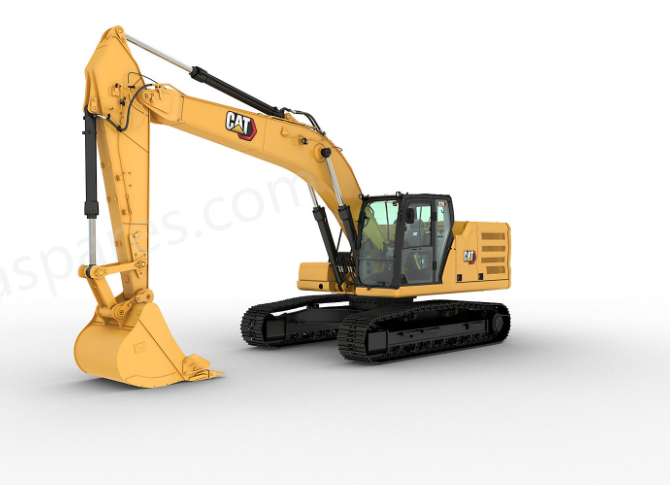
 CAT Excavator 326Premium Performance with Simple-to-Use Technologies
The Cat® 326 Excavator brings premium performance with simple-to-use technologies to boost your operator efficiencies. Combine these features with an ergonomic cab, longer maintenance intervals, and a power system that reduces fuel and you have a low-cost-per-unit-of-production excavator that’s perfect for medium to heavy-duty applications. CAT Excavator 324Heavy-Duty Muscle Built to Outperform
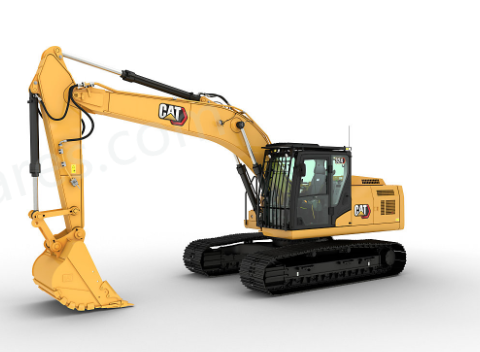
The Cat® 324 excavator is built to handle high-production workloads with the perfect balance of brute strength and refined control. Its powerful Cat® C7.1 engine, high-flow hydraulics, and advanced electrohydraulic system give you the muscle to move heavy material fast, without burning through your budget. With reinforced structures, field-proven durability, and easy-to-maintain components, the 324 is your go-to solution for tackling tough jobs with less downtime. CAT Excavator 322Profit-Driven Powerhouse for Heavy Loads
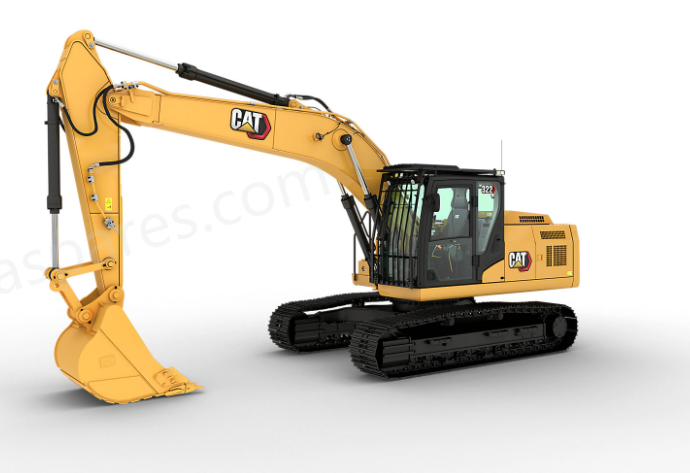
When you need muscle, precision, and cost control in one machine, the Cat® 322 excavator delivers. Purpose-built for high production, the 322 pairs fast cycle times with large bucket options to move more material in fewer passes. Its responsive electrohydraulic controls and rugged design keep you productive on the tough jobs, while smart fuel efficiency and streamlined maintenance help you stay profitable every step of the way. Whether you’re loading, trenching, or lifting, the 322 is a heavy-duty workhorse that pays you back. CAT Excavator 321Versatility at the Lowest Cost Per Hour
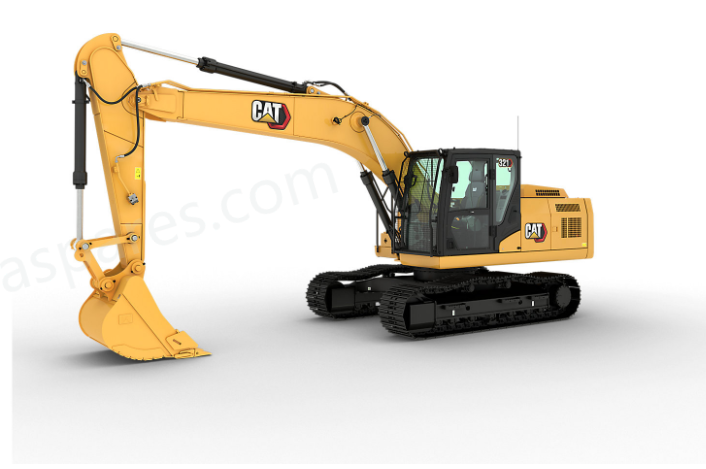
Powered by the reliable Cat® C3.6 engine, the Cat® 321 excavator delivers high torque and fast cycle times to maximize productivity. Reinforced Cat structures extend machine life and withstand the toughest conditions, while the latest cab design puts operator safety and comfort first. Every core system undergoes rigorous testing, so you can count on consistent, reliable performance shift after shift.