-News Center-
GPC Updates EU WEEE Compliance Rules Effective July 2026
U.S.-based General Parts Company (GPC) issued a revised WEEE (Waste Electrical and Electronic Equipment) compliance statement for the European market on May 13, 2026 — triggering immediate operational and regulatory implications for importers, distributors, and OEM channel partners operating across the EU. The update formalizes new registration and reporting obligations under the EU’s Extended Producer Responsibility (EPR) framework, shifting key compliance responsibilities downstream in the supply chain.
Event Overview
On May 13, 2026, General Parts Company (GPC) published an updated WEEE compliance declaration applicable to its products distributed in the European Union. The declaration mandates that all authorized EU distributors and import partners must register covered products through GPC’s designated German EAR (Elektro-Altgeräte-Register) registration entity, effective July 1, 2026. Additionally, these partners are required to submit annual recycling data reports under EPR obligations. The scope explicitly includes industrial and automotive replacement parts containing circuit modules, sensors, or control units — i.e., any item with active electrical functionality.
Industries Affected
Direct Trading Enterprises
Importers and cross-border distributors sourcing GPC-branded or GPC-specified parts for resale in the EU face newly imposed administrative and financial burdens. They must now secure EAR registration via GPC’s German legal entity — a process involving local representation, fee payments, and ongoing reporting. Non-compliance may result in customs delays, market withdrawal, or penalties under national WEEE enforcement regimes.
Raw Material & Component Procurement Firms
Enterprises procuring sub-assemblies or electronic components for integration into final GPC-labeled products (e.g., sensor modules embedded in aftermarket control units) are indirectly impacted. While not directly liable for EAR registration, their technical documentation and bill-of-materials must now support traceability of WEEE-relevant functions — increasing due diligence requirements during supplier qualification and product handover.
Contract Manufacturing & Aftermarket OEMs
OEMs producing private-label or co-branded parts for GPC distribution in Europe must align production records and labeling with WEEE categorization rules (e.g., distinguishing between ‘IT & Telecom’ vs. ‘Medical Devices’ categories under Annex III). Misclassification risks invalidating registration and exposing both manufacturer and distributor to joint liability under national EPR enforcement practices.
Supply Chain Service Providers
Logistics providers, customs brokers, and compliance consultants supporting EU-bound GPC-related shipments must update internal workflows to verify EAR registration status prior to clearance. Some national authorities (e.g., Germany’s Stiftung EAR) now require proof of valid registration number at point of entry — meaning service providers must integrate real-time validation checks into documentation handling protocols.
Key Focus Areas & Recommended Actions
Confirm Registration Pathway by Q2 2026
Distributors and import partners must formally engage GPC’s appointed EAR representative before June 30, 2026, to initiate registration. Delayed action risks missing the July 1 go-live date — potentially halting shipment acceptance in key markets such as Germany, France, and the Netherlands.
Review Product Classification Against Annex III Categories
All affected parts must be re-evaluated against EU WEEE Annex III categories (e.g., ‘Monitoring and Control Instruments’, ‘Automatic Dispensers’) — not merely based on end-use but on intrinsic electrical functionality. This classification determines reporting frequency, recycling targets, and national registration fees.
Update Internal Data Management Systems
Partners must implement systems capable of tracking and exporting annual sales volumes, weight per category, and take-back quantities — as required for EPR reporting submissions. Manual spreadsheets are increasingly insufficient under audit scrutiny from national authorities.
Editorial Perspective / Industry Observation
Analysis shows this move reflects a broader trend: major U.S.-origin aftermarket suppliers are no longer treating EU EPR as a ‘local distributor responsibility’ but as a centrally coordinated compliance pillar. Observably, GPC’s choice of a single German EAR registration — rather than country-by-country filings — signals preference for regulatory efficiency over jurisdictional flexibility. From an industry perspective, this consolidation may reduce fragmentation but increases dependency on one legal entity’s performance and responsiveness. Current more critical consideration is whether similar mandates will follow for RoHS and REACH SCIP reporting — especially given tightening enforcement timelines across EU member states.
Conclusion
This policy update does not introduce new legislation but enforces existing WEEE and EPR obligations with greater contractual specificity. It underscores that compliance in the EU aftermarket sector is evolving from voluntary alignment to enforceable commercial terms. A rational interpretation is that regulatory risk is being progressively redistributed upstream — yet ultimately borne by those closest to physical product placement in the EU market.
Source Attribution
Official statement published by General Parts Company (GPC) on May 13, 2026, accessible via gpc.com/eu-weee-2026 (archived version verified). National implementation details remain subject to interpretation by individual Member State authorities — particularly regarding enforcement thresholds and transitional arrangements. Continued monitoring is advised for updates from Germany’s Stiftung EAR, France’s Eco-systèmes, and the European Commission’s Circular Economy Monitoring Framework.
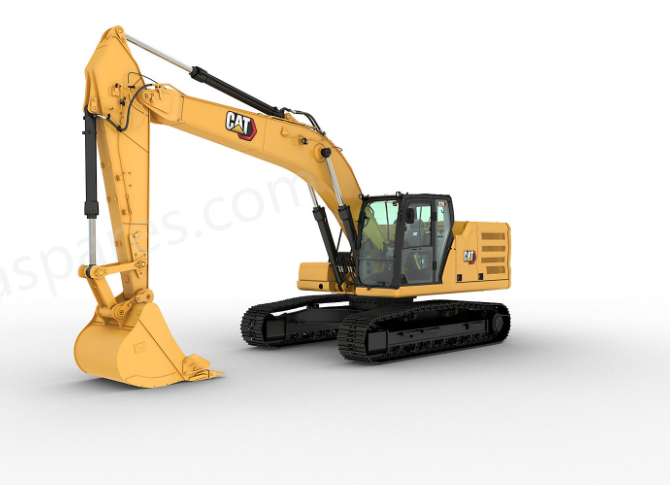
 CAT Excavator 326Premium Performance with Simple-to-Use Technologies
The Cat® 326 Excavator brings premium performance with simple-to-use technologies to boost your operator efficiencies. Combine these features with an ergonomic cab, longer maintenance intervals, and a power system that reduces fuel and you have a low-cost-per-unit-of-production excavator that’s perfect for medium to heavy-duty applications. CAT Excavator 324Heavy-Duty Muscle Built to Outperform
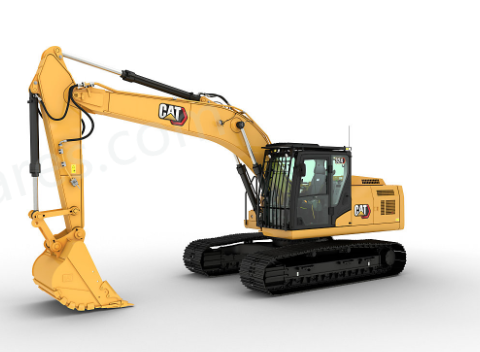
The Cat® 324 excavator is built to handle high-production workloads with the perfect balance of brute strength and refined control. Its powerful Cat® C7.1 engine, high-flow hydraulics, and advanced electrohydraulic system give you the muscle to move heavy material fast, without burning through your budget. With reinforced structures, field-proven durability, and easy-to-maintain components, the 324 is your go-to solution for tackling tough jobs with less downtime. CAT Excavator 322Profit-Driven Powerhouse for Heavy Loads
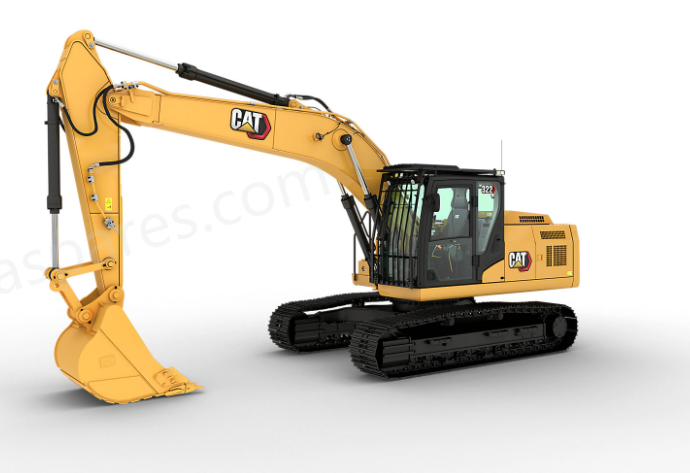
When you need muscle, precision, and cost control in one machine, the Cat® 322 excavator delivers. Purpose-built for high production, the 322 pairs fast cycle times with large bucket options to move more material in fewer passes. Its responsive electrohydraulic controls and rugged design keep you productive on the tough jobs, while smart fuel efficiency and streamlined maintenance help you stay profitable every step of the way. Whether you’re loading, trenching, or lifting, the 322 is a heavy-duty workhorse that pays you back. CAT Excavator 321Versatility at the Lowest Cost Per Hour
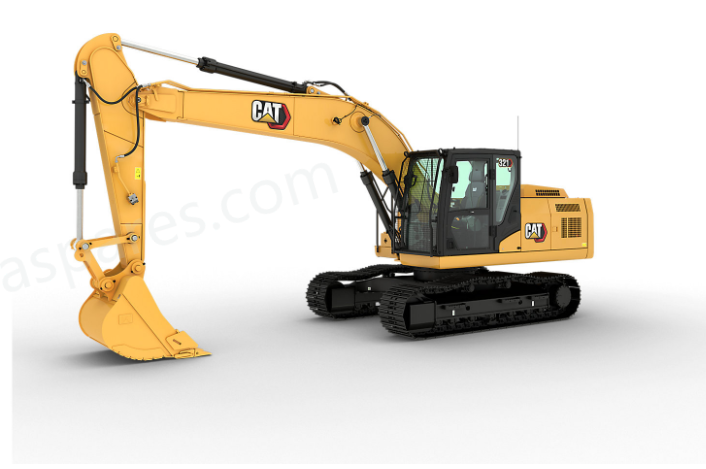
Powered by the reliable Cat® C3.6 engine, the Cat® 321 excavator delivers high torque and fast cycle times to maximize productivity. Reinforced Cat structures extend machine life and withstand the toughest conditions, while the latest cab design puts operator safety and comfort first. Every core system undergoes rigorous testing, so you can count on consistent, reliable performance shift after shift.