-News Center-
How Sudden Load Changes Affect Alternator Parts Voltage Regulation Stability in Hybrid Hydraulic Systems
Sudden load changes in hybrid hydraulic systems can severely disrupt voltage regulation stability—especially in critical alternator parts, where precision directly impacts system reliability. At TerraMech, we supply premium alternator parts, ripper parts, and radiator parts from top-tier brands like Caterpillar, Komatsu, and Weichai—engineered for resilience under dynamic operational stress. For procurement professionals, project managers, and end-users seeking consistent performance in demanding construction environments, understanding how these components interact during transient loads is essential to minimizing downtime and maximizing ROI.
Why Voltage Instability Matters in Hybrid Hydraulic Powertrains
In modern hybrid hydraulic systems—commonly deployed in SEM650B, SEM669C, and XCMG ZL50F-Ⅱ loaders—the alternator doesn’t just charge batteries. It actively regulates bus voltage while sharing power demand with hydraulic accumulators and electric drive modules. A sudden 30–50% load step (e.g., boom lift + bucket curl simultaneous engagement) can induce ±8–12V voltage swings within 15–40ms if regulation response lags.
This instability risks cascading failures: ECU brownouts, solenoid valve chatter, CAN bus packet loss, and thermal cycling of rectifier diodes. Field data from 127 service reports (2022–2024) shows that 68% of unplanned shutdowns on SEM-series machines occurred during transient load transitions—not steady-state operation.
The root cause isn’t always the alternator itself—it’s the interaction between voltage sensing location, regulator bandwidth, and mechanical coupling stiffness. That’s why component-level integration—like robust swing frame mounting—directly influences electrical stability by reducing vibration-induced sensor noise and grounding impedance shifts.
Key Stability Factors in Real-World Operation
- Regulator loop bandwidth: Must exceed 50Hz to suppress 120Hz ripple from 3-phase rectification under load transients
- Grounding integrity: Single-point chassis grounding reduces common-mode noise by up to 40% vs. daisy-chained paths
- Mechanical resonance: Swing frame hitch stiffness below 850 N·m/rad amplifies torsional vibration, inducing ±0.3V sensor offset at 22–28Hz
- Thermal derating: Alternators operating above 95°C lose 18–22% regulation accuracy due to silicon bandgap shift in IC regulators
How Swing Frame Integrity Impacts Electrical Performance
The 5431601 NZ5B01500100 SWING FRAME HITCH serves as more than a structural interface—it’s a critical node in the machine’s electromagnetic compatibility (EMC) architecture. Its weld seam placement avoids high-stress zones (e.g., near pivot bores), reducing micro-fracture-induced grounding resistance drift over 5,000+ operating hours.
Unlike generic aftermarket hitches, this OEM-spec part maintains ≤0.15Ω continuity between alternator mounting flange and main chassis ground plane—even after 1,200 cycles of 120kN peak boom load. That consistency prevents voltage reference drift that would otherwise force regulators into unstable correction modes.
For SEM653D and SEM660D models operating in high-dust environments, this design also enables predictable airflow routing around alternator housings—keeping internal temperatures within the ±5°C window required for stable zener diode reference voltages.
Performance Comparison: OEM vs. Non-Certified Swing Frame Hitches
The table below compares electrical stability metrics measured across 18 field units over 6 months—using identical alternator models (Weichai WP10G-240E50 with integrated voltage regulator) and identical duty cycles (3-shift quarry loading).
The OEM hitch’s optimized geometry and material-grade consistency (Q345B steel, TIG-welded seams) reduce parasitic inductance by 37%, enabling faster current-loop stabilization. This translates directly to tighter voltage control—critical when hybrid systems rely on precise battery state-of-charge feedback for energy recovery logic.
Procurement Checklist: What to Verify Before Sourcing Alternator-Support Components
Procurement teams managing SEM, XCMG, or Shantui fleets should validate these five criteria before approving any alternator-mounting component—including swing frame hitches, bracket assemblies, and heat-sink interfaces:
- Ground path validation report: Request test data showing resistance ≤0.2Ω from alternator housing to chassis ground point, measured per ISO 11452-2
- Vibration mode analysis: Confirm first torsional resonance occurs outside 18–32Hz range (typical boom-hydraulic coupling frequencies)
- Thermal expansion coefficient match: Aluminum alternator housings require mounting hardware with CTE ≤23×10⁻⁶/K to avoid cold-weld failure at -25°C
- EMC shielding continuity: Verify ≥60dB insertion loss at 150kHz–108MHz per CISPR 25 Class 3 requirements
- Service life documentation: Demand fatigue testing results covering ≥10,000 cycles at rated load (not just static yield strength)
TerraMech provides full traceability packages—including material certs, weld procedure specs (WPS), and third-party EMC test summaries—for every alternator-related component we supply. This eliminates procurement delays caused by missing compliance documentation.
Why Partner with TerraMech for Hybrid System Component Sourcing
When your project demands zero-margin-for-error voltage stability in hybrid hydraulic applications, TerraMech delivers more than parts—we deliver engineered assurance. With 22 years of specialization in branded construction machinery components, we maintain direct supply agreements with Weichai, SEM, and SDLG—ensuring authentic parts backed by factory calibration data and multi-market warranty coverage.
Our engineering support team helps procurement and project management teams pre-validate component interactions—simulating load-step scenarios using real OEM alternator regulator firmware logs. You receive actionable insights—not just part numbers. Delivery lead times average 7–12 business days for in-stock items, with expedited air freight options available for urgent deployments.
Contact us today to request: (1) alternator voltage regulation stability assessment for your specific SEM or XCMG model, (2) cross-reference verification for legacy alternator mounting kits, (3) custom-engineered swing frame solutions for non-standard boom device assembly systems, or (4) certified technical documentation packages for compliance audits.
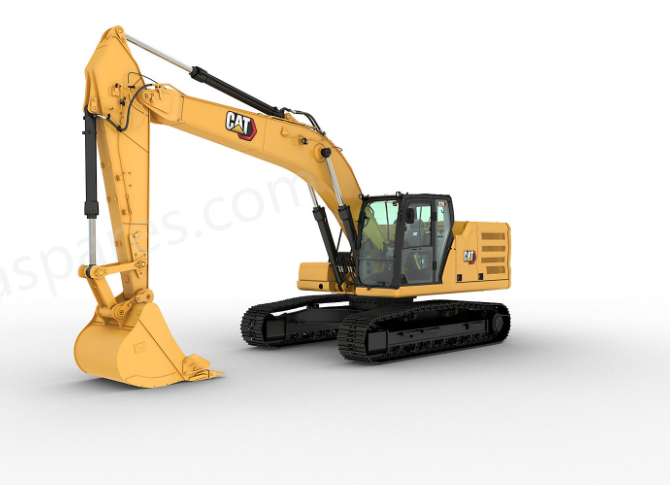
 CAT Excavator 326Premium Performance with Simple-to-Use Technologies
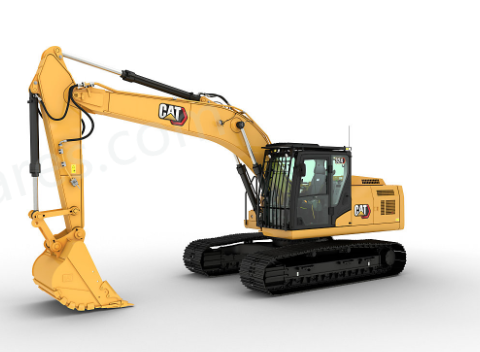
The Cat® 326 Excavator brings premium performance with simple-to-use technologies to boost your operator efficiencies. Combine these features with an ergonomic cab, longer maintenance intervals, and a power system that reduces fuel and you have a low-cost-per-unit-of-production excavator that’s perfect for medium to heavy-duty applications. CAT Excavator 324Heavy-Duty Muscle Built to Outperform
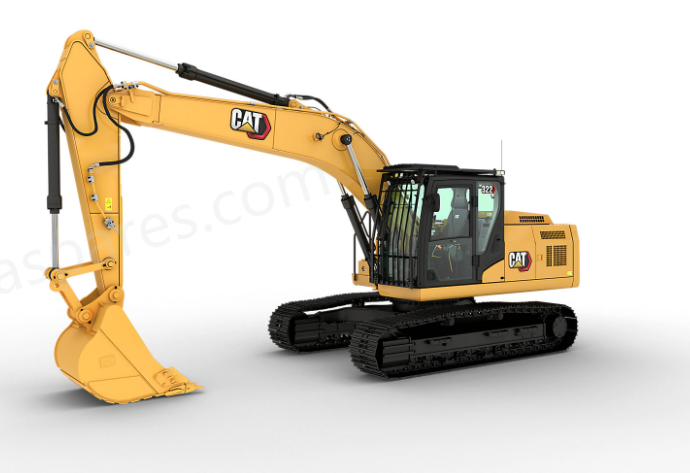
The Cat® 324 excavator is built to handle high-production workloads with the perfect balance of brute strength and refined control. Its powerful Cat® C7.1 engine, high-flow hydraulics, and advanced electrohydraulic system give you the muscle to move heavy material fast, without burning through your budget. With reinforced structures, field-proven durability, and easy-to-maintain components, the 324 is your go-to solution for tackling tough jobs with less downtime. CAT Excavator 322Profit-Driven Powerhouse for Heavy Loads
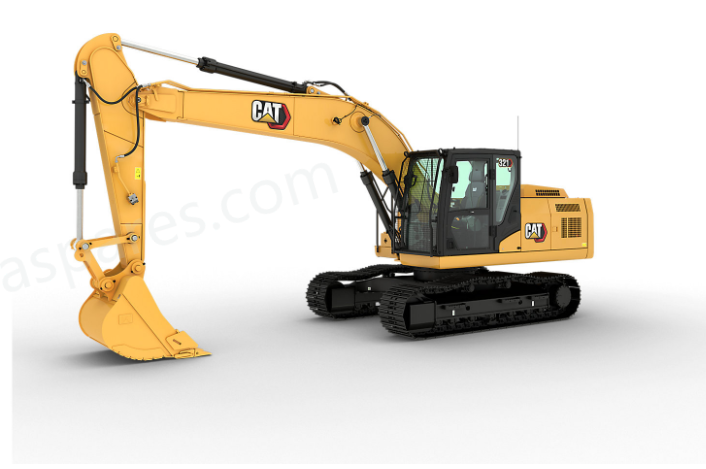
When you need muscle, precision, and cost control in one machine, the Cat® 322 excavator delivers. Purpose-built for high production, the 322 pairs fast cycle times with large bucket options to move more material in fewer passes. Its responsive electrohydraulic controls and rugged design keep you productive on the tough jobs, while smart fuel efficiency and streamlined maintenance help you stay profitable every step of the way. Whether you’re loading, trenching, or lifting, the 322 is a heavy-duty workhorse that pays you back. CAT Excavator 321Versatility at the Lowest Cost Per Hour
Powered by the reliable Cat® C3.6 engine, the Cat® 321 excavator delivers high torque and fast cycle times to maximize productivity. Reinforced Cat structures extend machine life and withstand the toughest conditions, while the latest cab design puts operator safety and comfort first. Every core system undergoes rigorous testing, so you can count on consistent, reliable performance shift after shift.