-News Center-
2026 Block Brake Pads Price Drivers and Cost Outlook
For finance approvers planning 2026 procurement budgets, understanding what drives block brake pads pricing is essential to controlling total equipment maintenance costs. From raw material volatility and OEM brand positioning to supply chain shifts and fleet usage demands, several factors can reshape cost expectations. This outlook helps decision-makers evaluate pricing trends more accurately and make smarter purchasing choices for construction machinery parts.
In heavy equipment fleets, block brake pads are a relatively small line item per unit, but they can influence maintenance frequency, machine availability, and safety exposure across 10, 50, or even 200 machines. For budget owners, the real issue is not only unit price, but the total cost per operating hour.
With more than 20 years in construction machinery and parts supply, TerraMech supports buyers sourcing branded equipment components from Caterpillar, Komatsu, Volvo, SEM, Shantui, XCMG, SDLG, Weichai, and SDEC. That market perspective is useful when evaluating how block brake pads prices may move in 2026 and where procurement teams can protect margins.
What Will Drive Block Brake Pads Prices in 2026
The 2026 cost outlook for block brake pads will likely be shaped by 5 main variables: friction material input costs, steel backing prices, OEM versus aftermarket positioning, logistics lead times, and machine utilization intensity. Finance approvers should review all 5 together rather than approving on price alone.
1. Raw material volatility remains the first pricing lever
Most block brake pads depend on a mix of friction compounds, metal content, adhesives, and machined or stamped support materials. If steel input or specialty friction additives rise by 8% to 15%, the finished part price may not increase at the same rate, but it often moves enough to affect annual MRO budgets.
For high-duty construction machinery, lower-grade friction materials may look attractive during quote comparison, yet shorter service life can raise replacement frequency by 20% to 40%. That turns an apparent savings decision into a higher annual cost per machine.
2. OEM brand position and specification level matter
Block brake pads are not fully interchangeable from a cost-performance perspective, even when dimensions appear similar. Branded components are often priced 15% to 35% above generic alternatives because of tighter production tolerances, better friction stability, and more predictable wear patterns under heavy loads.
For finance teams, the better comparison is not OEM versus aftermarket in isolation. It is service interval versus replacement cost versus downtime exposure. A part with a 1.2 times higher purchase price can still lower annual spend if replacement intervals are extended from 800 hours to 1,100 hours.
Why specification matching affects budget accuracy
In bulldozers, loaders, and other construction machines, brake system performance is tied to load profile, slope operation, operator habits, and ambient conditions. A mismatch in hardness, heat resistance, or contact surface can accelerate wear on both the brake pad and adjacent components.
The table below shows common price drivers that finance approvers should include when reviewing 2026 block brake pads quotations.
The key takeaway is that the quoted purchase price of block brake pads is only one part of the budget equation. In many fleets, usage intensity and replacement frequency create a larger annual variance than raw unit price alone.
3. Supply chain shifts can distort quarter-to-quarter pricing
Lead times for mechanical spare parts can vary from 7 to 15 days for stocked items and 3 to 6 weeks for production-based replenishment. When demand spikes in one quarter, buyers without framework supply arrangements may face rushed freight charges or forced substitution with higher-priced stock.
This is particularly relevant for groups managing mixed fleets across several brands. Standardization helps, but each machine family may still require distinct block brake pads specifications, making planning accuracy more important than last-minute spot buying.
How Finance Approvers Should Evaluate Total Cost Instead of Unit Cost
A sound 2026 approval process should compare at least 4 variables: unit price, expected service life, labor replacement time, and downtime cost. For a machine earning revenue daily, one unplanned stoppage can outweigh the price difference between two brake pad options.
A practical 4-point approval framework
- Check whether the quoted block brake pads match machine model, brake system design, and operating load profile.
- Estimate replacement interval in hours, not just purchase cost per set.
- Calculate labor and downtime exposure for each replacement event.
- Review supplier reliability, stock depth, and delivery consistency over a 12-month cycle.
Where low-price buying often fails
The most common mistake is approving the lowest quotation without validating material grade, wear consistency, or production traceability. In practice, cheaper block brake pads may require 2 replacements where a better-grade part needs only 1 over the same operating period.
A second mistake is excluding workshop labor from the approval model. If each replacement takes 2 to 4 labor hours and affects machine scheduling, the maintenance event itself becomes a major cost component.
The following comparison table can help procurement and finance teams align on a more realistic decision basis for block brake pads in construction machinery fleets.
For finance approvers, the higher-spec option is not automatically the right choice. The right choice is the one with the lower cost per operating hour and the better fit for fleet utilization, maintenance staffing, and replenishment lead time.
Budget Planning Tactics for 2026 Construction Machinery Parts Procurement
If your organization is preparing annual or semiannual spare parts budgets, block brake pads should be grouped with other wear and hydraulic system items into a structured replacement plan. This helps finance teams reduce emergency purchases and smooth cash flow across 4 quarters.
Use tiered purchasing instead of a single-volume assumption
A practical method is to build three demand bands: baseline demand, peak seasonal demand, and contingency demand. For example, 70% of projected annual volume can be budgeted as standard replenishment, 20% as seasonal variance, and 10% as contingency stock.
This approach is especially useful when fleets operate across roadwork, quarry, and earthmoving environments where braking wear differs significantly. It keeps approval controls tight without restricting maintenance responsiveness.
Pair brake parts planning with adjacent component review
Brake system cost control often improves when procurement teams evaluate connected parts at the same time. In many machine maintenance plans, hydraulic and transmission-support parts influence service timing and workshop access. For example, teams sourcing Shantui parts may also coordinate orders for hydraulic items such as SHANTUI BULLDOZER SPARE PARTS 16Y-11-40000 PUMP SD22, especially when aligning service windows on SD16, SD22, or SD32 series equipment.
That kind of bundled procurement can reduce fragmented freight, improve machine availability planning, and lower indirect service expense. It is also consistent with lifecycle-based maintenance thinking rather than isolated part buying.
Supplier checks before final approval
- Confirm model compatibility and part application before PO release.
- Ask for expected lead time ranges, such as 7–15 days or 3–4 weeks.
- Review export handling capability for cross-border shipments.
- Check whether the supplier can support mixed-brand construction machinery demand.
- Request guidance on service life expectations under different duty cycles.
Common Questions from Finance Teams About Block Brake Pads
Should 2026 budgets assume price increases?
In most cases, yes, but not uniformly. A reasonable budgeting method is to prepare for a moderate movement band rather than a fixed number. For many mechanical wear parts, a planning buffer of 5% to 12% is often more practical than assuming flat pricing.
Is aftermarket always more economical than OEM?
Not necessarily. Aftermarket block brake pads can be cost-effective when specification control is strong and supplier consistency is proven. However, if wear life is unstable or downtime risk rises, the lower purchase price may not translate into lower annual cost.
How often should usage assumptions be reviewed?
For active construction machinery fleets, quarterly review is a practical minimum. A 90-day cycle helps capture changes in operating intensity, route condition, operator mix, and emergency maintenance trends before they distort the yearly budget.
For 2026, the most effective strategy is to treat block brake pads as a lifecycle cost category rather than a simple consumable purchase. Finance approvers who compare material quality, expected service intervals, replacement labor, and supply reliability will make better decisions than those relying only on the lowest quote.
TerraMech supports buyers who need dependable branded construction machinery parts, practical sourcing guidance, and clearer cost planning across mixed equipment fleets. If you are building your 2026 maintenance budget or reviewing parts sourcing strategy, contact us now to get tailored procurement advice, discuss compatible options, and explore more solutions for your machinery parts program.
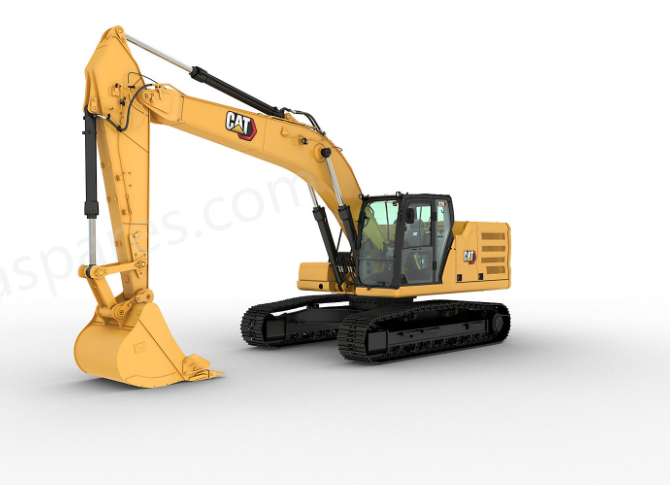
 CAT Excavator 326Premium Performance with Simple-to-Use Technologies
The Cat® 326 Excavator brings premium performance with simple-to-use technologies to boost your operator efficiencies. Combine these features with an ergonomic cab, longer maintenance intervals, and a power system that reduces fuel and you have a low-cost-per-unit-of-production excavator that’s perfect for medium to heavy-duty applications. CAT Excavator 324Heavy-Duty Muscle Built to Outperform
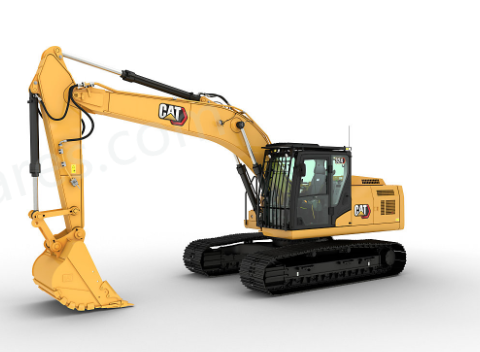
The Cat® 324 excavator is built to handle high-production workloads with the perfect balance of brute strength and refined control. Its powerful Cat® C7.1 engine, high-flow hydraulics, and advanced electrohydraulic system give you the muscle to move heavy material fast, without burning through your budget. With reinforced structures, field-proven durability, and easy-to-maintain components, the 324 is your go-to solution for tackling tough jobs with less downtime. CAT Excavator 322Profit-Driven Powerhouse for Heavy Loads
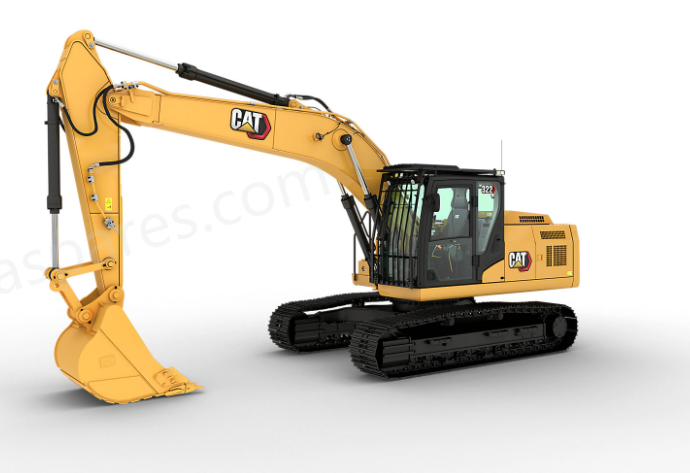
When you need muscle, precision, and cost control in one machine, the Cat® 322 excavator delivers. Purpose-built for high production, the 322 pairs fast cycle times with large bucket options to move more material in fewer passes. Its responsive electrohydraulic controls and rugged design keep you productive on the tough jobs, while smart fuel efficiency and streamlined maintenance help you stay profitable every step of the way. Whether you’re loading, trenching, or lifting, the 322 is a heavy-duty workhorse that pays you back. CAT Excavator 321Versatility at the Lowest Cost Per Hour
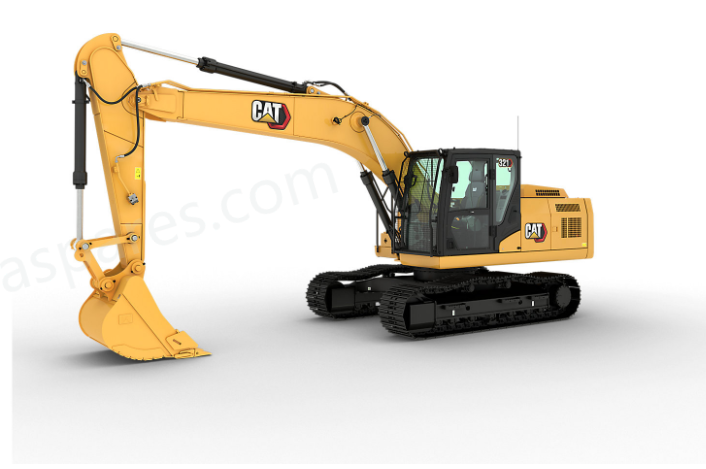
Powered by the reliable Cat® C3.6 engine, the Cat® 321 excavator delivers high torque and fast cycle times to maximize productivity. Reinforced Cat structures extend machine life and withstand the toughest conditions, while the latest cab design puts operator safety and comfort first. Every core system undergoes rigorous testing, so you can count on consistent, reliable performance shift after shift.