-News Center-
EU CBAM Carbon Data Reporting Extended to Generic Metal Parts
Brussels, April 2026 — Starting 1 May 2026, the European Union’s Carbon Border Adjustment Mechanism (CBAM) will extend mandatory upstream supply chain carbon emissions reporting to exporters of generic mechanical components—including transmission parts, hydraulic elements, and other metal-processed spare parts. This marks a significant operational shift for Chinese manufacturers supplying EU markets, as compliance now hinges not only on their own production emissions but also on verifiable, third-party-validated carbon data from raw material smelting, heat treatment, and surface finishing stages.
Event Overview
From 1 May 2026, the EU CBAM Regulation mandates that exporters of steel, aluminium, cement, hydrogen, electricity, and fertilisers submit verified carbon emission data covering upstream processes. The European Commission has confirmed that this requirement is being operationally extended to certain categories of generic metal-based mechanical components—specifically those classified under CN codes falling within Chapters 84 and 85 of the EU Combined Nomenclature, where metal processing constitutes the core value-add. Exporters failing to provide audited carbon intensity data for upstream suppliers risk customs delays, rejection of CBAM declarations, and potential exclusion from importer procurement lists.
Industries Affected
Direct Trading Enterprises
Export-oriented trading companies acting as EU-bound consignors must now collect, consolidate, and validate carbon data across multi-tier supplier networks—not just from final assemblers but from foundries, forging shops, and plating facilities. Their exposure lies in contractual liability: EU importers increasingly embed CBAM compliance clauses into purchase orders, making incomplete or unverified data grounds for shipment rejection or penalty deductions.
Raw Material Procurement Enterprises
Firms sourcing billets, ingots, or pre-finished forgings from domestic smelters face new due diligence obligations. They must now assess whether upstream suppliers maintain ISO 14064-aligned GHG inventories, possess traceable energy source records (e.g., grid mix vs. green power), and allow third-party verification access. Absent such capabilities, procurement enterprises may need to requalify entire material streams—or absorb cost premiums from compliant suppliers.
Processing & Manufacturing Enterprises
Metal component manufacturers performing heat treatment, machining, or electroplating must quantify process-level emissions—including furnace fuel type, electricity origin, and chemical usage—and map them to specific product batches. Unlike previous voluntary schemes, CBAM now requires batch-level carbon attribution, meaning ERP and MES systems must support granular emission tracking tied to production orders and material lots.
Supply Chain Service Providers
Logistics integrators, customs brokers, and certification bodies are adapting service offerings to include CBAM-specific documentation audits, upstream data gap assessments, and verification readiness reviews. Notably, demand is rising for bilingual (EN/CN) CBAM declaration support—especially for SMEs lacking dedicated sustainability teams—making interoperability with EU-accredited verifiers a key differentiator.
Key Focus Areas and Recommended Actions
Map and Prioritise Upstream Emission Hotspots
Focus initial efforts on stages contributing >70% of total scope 1+2 emissions per part family—typically primary metal melting, annealing, and chrome plating. Use tier-1 supplier questionnaires aligned with CBAM Annex IV reporting templates to identify data gaps before May 2026.
Engage Accredited Verifiers Early
Select EU-recognised verifiers (listed in the EU’s JRC database) capable of auditing non-EU upstream operations. Note: Verification must cover both direct emissions (e.g., natural gas combustion) and indirect emissions (e.g., purchased electricity grid factors), with evidence traceable to calendar-year 2025 operations.
Update Internal Documentation Protocols
Integrate CBAM-relevant fields into existing BOMs and production records—e.g., ‘smelting origin country’, ‘heat treatment energy source’, ‘surface treatment chemistry’. Avoid standalone spreadsheets; instead, embed carbon data attributes into ERP modules to ensure audit trail integrity.
Editorial Perspective / Industry Observation
Observably, this expansion signals a structural pivot in CBAM implementation—from sectoral containment to value-chain permeation. While earlier phases targeted bulk commodity producers, the inclusion of generic parts reflects the EU’s growing emphasis on embodied carbon transparency across *all* manufactured goods entering its market. Analysis shows this is less about immediate revenue generation (CBAM transitional phase remains levy-free until 2026) and more about establishing enforceable data infrastructure ahead of full financial application in 2027. From an industry standpoint, the real challenge lies not in measurement capability—but in harmonising fragmented supplier data practices across China’s Tier-2 and Tier-3 metalworking ecosystem.
Conclusion
This regulatory evolution does not merely raise compliance thresholds—it redefines competitiveness in export-oriented manufacturing. Success will hinge less on isolated decarbonisation projects and more on systemic data governance: traceable, verifiable, and interoperable carbon accounting embedded at every node of the supply chain. For EU-bound metal component exporters, May 2026 is not a deadline but a baseline reset.
Source Attribution
European Commission Implementing Regulation (EU) 2023/1773 (as amended by Commission Delegated Regulation (EU) 2026/XXX, published 12 March 2026); CBAM Transitional Reporting Portal Guidance v3.2 (JRC Technical Note, February 2026). Note: Final CN code coverage for mechanical components remains subject to EU Customs Authority clarification and is expected by Q3 2026.
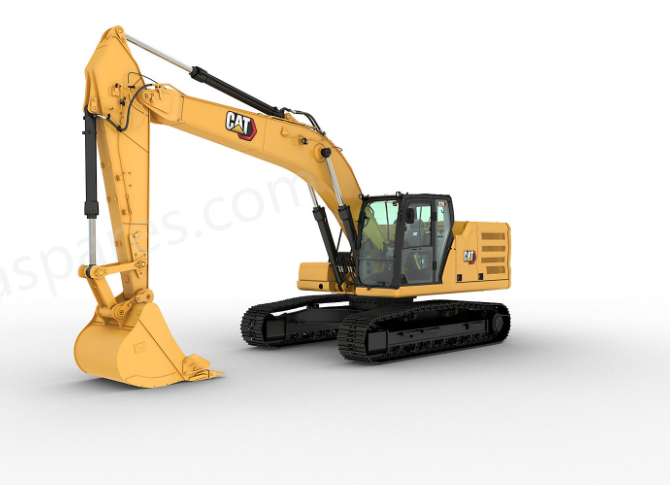
 CAT Excavator 326Premium Performance with Simple-to-Use Technologies
The Cat® 326 Excavator brings premium performance with simple-to-use technologies to boost your operator efficiencies. Combine these features with an ergonomic cab, longer maintenance intervals, and a power system that reduces fuel and you have a low-cost-per-unit-of-production excavator that’s perfect for medium to heavy-duty applications. CAT Excavator 324Heavy-Duty Muscle Built to Outperform
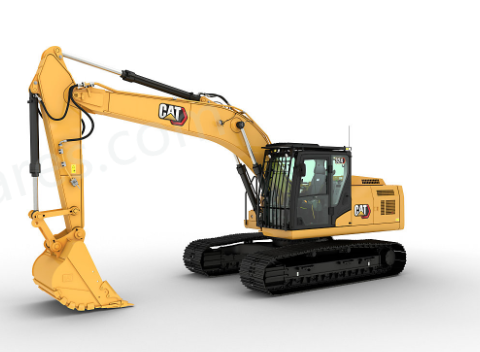
The Cat® 324 excavator is built to handle high-production workloads with the perfect balance of brute strength and refined control. Its powerful Cat® C7.1 engine, high-flow hydraulics, and advanced electrohydraulic system give you the muscle to move heavy material fast, without burning through your budget. With reinforced structures, field-proven durability, and easy-to-maintain components, the 324 is your go-to solution for tackling tough jobs with less downtime. CAT Excavator 322Profit-Driven Powerhouse for Heavy Loads
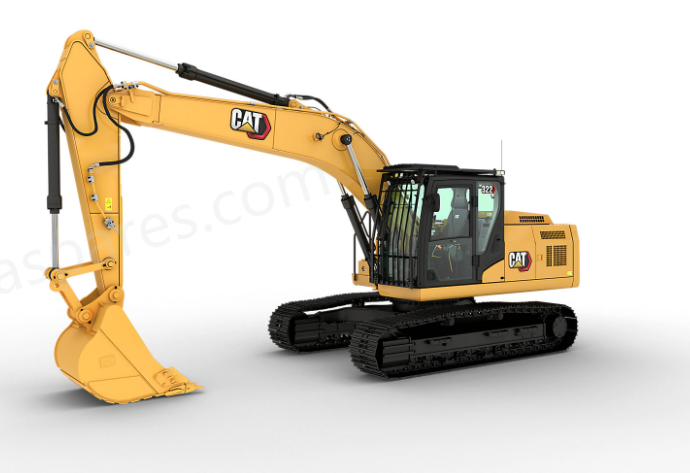
When you need muscle, precision, and cost control in one machine, the Cat® 322 excavator delivers. Purpose-built for high production, the 322 pairs fast cycle times with large bucket options to move more material in fewer passes. Its responsive electrohydraulic controls and rugged design keep you productive on the tough jobs, while smart fuel efficiency and streamlined maintenance help you stay profitable every step of the way. Whether you’re loading, trenching, or lifting, the 322 is a heavy-duty workhorse that pays you back. CAT Excavator 321Versatility at the Lowest Cost Per Hour
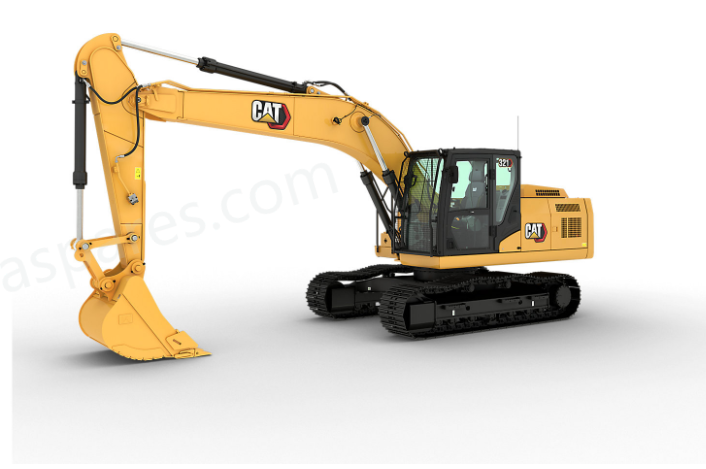
Powered by the reliable Cat® C3.6 engine, the Cat® 321 excavator delivers high torque and fast cycle times to maximize productivity. Reinforced Cat structures extend machine life and withstand the toughest conditions, while the latest cab design puts operator safety and comfort first. Every core system undergoes rigorous testing, so you can count on consistent, reliable performance shift after shift.