-News Center-
US CBP Requires Country-of-Origin Supply Chain Declaration for Generic Mechanical Parts
Effective May 17, 2026, U.S. Customs and Border Protection (CBP) will require importers of generic mechanical parts classified under HS codes 8481–8487—including hydraulic components, bearings, fasteners, and power transmission parts—to submit a certified Country-of-Origin Supply Chain Declaration at time of entry. This requirement directly affects exporters from China supplying U.S. distributors, OEMs, and MRO channels, with implications for documentation readiness and shipment timelines.
Event Overview
The U.S. Customs and Border Protection (CBP) announced a new regulatory requirement effective May 17, 2026. Under this rule, importers of goods falling within HS headings 8481–8487 must provide, upon entry into the United States, a certified Country-of-Origin Supply Chain Declaration. The declaration must specify the final assembly location and the countries of origin for all suppliers three tiers or more upstream in the supply chain. The requirement applies to generic mechanical and spare parts—including but not limited to hydraulic components, bearings, fasteners, and transmission elements.
Which Subsectors Are Affected
Direct Trading Enterprises
Companies that export finished mechanical parts from China to U.S. importers face immediate documentation obligations. Because the declaration must be submitted by the U.S. importer—but relies on data provided by foreign suppliers—trading enterprises must now collect, verify, and transmit tiered supplier country-of-origin information to their U.S. counterparts prior to shipment. Delays in data collection may extend customs clearance times and increase the risk of entry rejection or hold.
Contract Manufacturing & OEM Suppliers
Manufacturers producing parts for U.S.-based OEMs or private-label brands are affected when those parts fall under HS 8481–8487. These suppliers often lack visibility into deeper-tier sourcing (e.g., raw material smelters or forging plants). Compliance requires mapping at least three upstream tiers—a task that may expose gaps in current supplier onboarding and traceability systems.
Distribution & MRO Channel Operators
U.S. distributors and MRO (Maintenance, Repair, and Operations) service providers importing generic replacement parts must now validate and certify supply chain origin data before filing entries. Unlike branded products with established traceability, generic parts frequently source from multi-country sub-supplier networks—making consistent verification more complex and operationally burdensome.
What Relevant Enterprises or Practitioners Should Focus On and How to Respond
Monitor official CBP guidance and implementation clarifications
CBP has not yet published the official form, certification criteria, or enforcement thresholds (e.g., whether partial declarations trigger holds). Enterprises should track updates via the Federal Register, CBP’s Informed Compliance Publications, and authorized trade compliance portals—not rely solely on third-party summaries.
Identify high-volume HS 8481–8487 SKUs and assess current traceability depth
Focus first on top-10 SKUs by U.S. shipment volume and confirm whether existing bills of materials and supplier records document origin for at least three upstream tiers. Prioritize items where final assembly occurs in China but key components (e.g., bearing cages, hydraulic valve cores) originate elsewhere—these carry higher verification risk.
Distinguish between policy intent and operational feasibility
Analysis shows CBP’s objective is enhanced supply chain transparency—not necessarily real-time origin tracking for every minor component. However, the requirement mandates certification, meaning self-declaration without supporting evidence may not suffice. Enterprises should treat the rule as a documentation control obligation, not merely a data-reporting exercise.
Initiate cross-border coordination with U.S. importers and Tier 1 suppliers
Chinese exporters should proactively share draft supply chain maps with U.S. importers ahead of May 2026. Jointly define roles: who collects Tier 2–3 data, who validates, who signs the declaration. Align internal SOPs with U.S. partner expectations to avoid last-minute reconciliation delays.
Editorial Perspective / Industry Observation
Observably, this rule signals a shift toward upstream accountability in U.S. import compliance—not just for strategic or regulated goods (e.g., electronics, steel), but for broad-category industrial inputs. It does not introduce new tariffs or quotas, but raises the administrative and evidentiary bar for routine mechanical part imports. From an industry perspective, it functions less as an immediate trade barrier and more as a structural nudge toward greater supply chain documentation discipline. Continued attention is warranted because CBP may expand similar requirements to adjacent HS chapters (e.g., 8407–8409 engines, 8536 electrical fittings) if implementation proves administratively viable.
Conclusion: This requirement reflects an evolving emphasis on supply chain traceability in U.S. customs enforcement—not as a one-off measure, but as part of a broader pattern of origin-related due diligence. It is best understood not as a sudden restriction, but as a formalization of documentation expectations already emerging in bilateral trade discussions and corporate ESG reporting frameworks. Enterprises should prioritize process alignment over crisis response, treating May 2026 as a calibration point—not a deadline-driven inflection.
Source(s): U.S. Customs and Border Protection (CBP) official notice (effective date: May 17, 2026); Harmonized System classification references (HS 8481–8487); CBP’s published scope description for “generic mechanical parts.”
Noted for ongoing observation: CBP’s forthcoming release of the official declaration form, acceptable evidence standards, and any phased enforcement schedule.
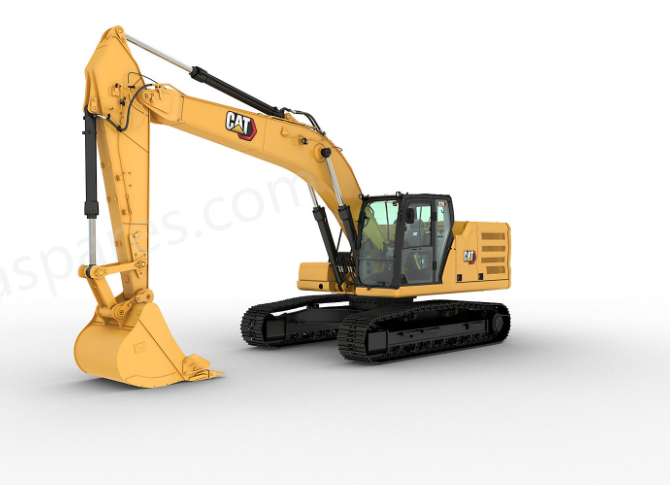
 CAT Excavator 326Premium Performance with Simple-to-Use Technologies
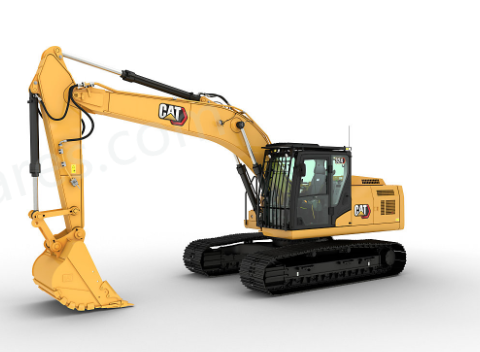
The Cat® 326 Excavator brings premium performance with simple-to-use technologies to boost your operator efficiencies. Combine these features with an ergonomic cab, longer maintenance intervals, and a power system that reduces fuel and you have a low-cost-per-unit-of-production excavator that’s perfect for medium to heavy-duty applications. CAT Excavator 324Heavy-Duty Muscle Built to Outperform
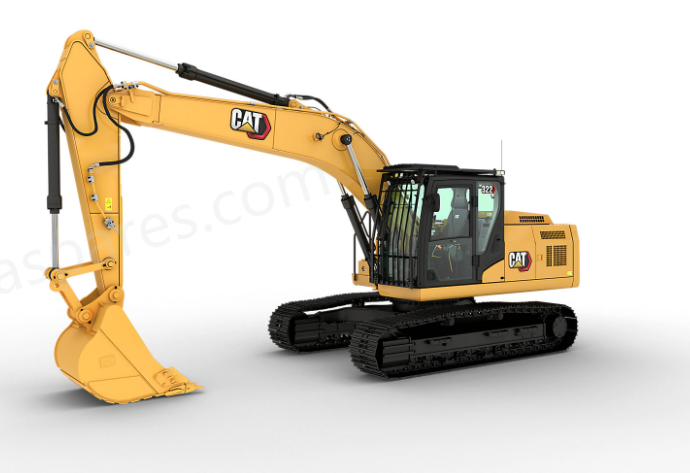
The Cat® 324 excavator is built to handle high-production workloads with the perfect balance of brute strength and refined control. Its powerful Cat® C7.1 engine, high-flow hydraulics, and advanced electrohydraulic system give you the muscle to move heavy material fast, without burning through your budget. With reinforced structures, field-proven durability, and easy-to-maintain components, the 324 is your go-to solution for tackling tough jobs with less downtime. CAT Excavator 322Profit-Driven Powerhouse for Heavy Loads
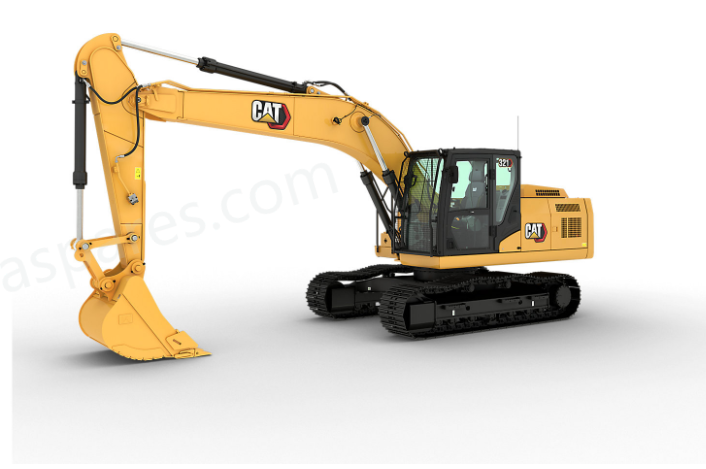
When you need muscle, precision, and cost control in one machine, the Cat® 322 excavator delivers. Purpose-built for high production, the 322 pairs fast cycle times with large bucket options to move more material in fewer passes. Its responsive electrohydraulic controls and rugged design keep you productive on the tough jobs, while smart fuel efficiency and streamlined maintenance help you stay profitable every step of the way. Whether you’re loading, trenching, or lifting, the 322 is a heavy-duty workhorse that pays you back. CAT Excavator 321Versatility at the Lowest Cost Per Hour
Powered by the reliable Cat® C3.6 engine, the Cat® 321 excavator delivers high torque and fast cycle times to maximize productivity. Reinforced Cat structures extend machine life and withstand the toughest conditions, while the latest cab design puts operator safety and comfort first. Every core system undergoes rigorous testing, so you can count on consistent, reliable performance shift after shift.