-News Center-
FDA Expands Import Compliance Review for Auto Generic Parts
The U.S. Food and Drug Administration (FDA) issued a temporary guidance on May 18, 2026, expanding pre-clearance review requirements for certain automotive generic parts—including electronic control modules (ECMs), ABS hydraulic units, and brake caliper pistons—under its Imported Medical Device-Associated Products Pre-Review List. This development directly affects exporters, distributors, and compliance officers in the global automotive parts supply chain, particularly those engaged in U.S.-bound trade from China.
Event Overview
On May 18, 2026, the FDA published a temporary guidance document specifying that certain automotive generic components—namely electronic control modules (ECMs), ABS hydraulic units, and brake caliper pistons—are now included in the Imported Medical Device-Associated Products Pre-Review List. Under this guidance, importers must submit technical documentation, a declaration of conformity, and evidence of the Chinese manufacturer’s ISO 13485 certification status prior to U.S. customs clearance. The FDA has clarified that this is not a binding regulation but a procedural expectation. Nevertheless, major U.S. and Canadian distributors have paused new order approvals in response, impacting delivery timelines and compliance responsiveness for Chinese automotive parts exporters.
Industries Affected by Segment
Direct Trading Enterprises
These include export-oriented trading companies acting as U.S.-bound consignees or authorized representatives. They are affected because they bear primary responsibility for submitting pre-clearance documentation to U.S. Customs and the FDA. Impact manifests as delayed shipment releases, increased administrative burden, and potential order cancellations due to inability to meet documentation deadlines.
Manufacturing Enterprises (OEM/ODM Suppliers)
Chinese manufacturers producing ECMs, ABS hydraulic units, or brake caliper pistons face new upstream compliance demands. Although ISO 13485 is not traditionally required for non-medical automotive parts, this guidance effectively treats these items as subject to medical device–adjacent oversight. Impact includes urgent need to verify or obtain ISO 13485 certification status—and to prepare supporting technical files aligned with FDA expectations—even if the parts themselves are not classified as medical devices.
Distribution & Channel Enterprises (U.S./Canada-Based)
U.S. and Canadian distributors serving aftermarket or light-vehicle replacement channels are affected operationally: several have suspended approval of new purchase orders pending clarity on documentation workflows and liability allocation. This pause disrupts procurement cycles, inventory planning, and vendor onboarding—especially for suppliers lacking ready access to ISO 13485 evidence or standardized technical dossiers.
Supply Chain & Compliance Support Providers
Firms offering regulatory consulting, documentation preparation, or FDA agent services face immediate demand spikes—but also heightened scrutiny. Their role shifts from advisory to operational enablers, as clients require validated templates, certified translations, and traceable submission records. Impact centers on scalability: capacity constraints may emerge if demand surges before standardized interpretation of the guidance is available.
What Relevant Enterprises or Practitioners Should Focus On and How to Respond
Monitor official FDA communications for updates to the temporary guidance
The current document is labeled “temporary,” indicating possible revision or formalization. Enterprises should subscribe to FDA email alerts, track docket numbers (if assigned), and review any subsequent Federal Register notices—particularly for language clarifying scope boundaries (e.g., whether only specific ECM functions trigger inclusion, or whether all variants are covered).
Identify and isolate high-priority SKUs matching the listed components
Not all ECMs or brake components fall under this review; only those explicitly named (e.g., ABS hydraulic units, brake caliper pistons) are currently in scope. Companies should cross-reference their U.S.-bound SKUs against the exact terminology used in the guidance—not broad categories—to avoid overcompliance or missed obligations.
Distinguish between policy signal and operational requirement
Analysis shows this is primarily a risk-mitigation signal rather than an enforceable mandate: no new statutory authority or penalty framework has been introduced. However, distributor-level enforcement (e.g., order freezes) creates de facto commercial pressure. Enterprises should treat documentation readiness as a near-term business continuity measure—not just a regulatory checkbox.
Prepare documentation packages proactively—not reactively
Current best practice is to compile three core elements for each affected SKU: (1) a signed Declaration of Conformity referencing applicable standards (e.g., SAE J1939, ISO 26262 where relevant), (2) verifiable ISO 13485 certification status (including scope statement and certificate validity), and (3) concise technical documentation (e.g., functional description, interface diagrams, material declarations). These should be reviewed internally before submission to U.S. partners.
Editorial Perspective / Industry Observation
Observably, this guidance reflects a broader trend of regulatory convergence at the intersection of automotive electronics and health-adjacent systems—particularly where vehicle safety functions (e.g., braking, stability control) overlap with outcomes traditionally governed by medical device oversight logic. Analysis suggests the FDA is testing a procedural boundary, not asserting jurisdiction over automotive parts per se. From an industry perspective, it is more appropriately understood as an early-stage signal about how dual-use components may be treated in future cross-agency coordination—not yet a settled compliance regime. Continuous monitoring remains essential, as stakeholder feedback and interagency alignment (e.g., with NHTSA) could significantly shape next steps.
This development underscores that regulatory expectations for automotive exports are evolving beyond traditional safety or emissions frameworks. It does not establish new legal obligations for most manufacturers—but it does reveal how commercial gatekeepers (distributors, customs brokers, FDA agents) may interpret and operationalize emerging guidance. For now, the most rational interpretation is that this is a procedural stress test, not a structural shift—yet one demanding immediate, targeted operational attention.
Source Attribution
Main source: U.S. Food and Drug Administration (FDA), Temporary Guidance Document, issued May 18, 2026.
Points requiring ongoing observation: Whether the FDA issues a formal notice in the Federal Register; whether NHTSA or other agencies issue coordinating statements; and whether major distributors publicly revise their order-hold policies in coming weeks.
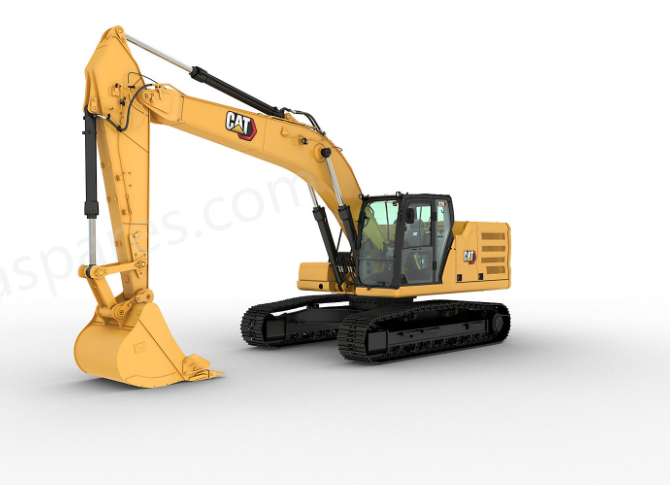
 CAT Excavator 326Premium Performance with Simple-to-Use Technologies
The Cat® 326 Excavator brings premium performance with simple-to-use technologies to boost your operator efficiencies. Combine these features with an ergonomic cab, longer maintenance intervals, and a power system that reduces fuel and you have a low-cost-per-unit-of-production excavator that’s perfect for medium to heavy-duty applications. CAT Excavator 324Heavy-Duty Muscle Built to Outperform
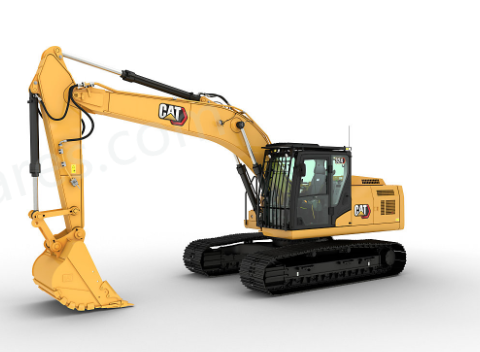
The Cat® 324 excavator is built to handle high-production workloads with the perfect balance of brute strength and refined control. Its powerful Cat® C7.1 engine, high-flow hydraulics, and advanced electrohydraulic system give you the muscle to move heavy material fast, without burning through your budget. With reinforced structures, field-proven durability, and easy-to-maintain components, the 324 is your go-to solution for tackling tough jobs with less downtime. CAT Excavator 322Profit-Driven Powerhouse for Heavy Loads
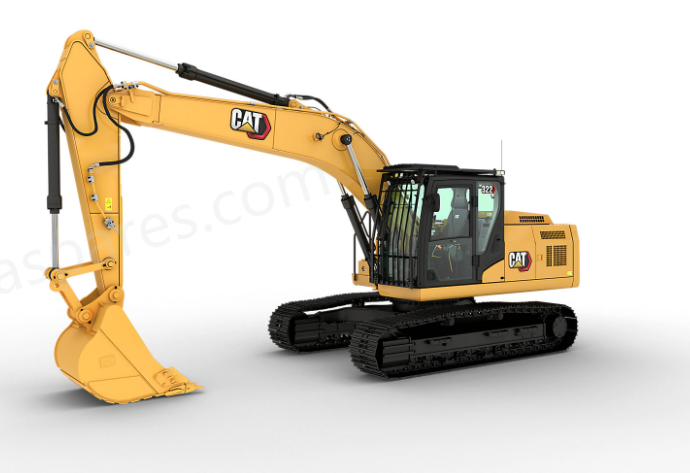
When you need muscle, precision, and cost control in one machine, the Cat® 322 excavator delivers. Purpose-built for high production, the 322 pairs fast cycle times with large bucket options to move more material in fewer passes. Its responsive electrohydraulic controls and rugged design keep you productive on the tough jobs, while smart fuel efficiency and streamlined maintenance help you stay profitable every step of the way. Whether you’re loading, trenching, or lifting, the 322 is a heavy-duty workhorse that pays you back. CAT Excavator 321Versatility at the Lowest Cost Per Hour
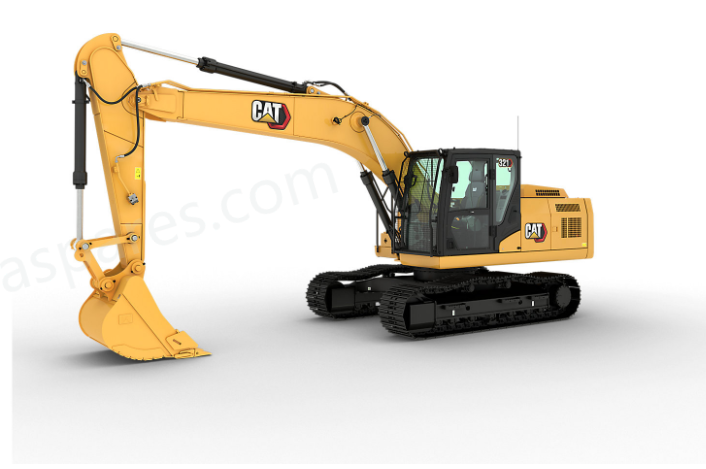
Powered by the reliable Cat® C3.6 engine, the Cat® 321 excavator delivers high torque and fast cycle times to maximize productivity. Reinforced Cat structures extend machine life and withstand the toughest conditions, while the latest cab design puts operator safety and comfort first. Every core system undergoes rigorous testing, so you can count on consistent, reliable performance shift after shift.