-News Center-
5220793 Part Review: What to Check in Drawings, Size, and Installation Position
In construction equipment maintenance, a 5220793 review should never stop at matching the label. Drawing details, actual size, and installation position determine whether the part will fit, carry load correctly, and maintain safe machine operation. For machines working under vibration, dust, shock, and repeated stress, small deviations around 5220793 can quickly become service failures, alignment issues, or avoidable downtime.
Why 5220793 deserves closer review
Mechanical parts in heavy equipment rarely fail because of one visible mistake alone.
More often, trouble begins with an incorrect revision, a hidden dimensional shift, or a mounting position that looks acceptable but changes load transfer.
That is why 5220793 needs a structured check before approval, replacement, or field installation.
For suppliers working across Caterpillar, Komatsu, Volvo, SEM, Shantui, XCMG, SDLG, Weichai, and SDEC platforms, consistency matters as much as availability.
TerraMech operates in that environment, where part verification supports both uptime and risk control across branded construction machinery fleets.
Drawings are the first control point
A drawing review for 5220793 should confirm more than the part number block.
Check the latest revision status, referenced assembly, material notes, tolerances, welding symbols, and any orientation marks.
If the drawing includes critical datums, those datums should match the inspection method used on the shop floor.
A common risk appears when the print is technically correct, but the receiving inspection uses a different measuring origin.
That can make a compliant 5220793 part appear out of spec, or worse, allow a nonconforming part into assembly.
What the drawing review should confirm
- Part number and revision level match the approved sourcing record.
- Material grade, hardness, or surface treatment are clearly identified.
- Hole patterns, edge distances, and interface surfaces match the mating structure.
- Right-hand and left-hand orientation cannot be confused during installation.
- Any weld location avoids high-stress concentration zones where fatigue can begin.
Dimensional checks should focus on fit, not only measurement
Size verification for 5220793 should concentrate on dimensions that influence assembly behavior.
Overall length matters, but so do center distances, flatness, perpendicularity, and the true position of mounting features.
In practice, these dimensions affect preload, clearance, and stress distribution after tightening.
A part can pass basic caliper checks and still create installation force, uneven contact, or accelerated wear.
Installation position changes the real outcome
The installation position of 5220793 is not a secondary detail.
It defines how the part receives load, whether service access remains practical, and whether nearby components keep proper clearance.
On construction machinery, an incorrect position may introduce vibration paths, contact with adjacent structures, or interference during articulation.
That is especially important around chassis and undercarriage-related assemblies, where impact loads are less forgiving.
When reviewing comparable heavy-duty parts such as 5183480 W44097000 SEM BULLDOZER , the same rule applies: correct placement often matters as much as material strength.
Field signs that position may be wrong
- Fasteners require forcing during assembly.
- Uneven witness marks appear after a short run.
- Paint rub, metal contact, or abnormal clearance appears nearby.
- Load-bearing surfaces do not contact evenly.
- Repeated loosening occurs despite correct torque procedures.
Where industry attention is shifting
The industry is paying closer attention to traceability, interchangeability, and inspection discipline.
That shift is practical, not theoretical.
Mixed fleets, aftermarket sourcing, and regional service operations increase the chance that a 5220793 replacement enters the system with incomplete validation.
A reliable review now includes revision tracking, dimensional records, installation photos, and confirmation against the actual machine configuration.
This is also where experienced supply support adds value.
Parts used in underground chassis or related heavy-structure applications benefit from proven manufacturing control, broad model familiarity, and clear export documentation.
A practical review path before release
A useful 5220793 review usually moves through three linked checks.
Start with the drawing and revision record.
Then verify critical dimensions against the defined datums and tolerances.
After that, confirm installation position on the target assembly, not only on paper.
If the part belongs to a broader machine family, compare neighboring part numbers and known substitutions.
That step often reveals whether a geometry difference is acceptable or whether it creates a hidden compatibility risk.
For reference parts with reinforced structure and durable service intent, such as the linked bulldozer component above, weld placement and tool compatibility are also worth checking when the assembly sees variable working conditions.
What to do next with 5220793
A sound decision on 5220793 comes from combining documentation, measurement, and real installation context.
If one element remains uncertain, the review is incomplete.
The next step is to build a short approval checklist around drawing revision, critical dimensions, mounting orientation, and machine-specific fit.
That approach makes future replacement decisions faster and reduces repeat inspection disputes.
For operations handling multiple branded machines, keeping the 5220793 review tied to verified part data and application history is the most practical way to support reliability and safe service performance.
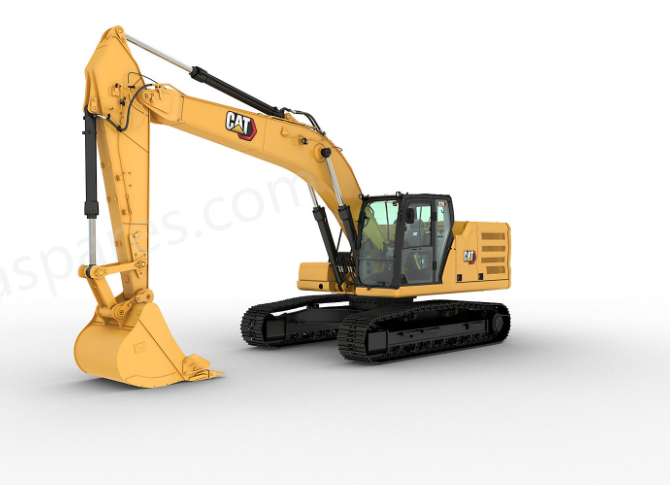
 CAT Excavator 326Premium Performance with Simple-to-Use Technologies
The Cat® 326 Excavator brings premium performance with simple-to-use technologies to boost your operator efficiencies. Combine these features with an ergonomic cab, longer maintenance intervals, and a power system that reduces fuel and you have a low-cost-per-unit-of-production excavator that’s perfect for medium to heavy-duty applications. CAT Excavator 324Heavy-Duty Muscle Built to Outperform
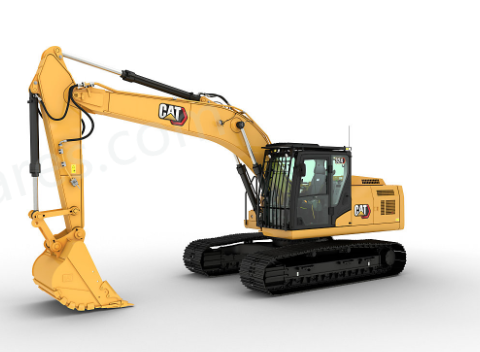
The Cat® 324 excavator is built to handle high-production workloads with the perfect balance of brute strength and refined control. Its powerful Cat® C7.1 engine, high-flow hydraulics, and advanced electrohydraulic system give you the muscle to move heavy material fast, without burning through your budget. With reinforced structures, field-proven durability, and easy-to-maintain components, the 324 is your go-to solution for tackling tough jobs with less downtime. CAT Excavator 322Profit-Driven Powerhouse for Heavy Loads
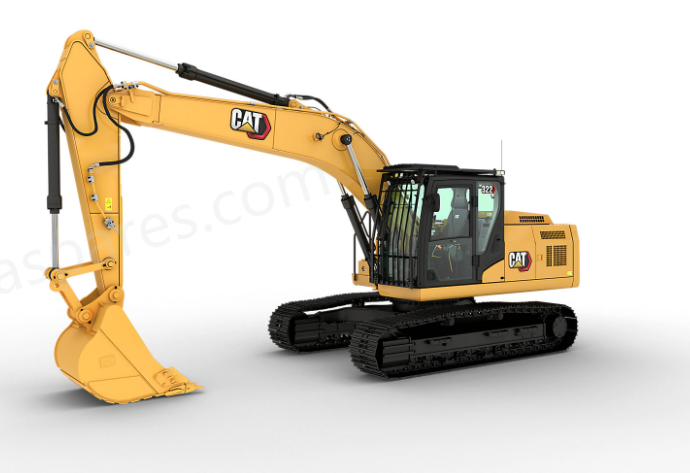
When you need muscle, precision, and cost control in one machine, the Cat® 322 excavator delivers. Purpose-built for high production, the 322 pairs fast cycle times with large bucket options to move more material in fewer passes. Its responsive electrohydraulic controls and rugged design keep you productive on the tough jobs, while smart fuel efficiency and streamlined maintenance help you stay profitable every step of the way. Whether you’re loading, trenching, or lifting, the 322 is a heavy-duty workhorse that pays you back. CAT Excavator 321Versatility at the Lowest Cost Per Hour
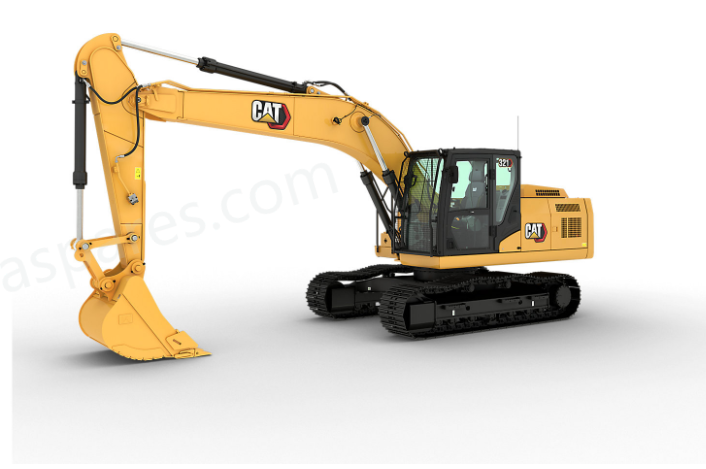
Powered by the reliable Cat® C3.6 engine, the Cat® 321 excavator delivers high torque and fast cycle times to maximize productivity. Reinforced Cat structures extend machine life and withstand the toughest conditions, while the latest cab design puts operator safety and comfort first. Every core system undergoes rigorous testing, so you can count on consistent, reliable performance shift after shift.