


-News Center-
What Maintenance Keeps a Soil Compactor Running Reliably on Site?
A soil compactor earns its keep only when it starts on the first try, holds a steady pass, and stays out of the workshop. Vibration, dust, and constant load wear it down faster than most site machines, and the wear rarely shows up as one dramatic failure. It shows up as a drum that starts to bounce, a hydraulic hose that weeps at a fitting, or an engine that loses power on a hot afternoon. Keeping one reliable is less about major repairs than about catching those small changes early, while they are still cheap to fix.
The most useful way to think about maintenance is in layers. Daily checks catch leaks, loose fasteners, and contamination before a shift starts. Short-interval servicing protects the engine and vibration system from the dust and heat they work in every day. Longer scheduled work replaces wear parts before they take another component with them. If any one layer is skipped, the other two have to work harder, and the machine usually tells you about it at the worst time.
The walkaround that prevents most call-outs
A short walkaround before the first pass is the highest-value maintenance a soil compactor gets. Start with the ground under the machine. Fresh oil, fuel, or hydraulic fluid on the ground is a warning, not a stain to ignore. Trace it to its source while the machine is still cold and clean, because a small leak at a fitting or seal will only get worse under vibration and pressure.
Check fluid levels with the machine on level ground, and look at the condition of the fluid as well as the level. Dark, milky, or gritty oil points to contamination or overheating, and topping it up without finding the cause only delays the problem. Check the drum surface for cracks, loose scrapers, and material build-up. A scraper that no longer sits close to the drum will leave soil stuck to the surface, and that uneven layer changes how the drum contacts the ground.
- Look for loose bolts, pins, and guards, especially around the drum frame and articulation joint.
- Check tyres or drum mounts, lights, mirrors, and the operator platform for damage or loose fittings.
- Inspect hoses for rubbing, cracking, and soft spots where they pass near hot or moving parts.
- Clear dust and soil from cooling inlets, the engine bay, and around the vibration housing.
- Confirm that the controls, brakes, and emergency stop respond normally before moving off.
That last point matters more than it sounds. A control that feels vague or a brake that needs extra travel is often the first sign of wear in a linkage or hydraulic circuit. Noting it at the start of the shift gives you time to plan a repair, rather than discovering it when the machine is already working on a slope or near other plant.
Drum and vibration system: where uneven compaction starts
If a soil compactor is leaving soft spots, the drum and vibration system deserve attention before anything else. The drum should roll cleanly and vibrate evenly across its width. Bouncing, hopping, or a change in vibration tone usually means the ground conditions have changed, a mount has worn, or something in the vibration system is no longer balanced.
Check the drum bearings and mounts for play, heat, and unusual noise after a run. Excessive heat in one bearing, a new vibration at a particular speed, or oil around a seal are all worth investigating. Keep the drum scrapers adjusted and replace them when they wear thin. Worn scrapers do not just leave a mess on the drum, they also allow material to pack into places it should not reach.
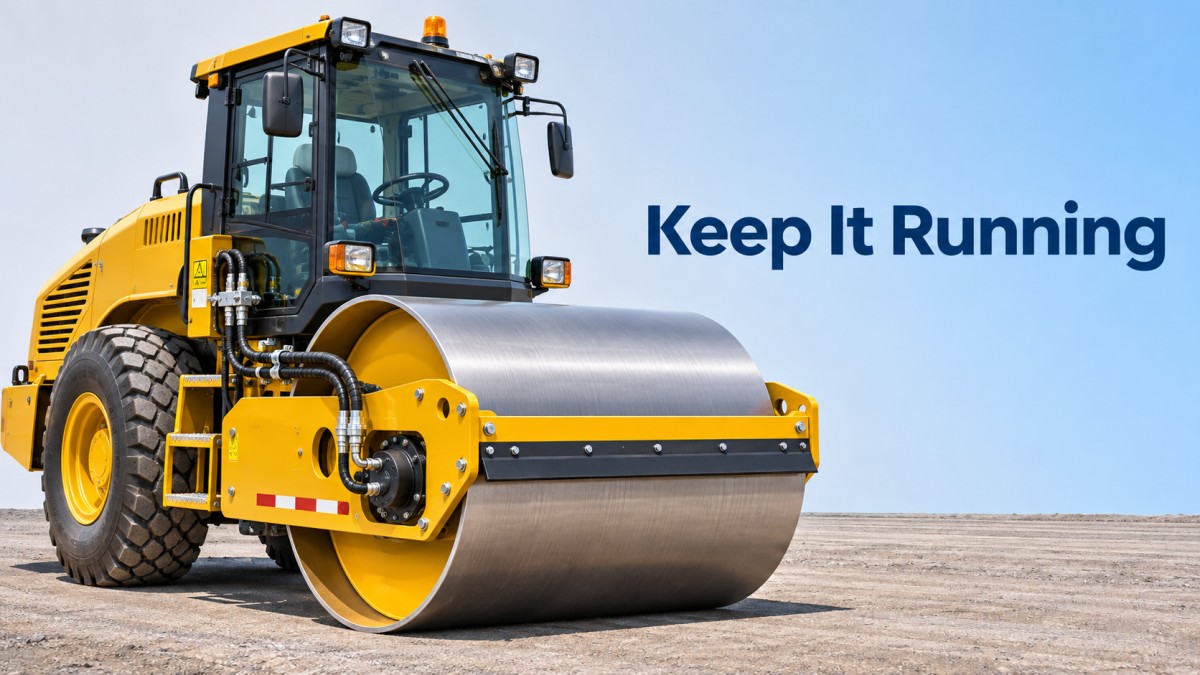
Do not run the vibration system on hard ground with no material to compact unless the machine is designed for it. Dry vibration on concrete or rock puts sharp shock loads through the drum, bearings, and frame, and repeated abuse shortens the life of mounts and seals. The same applies to turning too tightly with vibration engaged, which loads one side of the drum more than the other.
Engine, air, fuel, and cooling
A compactor engine works in the worst conditions for an engine: high dust, high vibration, and long periods at steady load. That makes the air filter the most important routine item. A clogged filter starves the engine of air, raises fuel use, and lets fine dust past the seals when it is eventually disturbed. Clean or replace it according to the working conditions, not just the calendar, and check the housing and intake hoses for leaks that would let unfiltered air in.
Fuel cleanliness matters just as much. Water and dirt in fuel cause rough running and injector wear that is expensive to put right. Drain water separators regularly, keep fuel caps and tank breathers clean, and avoid filling from open or dirty containers on site. Cooling needs the same discipline. A radiator blocked with dust will overheat an engine long before any gauge shows a problem, so blow out fins and screens from the clean side and check coolant level and hose condition while the engine is cool.
Listen for changes as well as looking for them. A new rattle, a belt squeal on start-up, or a change in exhaust colour can point to a belt, mounting, or combustion problem before it becomes a breakdown. Record what you hear and when it started. A short note in the service log is far more useful than trying to remember it two weeks later.
Hydraulics and steering need clean fluid and tight joints
Hydraulics on a soil compactor do heavy work in a dirty environment, so contamination is the main risk. Keep the reservoir cap, filler, and breathers clean before opening them, and change filters on schedule. If a hose is replaced, flush the connection area first and cap open lines so dust cannot enter the system. One particle of grit in a valve can cause slow or jerky steering that is hard to trace afterwards.
Check for slow response, drift, or uneven steering, and check the articulation joint for play. Steering that pulls to one side or takes longer to respond often comes from a worn joint or a cylinder seal starting to bypass, rather than from the pump itself. Tighten loose fittings to the correct setting, but do not over-tighten a weeping fitting to stop a leak. That usually damages the seal or thread and turns a small repair into a larger one.
Planned servicing and wear parts
Daily checks only work if they sit alongside planned servicing. Follow the manufacturer schedule for oil, filters, coolant, and vibration-system service, and adjust it for dusty or wet sites where service items wear faster. Keep a simple log for each machine: hours, fluid changes, filter changes, hose replacements, and any unusual noise or vibration. Patterns become clear in a log that are easy to miss from memory, such as a bearing that needs attention every few months or a filter that clogs much faster on one site than another.
Plan wear-part replacement before failure. Scrapers, seals, mounts, belts, and hoses are cheaper to replace during a planned stop than after they fail on site. Keep the common items in stock for the models you support most, and check that replacement parts match the machine. A part that looks close but is not quite right can cause a leak, a misalignment, or a return visit.
Across a mixed fleet, that planning gets easier when other machines share the same approach to longer intervals and straightforward servicing. The CAT Excavator 323 GC [blocked], for example, is built around longer service intervals and a durable, low-cost-per-hour design, which helps when you are aligning service stops across different types of plant rather than treating each machine in isolation.
When to take the machine out of service
Not every fault can wait for the next service. Pull the machine out if vibration changes suddenly, if steering or braking feels unsafe, if a hydraulic hose bursts or sprays, if the engine overheats, or if a drum bearing runs hot or noisy. Continuing to work in those conditions risks damage to the frame, drum, or engine that costs far more than the lost shift.
Reliable compaction comes from routine, not from reacting to breakdowns. Clean air and fuel, sound hydraulics, a true-running drum, and a vibration system that is checked rather than assumed will keep most machines working through a full shift. The machines that last longest on site are rarely the ones with the fewest hours. They are the ones whose small faults were found, noted, and fixed before they became the reason work stopped.
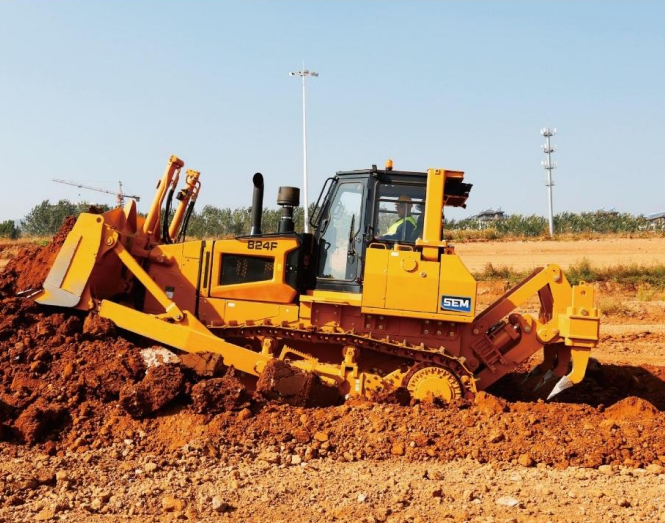
 SEM 824F ProductThe 824F features the new F Series design and is powered by a Weichai WD12T2 engine, delivering a gross power output of up to 185 kW (248 hp). The machine utilizes an electronically controlled hydrostatic transmission system, enhancing productivity and maneuverability. It offers various track shoe widths from 560 mm to 915 mm, as well as multiple blade options, including SU, S, U, Waste Handling, and Forest blades. Rear equipment options include a multi-shank ripper, single-shank ripper, and winch to meet diverse customer needs.
 SEM 920F Motor GraderThe SEM F Series Tier 2 Motor Grader is equipped with an SDEC engine and a PPC load-sensing hydraulic system for consistent, precise blade movement and reduced fuel consumption. The rear tandem drive is manufactured by Caterpillar and incorporates Caterpillar’s proven tandem axle design, delivering differentiated reliability, longer service life, and lower ownership and operating costs.
 SEM Road Roller Machines SEM 520The SEM 520 Single Drum Vibratory Road Roller is a heavy-duty compaction machine designed for large-scale road construction, highway projects and heavy earthwork tasks. Powered by a high-performance Weichai engine, it delivers steady and sufficient power for long-hour continuous operation. Equipped with the advanced pod-type sealed vibration system, it effectively resists dust and water intrusion, greatly extending the service life of core components. With powerful excitation force, optimized vibration frequency and amplitude, it achieves outstanding compaction results on soil, gravel and asphalt layers. The reinforced body structure and reliable wet brake system ensure superior stability and operational safety on various terrains. As an export-ready National II / Tier 2 model, it works well with regular fuel and features a service-friendly layout for easy daily upkeep.
 SEM Wheel Loader Machines SEM 660D 6 Ton Wheel LoaderThe SEM 660D 6 Ton Wheel Loader is a heavy-duty, high-performance machine built to tackle the most demanding loading, stockpiling, and material handling tasks. Powered by a robust 178kW Weichai engine and paired with a durable countershaft transmission, it delivers consistent power and reliable torque for its 6-ton rated load. Equipped with advanced load-sensing hydraulics, the 660D ensures smooth, responsive operation and fast cycle times, boosting productivity on every shift. With a bucket capacity ranging from 2.8 to 5.5 m³, it adapts to a wide variety of applications, including mining, quarries, ports, and construction sites. Designed with operator comfort and low maintenance in mind, this export-ready National II / Tier 2 model runs reliably on low-quality fuel and features a simple, service-friendly layout.