-News Center-
5332638 Replacement Guide: How to Match the Right Part to Your Machine
5332638 Replacement Guide: How to Match the Right Part to Your Machine
The part number 5332638 only becomes useful when it is matched to the right machine configuration. That is where many replacement decisions go wrong. In construction equipment service, a number stamped on an old component is not always enough on its own, because branded machines often change by production batch, supplier revision, control system, or related assembly layout. A replacement that looks close can still create fitment issues, unstable operation, or premature wear once the machine returns to work.
For maintenance teams, the real question is not “Can I find a 5332638 part?” but “Can I confirm this 5332638 replacement matches the exact application on this machine?” That means checking the equipment model, serial number range, function of the part in the system, and any linked components around it. In the field, installation time is expensive, and the cost of a wrong part is rarely limited to the purchase price. It usually shows up as repeat labor, machine downtime, and pressure on the service schedule.
This matters even more on branded construction machinery, where parts are often tied to a broader system rather than a single isolated function. A drivetrain-related component, valve-related item, electronic control element, or actuator may share similar external dimensions with another version but behave differently once connected to the machine. That is why experienced parts buyers do not rely only on visual comparison. They verify the application logic behind the number.
What 5332638 usually means in practice
In everyday aftermarket work, 5332638 is best treated as a reference key, not a complete purchasing answer. It points you toward a defined component, but it does not automatically confirm every machine variant that can use it. The same machine family may have different suppliers for control valves, ECM-related hardware, actuators, clutch components, or speed control assemblies, especially across different production periods.
That is why one of the most practical habits in parts identification is to read the number in context. Ask three basic questions before ordering:
- What system does the original part belong to: hydraulic control, drivetrain, engine-side control, electrical actuation, or another assembly?
- What machine model and serial range is it coming from?
- Has the original part been superseded, modified, or cross-referenced to another number?
Without those checks, the risk is not only ordering the wrong item, but ordering a part that fits physically while failing functionally. That distinction is critical in service work.
Why exact matching matters more than many buyers expect
A mismatched replacement can show problems in several ways. Sometimes the mounting points line up, but the connector, pressure characteristic, stroke, response timing, or internal calibration does not. In other cases, the replacement works for a short period and then causes irregular shifting, unstable control, fault codes, or accelerated wear in the surrounding assembly.
Aftermarket maintenance professionals usually see this when a machine has already been repaired before, and the removed part is not necessarily the original factory configuration. That is one of the more common misunderstandings in the field: assuming the part currently installed is the correct historical reference. Sometimes it is. Sometimes it is simply the last emergency substitution. If you use that number without checking the machine record, you may repeat an earlier mistake.
At TerraMech, this is a familiar situation across branded equipment from Caterpillar, Komatsu, Volvo, SEM, Shantui, XCMG, SDLG, Weichai, and SDEC-linked applications. With more than twenty years in engineering machinery parts supply, the pattern is consistent: the more critical the system, the less safe it is to identify a replacement by appearance alone.
How to verify compatibility before you order
A disciplined compatibility check is usually straightforward if the right information is available. In most cases, these are the details worth confirming:
If the part sits in a control or actuation path, one extra step is worth taking: verify what the component is expected to do in operation, not just what it is called. A label such as actuator, valve, or control unit can cover several different functions depending on the machine platform. For example, service teams working on SEM wheel loader parts may encounter overlapping references across drivetrain and control-related assemblies. In that context, an item such as 5217528 W085000000 SEM MACHINERY ACTUATOR makes sense only when tied back to the exact loader model and subsystem, rather than treated as a universal match.
Common purchasing mistakes around 5332638
One mistake is assuming that cross-model compatibility is broader than it really is. Machines in the same brand family often share design language, but that does not guarantee interchangeable components. Another is treating a supplier code, casting mark, and service part number as if they were identical references. They may point to the same item, or they may not. The distinction matters when sourcing aftermarket parts.
A third mistake is focusing only on price tier without considering duty cycle. For a machine working in heavy daily loading, especially in quarry, earthmoving, or municipal fleet conditions, the replacement decision should account for the operating environment and maintenance interval expectations. A lower-cost option may still be acceptable in some cases, but that judgment depends on application, not on price alone.
There is also a documentation issue. Some buyers ask for “5332638 replacement” without sharing photos of the old part, machine plate details, or surrounding assembly information. That slows down accurate sourcing. A clear photo of the installed location, visible connector or mounting face, and the machine identification plate often resolves uncertainty faster than a short text request.
Reading part numbers with a service mindset
Good parts matching is really a maintenance discipline. It sits between technical understanding and purchasing accuracy. For 5332638, the useful approach is to treat the number as the start of verification, not the end of it. Look at the machine family, serial range, system function, and whether the machine has a history of part substitutions. If the component belongs to a sensitive assembly such as control, transmission, clutch, pump, or actuator-related hardware, take the extra time to confirm the exact specification path.
That is also where experienced suppliers add value. A supplier familiar with branded construction machinery can often identify whether a reference is straightforward, superseded, or likely to be confused with a nearby variant. In some SEM applications, for instance, the same service conversation may involve actuator, valve, torque converter, or ECM-related references around one fault symptom. In that kind of situation, even a well-known item like 5217528 W085000000 SEM MACHINERY ACTUATOR should be confirmed against the machine record rather than selected by name alone.
If you are sourcing a 5332638 replacement, the most reliable outcome comes from combining the part number with machine data and application context. That is what keeps replacement work practical: fewer returns, cleaner installation, and a machine that goes back to work without creating a second repair job. For aftermarket maintenance, that is the standard worth aiming for.
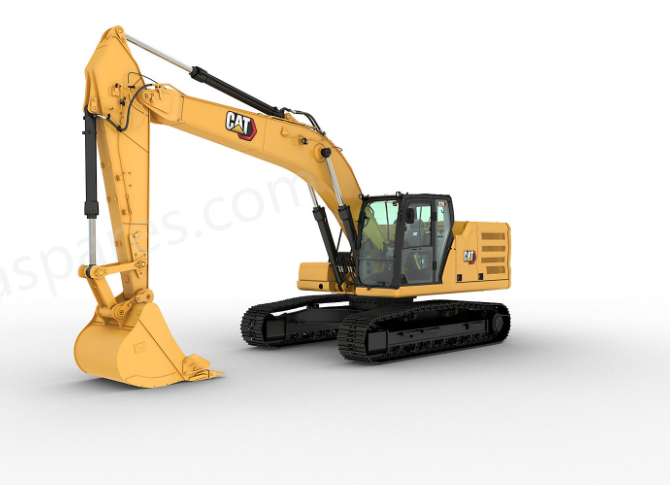
 CAT Excavator 326Premium Performance with Simple-to-Use Technologies
The Cat® 326 Excavator brings premium performance with simple-to-use technologies to boost your operator efficiencies. Combine these features with an ergonomic cab, longer maintenance intervals, and a power system that reduces fuel and you have a low-cost-per-unit-of-production excavator that’s perfect for medium to heavy-duty applications. CAT Excavator 324Heavy-Duty Muscle Built to Outperform
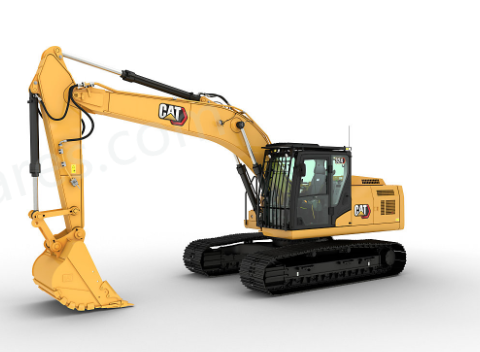
The Cat® 324 excavator is built to handle high-production workloads with the perfect balance of brute strength and refined control. Its powerful Cat® C7.1 engine, high-flow hydraulics, and advanced electrohydraulic system give you the muscle to move heavy material fast, without burning through your budget. With reinforced structures, field-proven durability, and easy-to-maintain components, the 324 is your go-to solution for tackling tough jobs with less downtime. CAT Excavator 322Profit-Driven Powerhouse for Heavy Loads
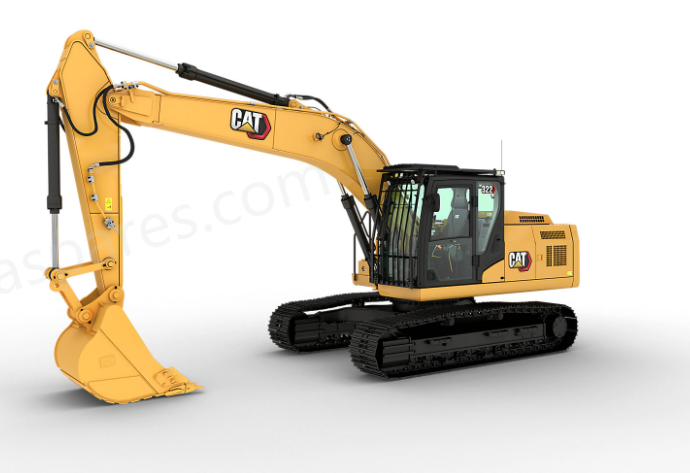
When you need muscle, precision, and cost control in one machine, the Cat® 322 excavator delivers. Purpose-built for high production, the 322 pairs fast cycle times with large bucket options to move more material in fewer passes. Its responsive electrohydraulic controls and rugged design keep you productive on the tough jobs, while smart fuel efficiency and streamlined maintenance help you stay profitable every step of the way. Whether you’re loading, trenching, or lifting, the 322 is a heavy-duty workhorse that pays you back. CAT Excavator 321Versatility at the Lowest Cost Per Hour
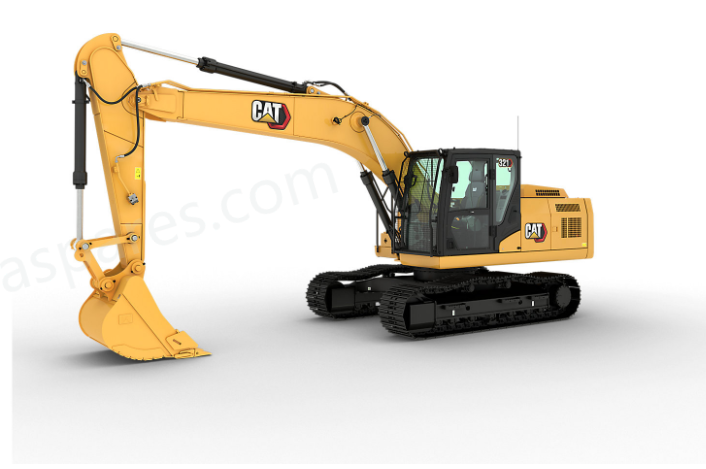
Powered by the reliable Cat® C3.6 engine, the Cat® 321 excavator delivers high torque and fast cycle times to maximize productivity. Reinforced Cat structures extend machine life and withstand the toughest conditions, while the latest cab design puts operator safety and comfort first. Every core system undergoes rigorous testing, so you can count on consistent, reliable performance shift after shift.