-News Center-
SEM SPARE PARTS 5217534 W110000160 GOVERNOR Working Principle Explained
SEM SPARE PARTS 5217534 W110000160 GOVERNOR Working Principle Explained
For technical evaluators, governor behavior is not a minor detail.
It directly affects speed stability, fuel use, torque response, and machine safety.
That is why the SEM SPARE PARTS 5217534 W110000160 GOVERNOR deserves careful attention during component review.
In wheel loader applications, a governor must keep engine speed within a controlled operating range.
It must react quickly when load changes, yet avoid unstable hunting or delayed correction.
This article explains the working principle, evaluation points, and practical sourcing signals.
The focus stays on real machinery use, not abstract theory.
What the Governor Does in Construction Machinery
A governor is an engine control component that regulates fuel delivery according to speed demand.
Its job is simple in concept.
When engine speed falls under load, fuel input must rise.
When speed climbs too high, fuel input must be reduced.
In practice, that balance determines whether a machine feels responsive or inconsistent.
For wheel loader parts, governor performance matters most during sudden torque demand.
Typical moments include digging, lifting, reversing, braking transitions, and hydraulic load spikes.
A weak governor may allow rpm drop, black smoke, sluggish acceleration, or unstable idle.
A well-matched governor supports smooth power delivery and cleaner operating control.
SEM SPARE PARTS 5217534 W110000160 GOVERNOR Working Principle
The SEM SPARE PARTS 5217534 W110000160 GOVERNOR works by balancing speed feedback against fuel control demand.
Although designs vary, the principle follows a predictable control loop.
1. Speed sensing
The governor first detects actual engine speed.
This may happen through mechanical rotation, internal flyweights, or linked control elements.
The sensed speed becomes the reference for correction.
2. Comparison with target speed
The system compares actual rpm with the operator or machine-set target rpm.
Any gap between the two values creates a control action.
3. Fuel quantity adjustment
If rpm drops, the governor increases fuel supply through the related engine parts linkage.
If rpm rises, it reduces fuel delivery to prevent overspeed.
This response must be quick but controlled.
Excess correction creates oscillation.
Insufficient correction creates slow recovery.
4. Stabilization under changing load
The final stage is stabilization.
The governor keeps adjusting as hydraulic pumps, drive loads, and accessory systems change demand.
In real working cycles, this happens continuously.
That also explains why governor quality has a visible effect on operator confidence.
Why Precision Matters During Technical Evaluation
A governor is judged by more than whether the engine starts and runs.
The real question is how precisely it controls speed across different conditions.
Several factors deserve close review.
- Response speed during sudden load increase
- Idle stability without drift or shaking
- Overspeed protection under unloaded acceleration
- Consistency across hot and cold operating states
- Compatibility with connected fuel and control systems
From a standards-minded perspective, repeatability is often more important than a single acceptable test result.
A governor that performs well once but drifts later creates operational risk.
This is especially relevant in high-cycle loaders where torque demand changes all day.
Common Failure Signals and What They Usually Mean
During inspection, governor-related problems usually appear through machine behavior first.
A few signals are especially useful.
These signs should never be reviewed in isolation.
Check linked systems as well, including valve condition, air filter element status, and fuel path cleanliness.
In some cases, the governor is blamed for faults created elsewhere.
Application Context in Wheel Loader Parts
The governor does not work alone.
Its performance is shaped by the broader machine system.
In wheel loaders, related components may include the gear pump, work pump, control valve, pilot valve, alternator, and radiator.
Braking system transitions can also influence perceived engine response.
That is why application context matters during technical assessment.
A governor that works well in one configuration may behave differently in another.
Model cross-reference is also important.
Associated part numbers can include 5227740, 5252598, 5564804, 5651157, 5753319, 5371022, and 5782190.
Verification should confirm that the replacement matches both function and operating logic.
Practical Sourcing Considerations
Technical review and sourcing review should happen together.
A correct governor on paper can still create problems if supply quality is inconsistent.
In actual procurement work, a few checks are worth standardizing.
- Confirm the exact part number and any approved substitute numbers.
- Review application fit for braking system and wheel loader parts usage.
- Request traceable quality information and export packaging standards.
- Check whether the supplier understands connected engine parts, not only one item.
- Use bench or field verification before scaling bulk orders.
TerraMech brings more than twenty years of engineering machinery experience to this process.
Its portfolio covers branded equipment and components from Caterpillar, Komatsu, Volvo, SEM, Shantui, XCMG, SDLG, Weichai, and SDEC.
That background matters when evaluating compatibility, export handling, and one-stop OEM or ODM support.
For reference, detailed supply information is available here: SEM SPARE PARTS 5217534 W110000160 GOVERNOR .
Evaluation Checklist for Reliable Decision-Making
A practical evaluation framework helps avoid subjective judgment.
- Check part identity, marking clarity, and packaging integrity.
- Verify fit with the target engine and loader configuration.
- Measure idle stability and load-step recovery behavior.
- Observe smoke, sound variation, and overspeed resistance.
- Inspect related fuel, valve, and air path conditions.
- Document repeatability across multiple operating cycles.
This approach gives a clearer basis for technical approval.
It also reduces the chance of approving a part that only appears acceptable during a short test.
Conclusion
The SEM SPARE PARTS 5217534 W110000160 GOVERNOR is a control component with direct influence on engine reliability.
Its working principle centers on sensing speed, comparing target demand, adjusting fuel, and stabilizing output.
For technical evaluation, precision, repeatability, and application fit are the key decision points.
When these factors are reviewed carefully, sourcing decisions become more accurate and operational risk drops.
That is the practical value of understanding governor behavior before purchase, installation, or fleet-level replacement planning.
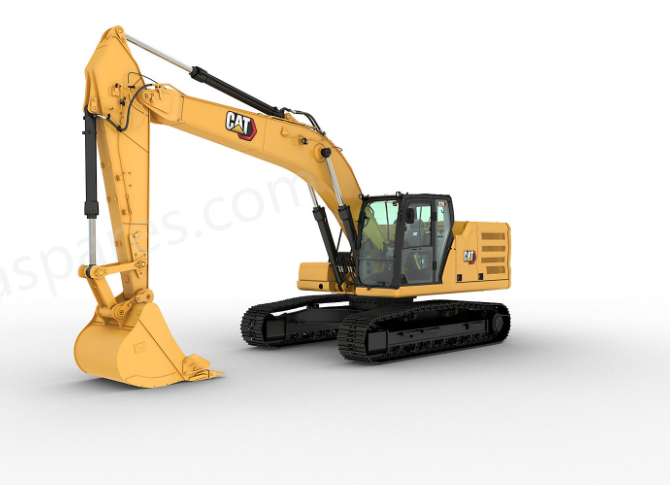
 CAT Excavator 326Premium Performance with Simple-to-Use Technologies
The Cat® 326 Excavator brings premium performance with simple-to-use technologies to boost your operator efficiencies. Combine these features with an ergonomic cab, longer maintenance intervals, and a power system that reduces fuel and you have a low-cost-per-unit-of-production excavator that’s perfect for medium to heavy-duty applications. CAT Excavator 324Heavy-Duty Muscle Built to Outperform
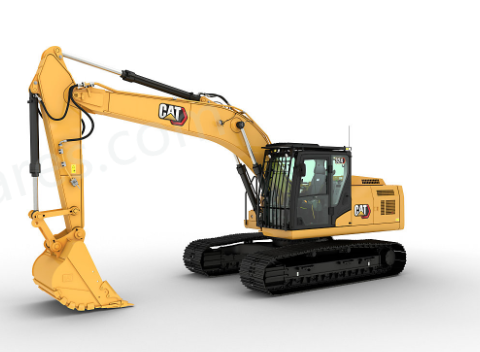
The Cat® 324 excavator is built to handle high-production workloads with the perfect balance of brute strength and refined control. Its powerful Cat® C7.1 engine, high-flow hydraulics, and advanced electrohydraulic system give you the muscle to move heavy material fast, without burning through your budget. With reinforced structures, field-proven durability, and easy-to-maintain components, the 324 is your go-to solution for tackling tough jobs with less downtime. CAT Excavator 322Profit-Driven Powerhouse for Heavy Loads
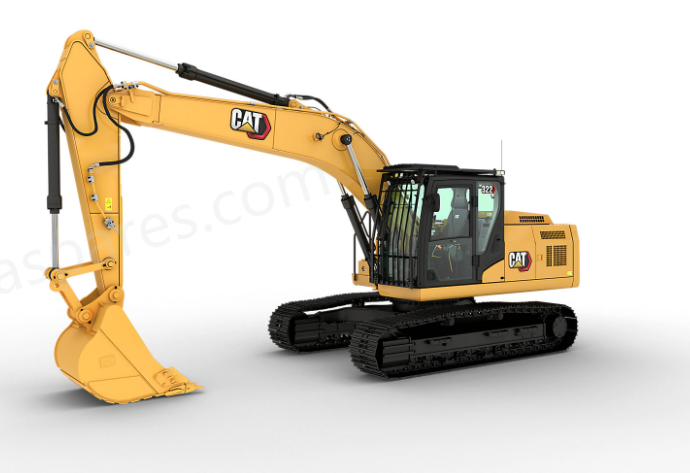
When you need muscle, precision, and cost control in one machine, the Cat® 322 excavator delivers. Purpose-built for high production, the 322 pairs fast cycle times with large bucket options to move more material in fewer passes. Its responsive electrohydraulic controls and rugged design keep you productive on the tough jobs, while smart fuel efficiency and streamlined maintenance help you stay profitable every step of the way. Whether you’re loading, trenching, or lifting, the 322 is a heavy-duty workhorse that pays you back. CAT Excavator 321Versatility at the Lowest Cost Per Hour
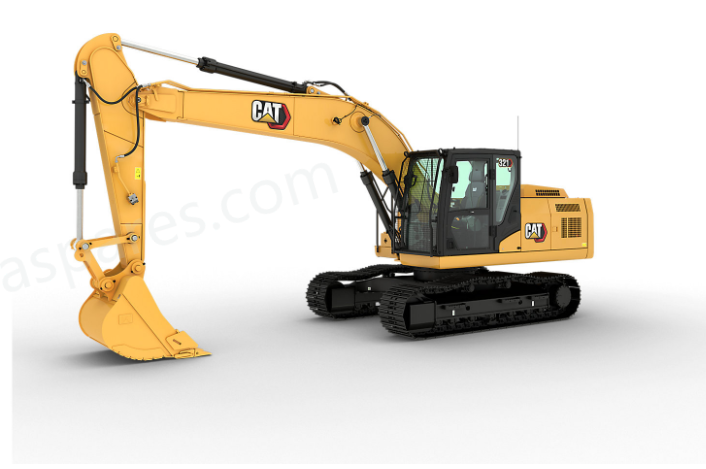
Powered by the reliable Cat® C3.6 engine, the Cat® 321 excavator delivers high torque and fast cycle times to maximize productivity. Reinforced Cat structures extend machine life and withstand the toughest conditions, while the latest cab design puts operator safety and comfort first. Every core system undergoes rigorous testing, so you can count on consistent, reliable performance shift after shift.