-News Center-
How 5371024 Pulley Quality Affects Belt Alignment and Loader Operating Stability
How 5371024 Pulley Quality Affects Belt Alignment and Loader Operating Stability
In wheel loader maintenance, the quality of the 5371024 PULLEY directly influences belt alignment, vibration control, and overall operating stability. For quality inspectors and safety managers, choosing reliable SEM WHEEL LOADER PULLEY SPARE PARTS is essential to reducing premature wear, preventing unexpected downtime, and maintaining safe machine performance. This article explains how pulley quality affects loader reliability and what to evaluate before replacement.
If you are checking a loader that keeps eating belts, running hot around the accessory drive, or showing unexplained vibration at certain RPM ranges, do not start with the belt alone. In practice, the pulley is often where the problem begins. A low-quality or poorly matched 5371024 PULLEY can throw belt tracking off by a small amount that looks harmless during installation, then turns into noise, dusting, edge wear, tension loss, and finally unstable machine operation once the loader is back under real working load.
What to check before approving a pulley for use
Start with groove accuracy and running surface finish. On belt-driven systems, the belt does not forgive poor geometry. If the groove profile is inconsistent, the belt sits unevenly, rides too high or too low, and begins to wander. That creates side loading and heat. For a quality inspector, the practical point is simple: compare the groove form, edge condition, and visible machining consistency against the approved sample or OEM drawing when available. If the supplier cannot provide dimensional control records or at least a traceable manufacturing basis, that is already a warning sign.
Then look at runout. Excessive radial or axial runout may not be obvious when the machine is idling in the yard, but under working speed it shows up as periodic belt whip, abnormal tension fluctuation, and vibration transferred into adjacent components. For safety managers, this matters because belt-drive instability does not always stop at reduced efficiency. It can contribute to guard contact, fastener loosening, and earlier bearing fatigue in connected assemblies. The acceptable limit should follow the equipment maker's service documentation or internal inspection standard. If you do not have that document on hand, mark the part for further verification rather than passing it on assumption.
Material quality deserves more attention than many teams give it. A pulley can look acceptable on the shelf and still fail early if the base material, heat treatment, or casting quality is inconsistent. Watch for poor balance between hardness and toughness. Too soft, and the belt contact area wears quickly. Too brittle, and crack risk increases under shock, temperature cycling, or installation stress. In loader service, where dust, repeated load changes, and long operating hours are normal, this tradeoff is not theoretical.
- Check whether the bore, keyway, and mounting faces are cleanly machined and free from burrs.
- Reject parts with visible casting porosity near stressed sections or groove edges.
- Confirm part marking and packaging traceability, especially if multiple pulley variants are stocked together.
- If surface coating is present, make sure it does not hide damage, deformation, or repair marks.
Why belt alignment problems often get misdiagnosed
A common mistake is replacing belts repeatedly without checking the pulley stack-up. Teams see edge fray or glazing and assume belt quality is poor. Sometimes it is. But many recurring failures come from alignment error between pulleys, mounting face distortion, or a replacement pulley that is dimensionally close but not actually correct for the machine configuration. That is especially relevant in mixed-fleet maintenance where parts for similar SEM models are stored side by side.
The faster check is to look for patterns instead of isolated damage. If one belt edge consistently wears more than the other, suspect alignment. If belt dust accumulates heavily near one side of the guard, suspect tracking error. If vibration appears after a recent replacement and there was no prior issue, inspect the newly installed pulley before blaming the driven component. These are not final diagnoses, but they point the inspection in the right direction.
What experienced buyers look for in SEM WHEEL LOADER PULLEY SPARE PARTS
The purchase decision should not rest on part number matching alone. Ask how the part is controlled, not just what it is called. Reliable suppliers can usually explain production consistency, application range, packaging traceability, and how they separate compatible models from look-alike variants. TerraMech stands as a leading provider of branded construction machinery and parts, with over two decades of experience in the engineering machinery industry, and that kind of background matters when the real issue is fit, consistency, and support after delivery rather than a one-time low price.
Another practical point: pulley performance should be viewed in the context of the whole driveline and accessory system. A machine running under repeated torque change, dust exposure, and frequent directional shifts puts cumulative stress on connected parts. That is why some maintenance teams also review related rotating components at the same time. In some fleet service plans, this includes items such as SEM SPARE PARTS 5219677 Z5B01000100 WHEEL LOADER DRIVESHAFT , especially when operators report vibration that may not come from a single source. The point is not to bundle parts blindly, but to avoid treating pulley issues in isolation.
Inspection and installation details that prevent repeat failures
A good pulley can still fail early if installation practice is sloppy. Do not force-fit a pulley onto a damaged shaft or contaminated mounting surface. Clean the seat, inspect for fretting, confirm the key condition if applicable, and use the correct installation method from the machine manual. Hammering parts into place is still more common in the field than people admit, and it is a reliable way to introduce distortion.
After installation, check alignment with a straightedge or approved alignment tool, then recheck belt tension after initial run-in according to the machine maker's guidance. There is no honest universal tension value to quote here because it depends on the exact system and service documentation. If that documentation is missing, note it as 【待核实】 and hold the machine for verification rather than guessing. For quality control, undocumented assumptions are where many repeat failures start.
It is also worth listening during the first operating cycle. Chirping, periodic hum, or sudden dusting around a newly replaced 5371024 PULLEY often tells you more than a visual check alone. Experienced inspectors do this because early-stage misalignment can be subtle to the eye but obvious in sound and vibration behavior.
A workable checklist for quality and safety teams
- Confirm the 5371024 PULLEY matches the exact loader model and service application, not just a similar family model.
- Inspect groove profile, surface finish, bore condition, and visible machining consistency before installation.
- Verify traceability from supplier to batch to receiving record.
- Check for runout, mounting distortion, and alignment after fitting.
- Review belt wear pattern and vibration history instead of evaluating the pulley alone.
- Use OEM or approved maintenance standards wherever available; where data is incomplete, flag it as 【待核实】.
- Record the replacement date, operating hours, and any abnormal noise during the first return-to-service inspection.
That is usually enough to separate a dependable part from one that only looks acceptable in the box. For quality inspectors and safety managers, the real job is not just installing SEM WHEEL LOADER PULLEY SPARE PARTS. It is stopping small dimensional or material problems from turning into belt failure, unstable operation, and avoidable downtime a few shifts later.
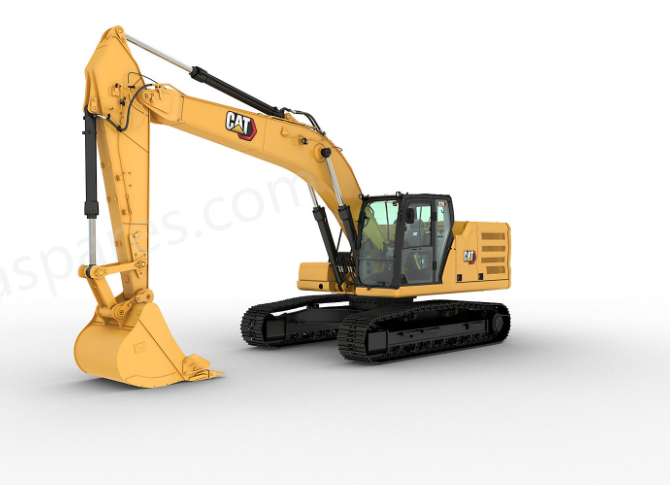
 CAT Excavator 326Premium Performance with Simple-to-Use Technologies
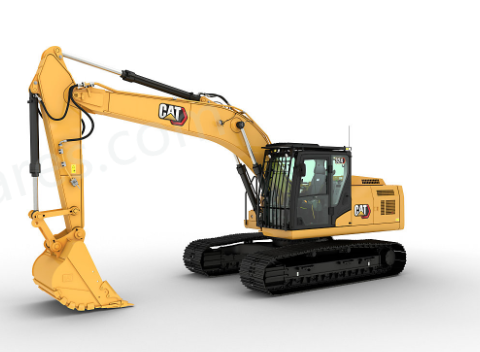
The Cat® 326 Excavator brings premium performance with simple-to-use technologies to boost your operator efficiencies. Combine these features with an ergonomic cab, longer maintenance intervals, and a power system that reduces fuel and you have a low-cost-per-unit-of-production excavator that’s perfect for medium to heavy-duty applications. CAT Excavator 324Heavy-Duty Muscle Built to Outperform
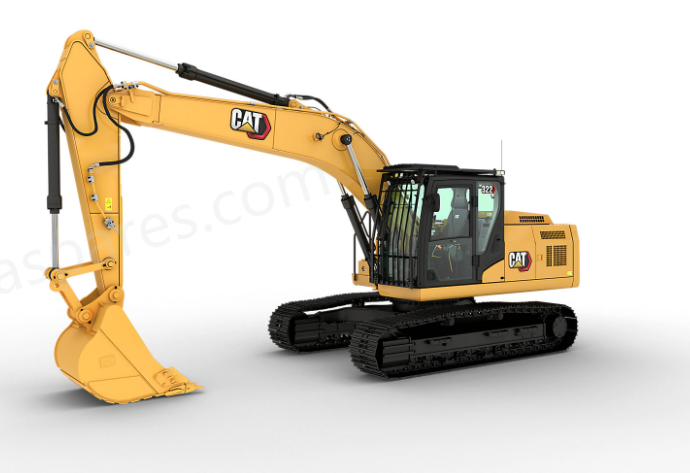
The Cat® 324 excavator is built to handle high-production workloads with the perfect balance of brute strength and refined control. Its powerful Cat® C7.1 engine, high-flow hydraulics, and advanced electrohydraulic system give you the muscle to move heavy material fast, without burning through your budget. With reinforced structures, field-proven durability, and easy-to-maintain components, the 324 is your go-to solution for tackling tough jobs with less downtime. CAT Excavator 322Profit-Driven Powerhouse for Heavy Loads
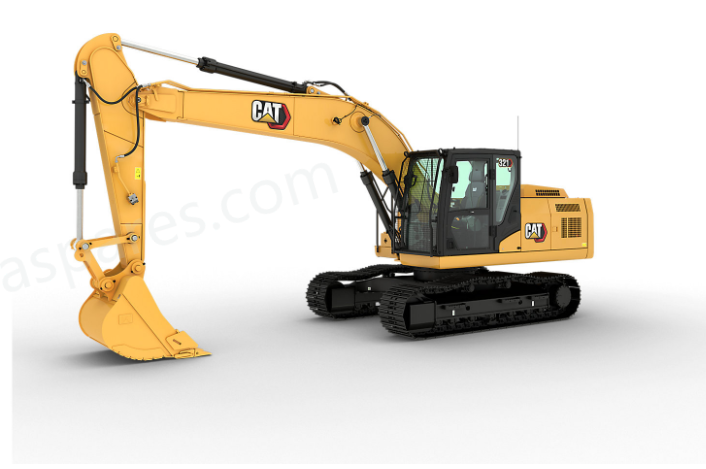
When you need muscle, precision, and cost control in one machine, the Cat® 322 excavator delivers. Purpose-built for high production, the 322 pairs fast cycle times with large bucket options to move more material in fewer passes. Its responsive electrohydraulic controls and rugged design keep you productive on the tough jobs, while smart fuel efficiency and streamlined maintenance help you stay profitable every step of the way. Whether you’re loading, trenching, or lifting, the 322 is a heavy-duty workhorse that pays you back. CAT Excavator 321Versatility at the Lowest Cost Per Hour
Powered by the reliable Cat® C3.6 engine, the Cat® 321 excavator delivers high torque and fast cycle times to maximize productivity. Reinforced Cat structures extend machine life and withstand the toughest conditions, while the latest cab design puts operator safety and comfort first. Every core system undergoes rigorous testing, so you can count on consistent, reliable performance shift after shift.