-News Center-
OEM vs Aftermarket 5371024 Pulley: Which Option Lowers Loader Downtime?
OEM vs Aftermarket 5371024 Pulley: Which Option Lowers Loader Downtime?
When loader uptime directly affects project costs, choosing between OEM and aftermarket parts becomes a strategic decision. For buyers assessing 5371024 PULLEY SEM WHEEL LOADER PULLEY SPARE PARTS, the real question is not just price, but reliability, fit, lead time, and lifecycle value. Backed by TerraMech’s deep experience in construction machinery components, this guide compares both options to help business evaluators reduce downtime and make smarter procurement decisions.
If you are evaluating a replacement pulley for a SEM wheel loader, the mistake to avoid is treating OEM and aftermarket as a simple good-versus-bad choice. In practice, both can work. The real issue is whether the part you buy keeps the machine running without creating follow-on failures, delivery delays, or repeat labor.
Start with the downtime math, not the catalog price
For business evaluators, the right question is usually: what does one extra day of downtime cost compared with the savings on the part itself?
A lower-priced aftermarket pulley may look attractive on paper. But if the loader is on an active site and the part arrives late, fits poorly, or fails early, the total cost can move in the wrong direction very quickly. On the other hand, paying a premium for OEM does not always make sense for older machines, fleet backup units, or regions where trusted aftermarket supply is already proven.
Before comparing quotations, write down three numbers internally: estimated hourly machine cost, likely repair window, and the cost of a second replacement if the first part does not perform. That usually makes the decision clearer.
What OEM usually gives you
OEM is often chosen when the machine is critical, the operating schedule is tight, or the buyer wants the lowest fitment risk. For 5371024 PULLEY SEM WHEEL LOADER PULLEY SPARE PARTS, the practical advantage of OEM is not branding alone. It is consistency.
- Part identification is usually more straightforward, especially when serial number matching matters.
- Dimensional compatibility risk is generally lower.
- Material and production control are more predictable, at least in normal supply conditions.
- Warranty handling may be easier, though terms still need to be checked line by line.
Where OEM becomes less attractive is lead time and budget pressure. Depending on region, dealer stock, and model age, you may find the genuine part is available only through a longer supply chain. That changes the equation fast when the machine is already parked.
When aftermarket is the better commercial decision
A good aftermarket pulley can be the smarter buy when the supplier can document fitment, inspect quality before shipment, and respond quickly if something is wrong. This is especially relevant for buyers managing mixed fleets or maintenance budgets across several loader units.
The key phrase there is good aftermarket. The market is not uniform. Some suppliers understand construction machinery tolerances and application risk; others are simply trading by part number. Those are not the same thing.
The checklist that actually helps during sourcing
Check the exact machine application. Do not stop at the part number alone. Confirm model, serial number range, and any supersession notes if available. In wheel loader parts, a part number match without application verification is where avoidable errors start.
Ask what quality evidence the seller can provide. Not marketing claims. Ask for actual product photos, packaging details, dimensional confirmation if relevant, and pre-shipment inspection support. If the answer stays vague, treat that as a signal.
Look at response speed. A supplier that takes two days to answer a basic fitment question will probably not move faster when there is a warranty or shipping issue.
Check what else you may need in the same repair window. Experienced buyers often reduce downtime by bundling related parts and consumables in one order. TerraMech supports a broad construction machinery portfolio across Caterpillar, Komatsu, Volvo, SEM, Shantui, XCMG, SDLG, Weichai, and SDEC, so evaluating adjacent items at the same time can save a second stoppage. In some maintenance plans, buyers reviewing pulley replacements also compare related components such as SEM SPARE PARTS 5217528 W085000000 AIR BOOSTER when they want a more complete spare parts package instead of single-item purchasing.
Be careful with “same as OEM” language. It may be true. It may also mean very little without supporting detail. Unless there is documentation you can verify, keep the claim in the unconfirmed category.
Review the landed cost, not just unit price. Freight mode, import handling, urgent dispatch charges, and the cost of holding buffer stock all belong in the comparison. A cheaper pulley with expensive air freight is no longer the cheaper option.
Risk points that buyers often underestimate
One common procurement mistake is assuming every aftermarket source carries the same operational risk. They do not. There is a meaningful difference between a supplier with engineering machinery experience and a trader moving general industrial stock with limited application knowledge.
Another issue is overconfidence in historical compatibility. A buyer may say, “We used aftermarket before and it was fine.” That is useful background, but not proof for this exact batch, this exact supplier, or this exact repair context.
Also watch for incomplete documentation on older equipment. If machine records are weak, you may need extra verification before ordering. Where technical details are unclear, it is better to mark them as 【待核实】 internally than force a fast decision and risk another shutdown.
A practical buying rule for 5371024 pulley selection
Choose OEM when the loader is mission-critical, the fitment risk is unacceptable, or the cost of one failed replacement is higher than the price difference.
Choose aftermarket when the supplier can show credible application knowledge, delivery is faster, and the savings remain meaningful after you factor in downtime exposure and logistics.
For most business evaluators, that is the real decision frame for 5371024 PULLEY SEM WHEEL LOADER PULLEY SPARE PARTS. Not “which is cheaper,” but “which option is more likely to keep the loader working with the fewest unpleasant surprises.”
If you need a final filter, ask each supplier one direct question: what exactly do you do, before shipment, to reduce my risk of downtime? The stronger answer usually points to the better purchase.
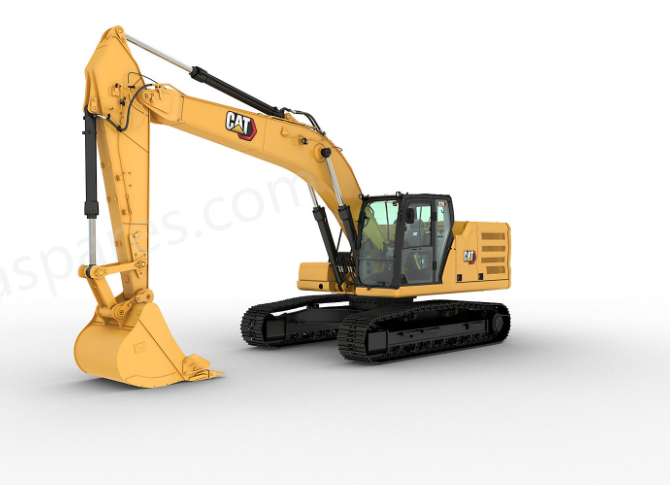
 CAT Excavator 326Premium Performance with Simple-to-Use Technologies
The Cat® 326 Excavator brings premium performance with simple-to-use technologies to boost your operator efficiencies. Combine these features with an ergonomic cab, longer maintenance intervals, and a power system that reduces fuel and you have a low-cost-per-unit-of-production excavator that’s perfect for medium to heavy-duty applications. CAT Excavator 324Heavy-Duty Muscle Built to Outperform
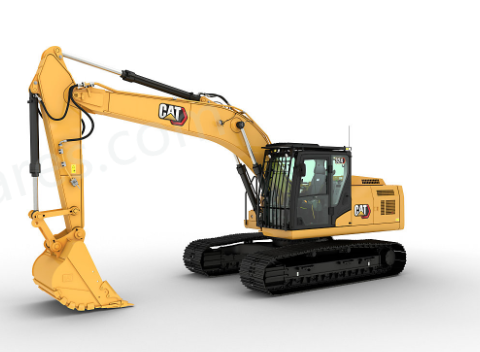
The Cat® 324 excavator is built to handle high-production workloads with the perfect balance of brute strength and refined control. Its powerful Cat® C7.1 engine, high-flow hydraulics, and advanced electrohydraulic system give you the muscle to move heavy material fast, without burning through your budget. With reinforced structures, field-proven durability, and easy-to-maintain components, the 324 is your go-to solution for tackling tough jobs with less downtime. CAT Excavator 322Profit-Driven Powerhouse for Heavy Loads
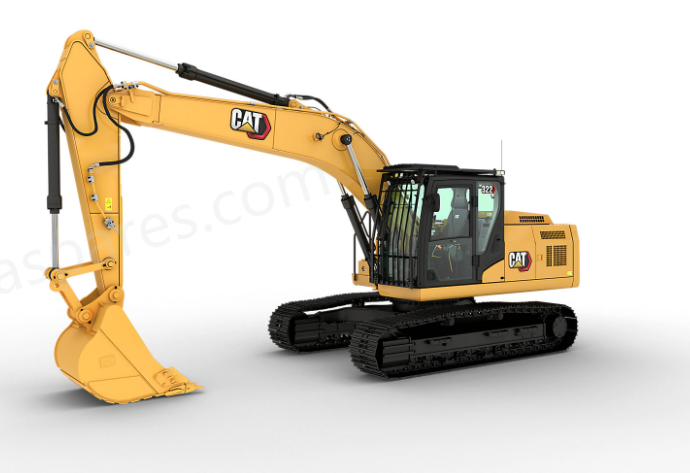
When you need muscle, precision, and cost control in one machine, the Cat® 322 excavator delivers. Purpose-built for high production, the 322 pairs fast cycle times with large bucket options to move more material in fewer passes. Its responsive electrohydraulic controls and rugged design keep you productive on the tough jobs, while smart fuel efficiency and streamlined maintenance help you stay profitable every step of the way. Whether you’re loading, trenching, or lifting, the 322 is a heavy-duty workhorse that pays you back. CAT Excavator 321Versatility at the Lowest Cost Per Hour
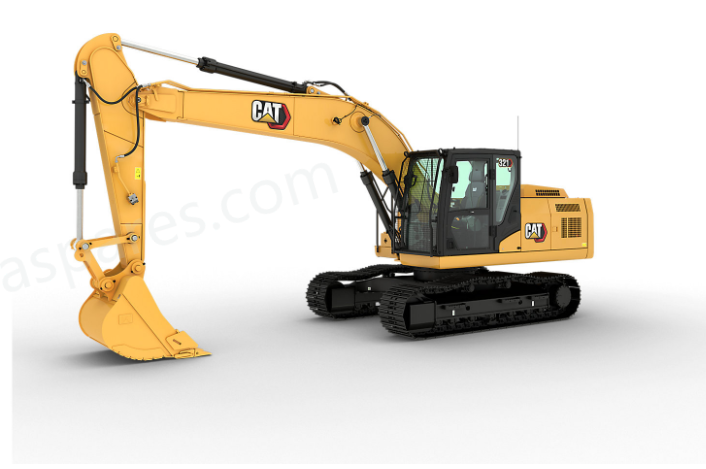
Powered by the reliable Cat® C3.6 engine, the Cat® 321 excavator delivers high torque and fast cycle times to maximize productivity. Reinforced Cat structures extend machine life and withstand the toughest conditions, while the latest cab design puts operator safety and comfort first. Every core system undergoes rigorous testing, so you can count on consistent, reliable performance shift after shift.