-News Center-
Are Shantui Spare Parts Worth the Higher Upfront Cost?
Why Shantui spare parts are gaining attention in cost-focused maintenance decisions
When budgets tighten, lower-priced components look attractive at first glance.
However, Shantui spare parts often deliver stronger value through durability, equipment stability, and reduced interruption across demanding machine cycles.
In heavy equipment environments, the real question is rarely the ticket price alone.
The better question is whether a part lowers lifetime cost, protects uptime, and supports predictable asset performance.
That is why Shantui spare parts remain relevant in a market shaped by inflation, utilization pressure, and tighter maintenance planning.
A clear market shift: total cost is replacing lowest-price purchasing
Across the machinery parts sector, buying behavior is changing.
Short-term savings from low-grade alternatives often disappear after earlier wear, repeat replacements, and avoidable downtime.
This trend is especially visible in undercarriage, powertrain, hydraulic, and transmission-related components.
For machines operating under shock loads, variable torque, and harsh conditions, reliability has become a financial metric.
As a result, Shantui spare parts are increasingly evaluated through lifecycle cost rather than only initial procurement expense.
What is driving this change
Why the higher upfront cost can make financial sense
The value of Shantui spare parts usually appears after installation, not before purchase.
Better metallurgy, machining accuracy, and compatibility can reduce friction, vibration, and premature system stress.
That matters because one weak part can damage connected assemblies.
A cheaper pulley, gear, seal, or bearing may trigger larger failures in the transmission or drivetrain.
- Fewer emergency replacements
- Longer maintenance intervals
- Lower labor repetition
- Better machine resale condition
- Reduced risk of collateral component damage
These factors help explain why Shantui spare parts often outperform low-price substitutes in total return terms.
A practical comparison beyond purchase price
Where quality parts create the biggest impact in machine performance
The financial benefit is strongest in components exposed to torque transfer, impact loading, and repeated direction changes.
Transmission and drivetrain systems are especially sensitive because failures spread quickly across linked assemblies.
A useful example is 5371024 PULLEY SEM WHEEL LOADER PULLEY SPARE PARTS.
Designed for SEM618D, SEM636D, and SEM655D wheel loaders, it serves wheel loader transmission applications under demanding duty cycles.
Its value comes from high strength, durability, and the ability to handle significant impact loads and regular gear-direction changes.
This reflects a wider principle also relevant to Shantui spare parts.
When authentic drivetrain components are selected, machines tend to show better productivity and lower owning and operating costs over time.
How this trend affects maintenance planning and parts sourcing
The shift toward lifecycle thinking changes more than purchase decisions.
It also influences stocking strategy, service scheduling, and failure analysis routines.
- Critical components deserve stronger quality thresholds.
- Repeat-failure positions should be reviewed for root-cause and part-grade mismatch.
- High-use machines benefit from parts with proven consistency.
- Mixed fleets need suppliers with cross-brand knowledge and export support.
TerraMech supports this approach through over two decades of engineering machinery experience.
Its portfolio covers globally recognized brands including Shantui, SEM, Caterpillar, Komatsu, Volvo, XCMG, SDLG, Weichai, and SDEC.
That breadth helps align parts selection with machine condition, application intensity, and long-term operating goals.
What deserves attention before choosing between premium and cheaper options
- Check whether the component sits in a failure-sensitive system.
- Estimate downtime cost per hour, not only unit purchase price.
- Review fit accuracy, material durability, and service history.
- Consider whether poor quality could damage related assemblies.
- Compare replacement frequency over the full maintenance cycle.
These checkpoints make evaluation of Shantui spare parts more objective and less price-driven.
The smarter next step for reducing long-term operating cost
Are Shantui spare parts worth the higher upfront cost?
In many heavy-duty applications, yes.
Their advantage is not simply brand preference.
It is the ability to protect uptime, maintain machine efficiency, and lower hidden operating losses.
When reviewing Shantui spare parts, focus on total equipment economics, not isolated purchase cost.
A practical next step is to compare one critical component category by lifecycle performance, replacement frequency, and downtime impact.
That small review often reveals why quality parts deliver stronger long-term value.
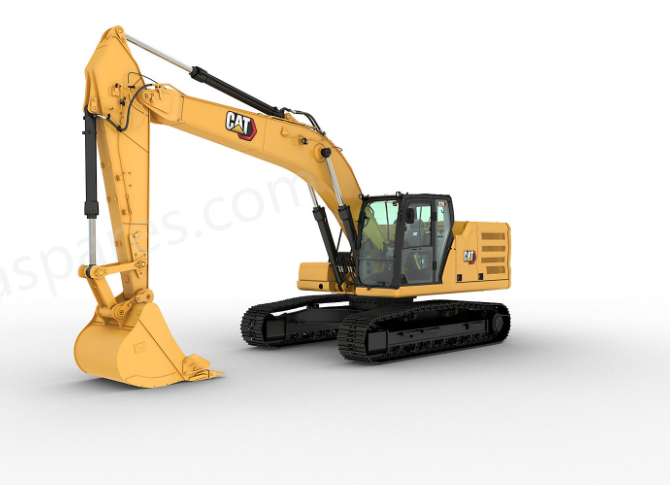
 CAT Excavator 326Premium Performance with Simple-to-Use Technologies
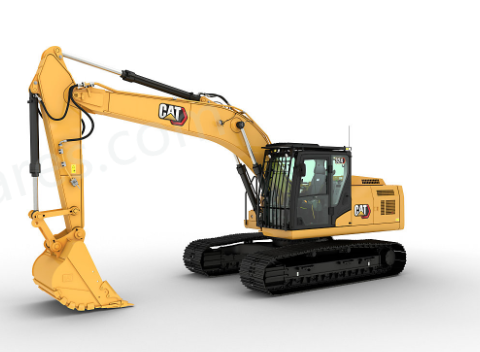
The Cat® 326 Excavator brings premium performance with simple-to-use technologies to boost your operator efficiencies. Combine these features with an ergonomic cab, longer maintenance intervals, and a power system that reduces fuel and you have a low-cost-per-unit-of-production excavator that’s perfect for medium to heavy-duty applications. CAT Excavator 324Heavy-Duty Muscle Built to Outperform
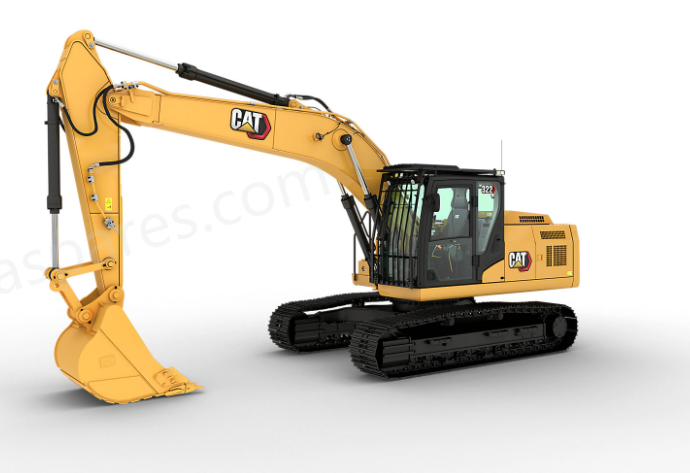
The Cat® 324 excavator is built to handle high-production workloads with the perfect balance of brute strength and refined control. Its powerful Cat® C7.1 engine, high-flow hydraulics, and advanced electrohydraulic system give you the muscle to move heavy material fast, without burning through your budget. With reinforced structures, field-proven durability, and easy-to-maintain components, the 324 is your go-to solution for tackling tough jobs with less downtime. CAT Excavator 322Profit-Driven Powerhouse for Heavy Loads
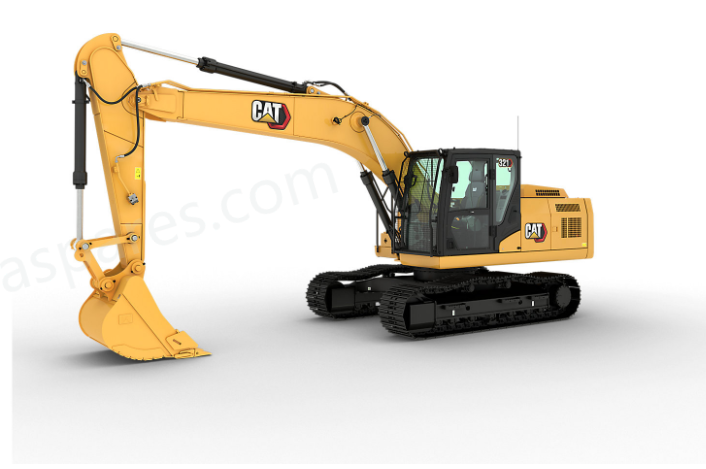
When you need muscle, precision, and cost control in one machine, the Cat® 322 excavator delivers. Purpose-built for high production, the 322 pairs fast cycle times with large bucket options to move more material in fewer passes. Its responsive electrohydraulic controls and rugged design keep you productive on the tough jobs, while smart fuel efficiency and streamlined maintenance help you stay profitable every step of the way. Whether you’re loading, trenching, or lifting, the 322 is a heavy-duty workhorse that pays you back. CAT Excavator 321Versatility at the Lowest Cost Per Hour
Powered by the reliable Cat® C3.6 engine, the Cat® 321 excavator delivers high torque and fast cycle times to maximize productivity. Reinforced Cat structures extend machine life and withstand the toughest conditions, while the latest cab design puts operator safety and comfort first. Every core system undergoes rigorous testing, so you can count on consistent, reliable performance shift after shift.