-News Center-
What to Check Before Buying 5371024 Pulley Spare Parts for SEM Wheel Loaders?
What to Check Before Buying 5371024 Pulley Spare Parts for SEM Wheel Loaders?
Before purchasing 5371024 PULLEY SEM WHEEL LOADER PULLEY SPARE PARTS, procurement teams need to verify compatibility, material quality, supplier credibility, and delivery support to avoid costly downtime. With TerraMech’s extensive experience in construction machinery parts, buyers can better identify reliable components that meet SEM wheel loader performance requirements while improving purchasing efficiency and long-term equipment reliability.
If you are buying this pulley for a machine that is already down, the pressure usually comes from operations, not from the part itself. That is exactly when expensive mistakes happen. A pulley may look simple on paper, but on a SEM wheel loader, the wrong fit, wrong groove profile, or weak machining can turn a quick replacement into repeat labor, belt failure, and another stoppage a few weeks later.
What follows is the checklist most buyers should run through before placing an order for 5371024 PULLEY SEM WHEEL LOADER PULLEY SPARE PARTS, especially when cost matters but failure cost matters even more.
Start with the exact machine identity, not the part name
Do not approve a pulley order based only on “SEM wheel loader pulley” or even on the 5371024 number copied from an old list. Confirm the loader model, serial number, engine arrangement if relevant, and whether the machine has had previous modifications. In the field, older units are often repaired with mixed assemblies, so the installed part may not match the original factory configuration.
A practical purchasing check is simple: ask for the machine plate photo, the old part photo, and key dimensions from the removed component if available. Buyers who skip this step often end up solving a catalog problem while the workshop is dealing with a real machine problem.
Check the dimensions that actually affect installation
For pulley spare parts, the biggest risk is assuming that “close enough” will work. It usually does not. You want confirmation on bore size, outer diameter, groove count, groove profile, offset, face width, and mounting method. If the supplier cannot confirm these clearly, the quote is not ready for approval.
This matters for cost control too. A lower unit price is meaningless if the workshop has to machine spacers, adjust alignment, or delay reassembly while waiting for clarification. In procurement terms, dimensional accuracy is part of total landed cost, not a technical detail to leave to maintenance.
Look beyond material claims
Suppliers often describe parts as “high quality” or “durable,” but for a pulley, that phrase by itself tells you nothing. Ask what the pulley body material is, how the groove surfaces are machined, and whether balancing or runout control is part of the production process. If there is no answer, treat that as a warning sign.
You do not need to over-spec every purchase, but you do need confidence that the part can handle normal loader vibration, belt tension, dust, and long shift cycles. A pulley that wears grooves too quickly or runs out of true will push cost into belts, bearings, labor hours, and operator complaints.
Ask what quality documents are available, but keep expectations realistic
Not every buyer needs a full technical file, and not every spare part category comes with the same paperwork. Still, you should ask what can be provided: inspection records, dimensional checks, packing list accuracy, and origin details. If a supplier mentions testing, request the exact scope rather than accepting a broad statement.
If you are buying for government projects, fleet tenders, or export resale, verify documentation requirements early. Some procurement teams discover too late that the part itself is acceptable, but the supporting paperwork is not enough for their internal approval chain. Where information cannot be confirmed, mark it as 【待核实】 and do not let assumptions become purchasing facts.
Evaluate the supplier on response quality, not just quote speed
Fast replies are useful, but vague replies are expensive. A credible parts supplier should be able to explain whether the quoted 5371024 pulley is matched to your SEM wheel loader application, what lead time is real, and what happens if the delivered item does not match the agreed specification.
TerraMech’s position in the engineering machinery parts business is relevant here because experience tends to show up in the small things: cleaner identification work, fewer back-and-forth emails on fitment, and better judgment when a buyer sends incomplete field information. For procurement teams, that usually means less internal chasing and fewer emergency corrections after the PO is issued.
Do a cost check that includes downtime and freight risk
This is where many purchasing decisions go off track. Comparing only the unit price of pulley spare parts makes sense on a spreadsheet, but not always in operation. A cheaper part with uncertain lead time, inconsistent packaging, or no return clarity can end up costing more than a higher-priced item that arrives correctly and on schedule.
If the machine is revenue-critical, it is worth asking for both standard and expedited delivery options before final approval. That gives procurement a cleaner decision instead of a rushed freight upgrade later.
Use related-part thinking when you review the order
Experienced buyers rarely look at a pulley in isolation. They check what usually fails around it: belts, fasteners, adjacent wear components, and any mounting hardware that may not survive removal. This is often where procurement can prevent a second stoppage with one better-prepared order.
In some SEM machinery purchases, buyers also bundle structural or linkage-related items during the same sourcing cycle, especially when they are already consolidating freight from one supplier. For example, a part such as 5228232 Z510020831 PIN SEM MACHINERY may come up in the same maintenance planning discussion for wheel loader structural systems. That product is described for models including SEM656D, SEM655D, SEM658D, and SEM660D, with emphasis on robust construction and durability, but as always, actual fitment should be confirmed against the machine records before combining items in one PO.
Pay attention to packaging and part marking
This sounds minor until a part arrives at site with damaged edges, no clear identification, or mixed labels. Ask how the pulley will be packed, how it will be marked, and whether the shipping label matches the commercial documents and the internal item code your warehouse uses. Good packaging is not cosmetic. It reduces receiving errors and claim arguments.
For cross-border orders, this becomes more important. Mislabeling can create delays in customs handling or confusion at destination warehouses, especially when several similar SEM wheel loader pulley spare parts are arriving together.
Before you release the PO, run this final buyer check
- Confirmed machine model and serial data
- Verified 5371024 part reference against actual application
- Checked critical dimensions and mounting details
- Reviewed supplier answers for clarity, not just speed
- Compared total cost, including freight and downtime risk
- Confirmed lead time, packing method, and claim process
- Considered adjacent replacement items where practical
That is usually enough to separate a routine spare parts purchase from a costly recovery exercise. When buyers treat 5371024 PULLEY SEM WHEEL LOADER PULLEY SPARE PARTS as a fitment-and-risk decision instead of a simple price line, they tend to buy better, chase less, and keep machines moving with fewer repeat issues.
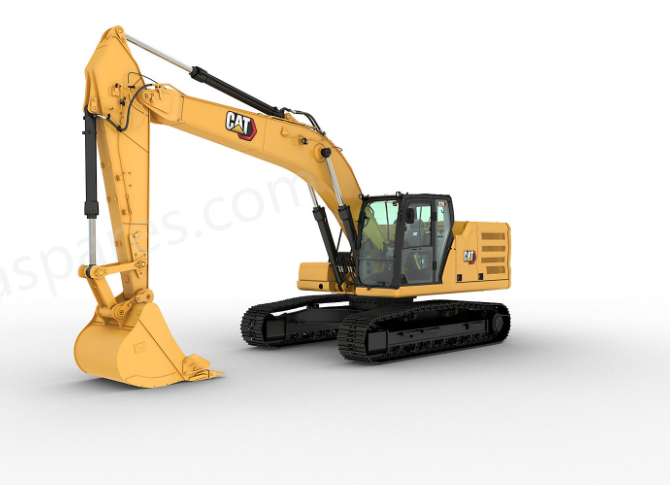
 CAT Excavator 326Premium Performance with Simple-to-Use Technologies
The Cat® 326 Excavator brings premium performance with simple-to-use technologies to boost your operator efficiencies. Combine these features with an ergonomic cab, longer maintenance intervals, and a power system that reduces fuel and you have a low-cost-per-unit-of-production excavator that’s perfect for medium to heavy-duty applications. CAT Excavator 324Heavy-Duty Muscle Built to Outperform
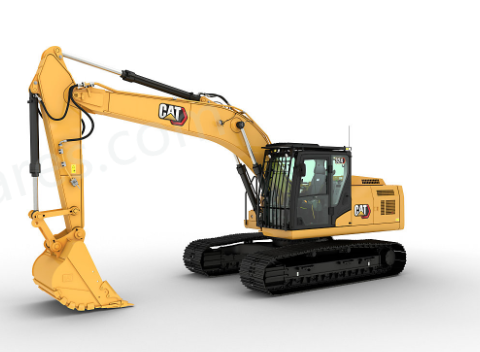
The Cat® 324 excavator is built to handle high-production workloads with the perfect balance of brute strength and refined control. Its powerful Cat® C7.1 engine, high-flow hydraulics, and advanced electrohydraulic system give you the muscle to move heavy material fast, without burning through your budget. With reinforced structures, field-proven durability, and easy-to-maintain components, the 324 is your go-to solution for tackling tough jobs with less downtime. CAT Excavator 322Profit-Driven Powerhouse for Heavy Loads
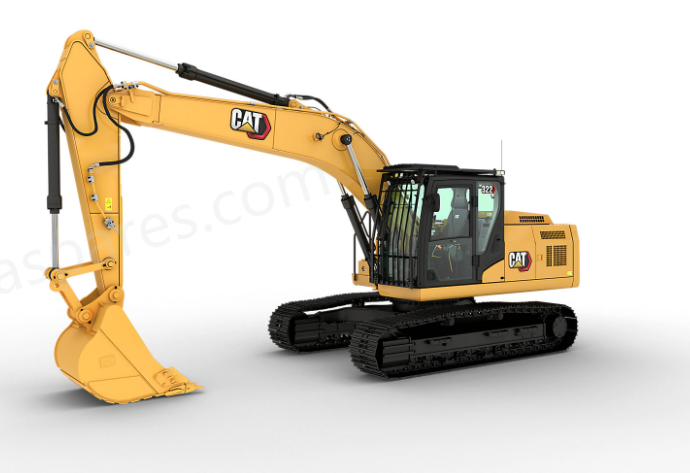
When you need muscle, precision, and cost control in one machine, the Cat® 322 excavator delivers. Purpose-built for high production, the 322 pairs fast cycle times with large bucket options to move more material in fewer passes. Its responsive electrohydraulic controls and rugged design keep you productive on the tough jobs, while smart fuel efficiency and streamlined maintenance help you stay profitable every step of the way. Whether you’re loading, trenching, or lifting, the 322 is a heavy-duty workhorse that pays you back. CAT Excavator 321Versatility at the Lowest Cost Per Hour
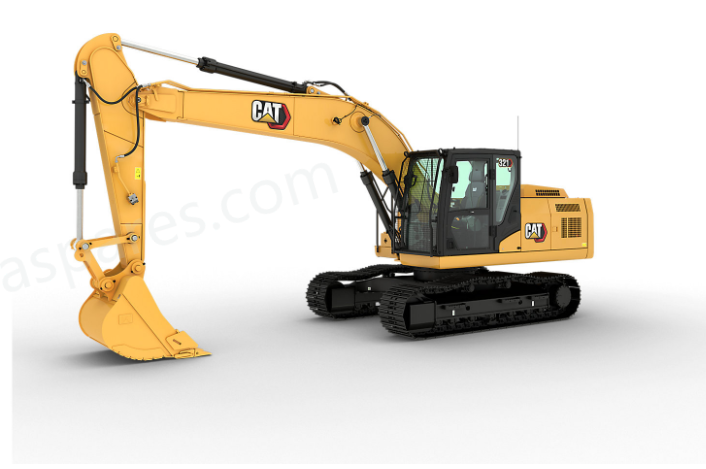
Powered by the reliable Cat® C3.6 engine, the Cat® 321 excavator delivers high torque and fast cycle times to maximize productivity. Reinforced Cat structures extend machine life and withstand the toughest conditions, while the latest cab design puts operator safety and comfort first. Every core system undergoes rigorous testing, so you can count on consistent, reliable performance shift after shift.