


-News Center-
Why Is Your Soil Compactor Leaving Soft Spots and Uneven Density?
A soil compactor that leaves soft spots is not always telling you the machine is broken. More often it is telling you that the ground, the lift, or the way the pass was made did not match what the drum was asked to do. The weak area is usually the result of several small mismatches working together: moisture that is a little off, a layer that is a little too thick, a pass that overlapped in one place and missed in another, or a setting meant for a different soil. Fixing it starts with finding which of those is happening on your site, not with turning the vibration up and hoping for the best.
Soft spots matter because they do not stay isolated. A loose pocket under a firm surface will settle later under traffic, water, or the next layer. That settlement can crack a slab, rut a road base, or leave a trench line that keeps sinking after the job is finished. Catching the cause while the layer is still open is far cheaper than cutting it out and starting again.
Moisture is usually the first thing to check
Soil needs a certain amount of water to compact well. Too dry, and the particles do not slide past each other, so the drum passes over them without locking them together. Too wet, and water fills the gaps between particles, pushing them apart and leaving the surface spongy underfoot. Both conditions can look similar from the cab, which is why a visual check alone is not enough.
Pick up a handful from the layer you are working. If it crumbles as soon as you squeeze it, it is probably too dry. If water squeezes out or the soil sticks heavily to your glove and smears, it is probably too wet. The workable range sits between those two: the soil holds its shape when squeezed, then breaks apart cleanly when you drop it. When the moisture is wrong, no amount of extra passes will correct it. Dry soil needs water added evenly and mixed in before compaction, not sprayed on top after the drum has already passed. Wet soil needs time, aeration, or blending with drier material before you go back over it.
Lift thickness and pass pattern decide density
A common cause of uneven density is a lift that is too thick for the machine and the soil. The drum compacts from the top down, and its energy fades with depth. A thin layer may reach density through its full depth, while a thick layer can feel firm on the surface and stay loose underneath. That hidden loose layer is exactly what shows up later as a soft spot.
The fix is to keep lifts consistent and to match their thickness to the soil and the roller you have. Granular soils generally allow a thicker lift than cohesive clay, but the difference is not a reason to guess. If a proof roll or a density check shows the bottom of the lift is still soft, reduce the thickness and retest, rather than adding passes to a lift that is already too deep.
Pass pattern matters just as much. Missing the overlap between adjacent passes leaves a narrow strip that never gets full energy. Turning in the same place, stopping on fresh material, or changing speed halfway across a lane creates the same effect. Keep a steady speed, overlap each pass by a consistent amount, and plan the pattern before you start so the edges get the same attention as the centre.
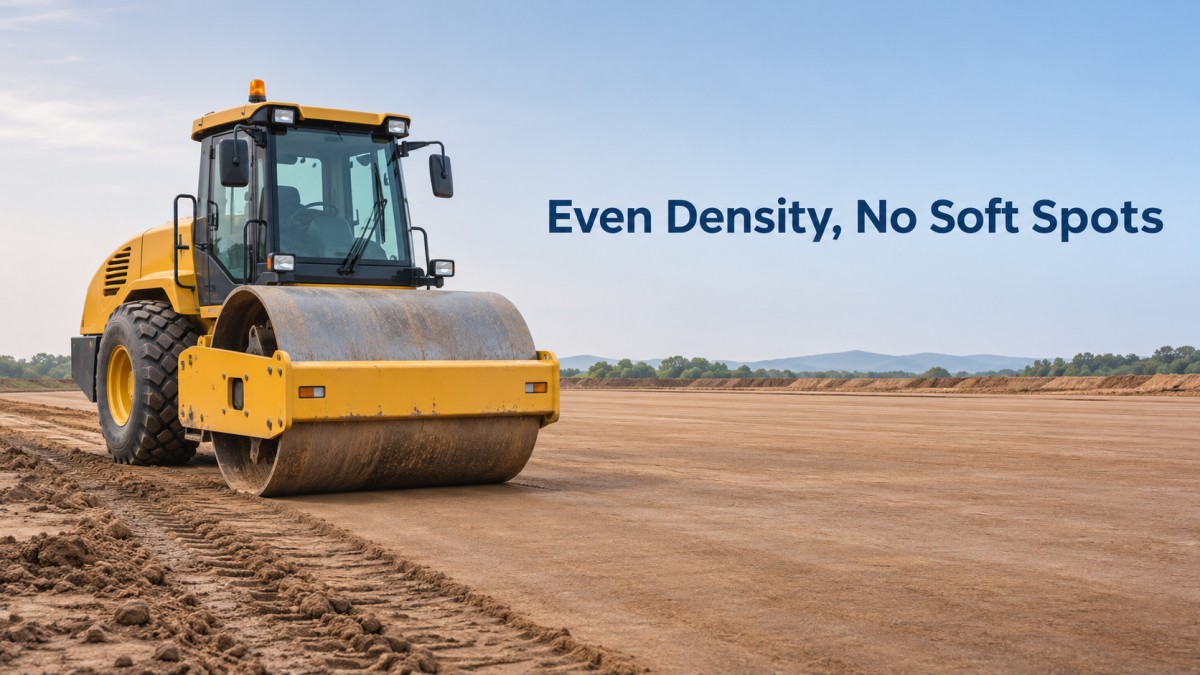
The drum setting has to match the soil
Not every soil responds to the same vibration. Granular material such as sand and gravel usually benefits from vibration, which helps particles settle into a tighter arrangement. Cohesive soil such as clay can be damaged by too much vibration, which can break its structure and leave it weaker, not stronger. Static rolling or a lower amplitude is often more effective there.
If you are seeing a smooth, firm surface in one area and a soft, pumping area nearby, check whether the soil changed across the site. A fill that mixes clay in one corner and granular material in another will not compact evenly with one setting. Adjust the amplitude and frequency for the material in front of you, and slow down where the soil needs more time under the drum. A faster pass does not save time if it leaves a layer that has to be reworked.
How to spot the problem while you can still fix it
Walking the layer after compaction tells you more than looking from the cab. Press your boot into the surface in several places. A consistent layer will resist in the same way across the area. A soft spot will give, deflect, or leave a deeper print. Look for rutting from the drum itself, for water pooling in low areas, and for places where the surface cracks or pumps under load.
Pay attention to edges and transitions. The joint between a new lift and an existing structure, the area beside a trench, and the ground around a manhole or footing are all places where moisture, thickness, and coverage change quickly. These are also the places where a test that passes in the middle of the lane can hide a failure at the edge.
- Check moisture before the first pass, not after a soft spot appears.
- Keep lift thickness even, especially where fill depth changes.
- Overlap passes consistently and avoid stopping on fresh material.
- Match vibration to the soil type in that specific area.
- Walk the finished layer and mark soft areas for rework before the next lift goes on.
When the machine itself is part of the problem
Sometimes the cause is mechanical. A drum with worn pads, a vibration system that is not reaching full amplitude, or a drive that slips under load will leave a pattern of weak areas that follows the machine, not the soil. Uneven tyre pressure on a pneumatic roller, a clogged water spray, or a drum that is not clean can have the same effect.
A quick check before work helps here: confirm the vibration is engaging, the drum is clean and free of built-up material, and the machine is travelling at a steady speed without surging. The same logic applies across a fleet. A hydraulic system that cannot hold pressure will not deliver consistent force, whether it drives a drum or a blade. For compatible Shantui dozers, keeping spares such as SHANTUI BULLDOZER SPARE PARTS 16Y-11-40000 PUMP SD22 [blocked] available helps avoid downtime when a pump starts to lose performance, rather than letting a weak hydraulic circuit turn into uneven work on site.
Soft spots rarely have a single cause, and that is why they keep returning on jobs where only one thing is changed. Work through the conditions in order: moisture, lift thickness, pass coverage, drum setting, then machine condition. When the layer is right, the pattern is steady, and the setting matches the soil, density becomes far more even from one pass to the next, and the surface you leave behind is one you can build on with confidence.
FAQ
Why does the surface feel firm but the layer below stays soft?
The drum compacts from the top down, so a lift that is too thick can form a firm crust while the lower part remains loose. Reducing lift thickness and checking density through the full depth is more effective than adding passes to the same thick layer.
Can extra passes fix a soft spot caused by wet soil?
Usually not. Extra passes on saturated soil can push water around and break the soil structure, making it weaker. Let the material dry, aerate it, or blend it with drier soil first, then compact it again.
How do I know if vibration is helping or hurting?
If the soil is granular and the drum is settling it into a tighter surface, vibration is helping. If cohesive soil is cracking, pumping, or becoming softer after vibration, switch to a lower amplitude or static rolling and retest the area.
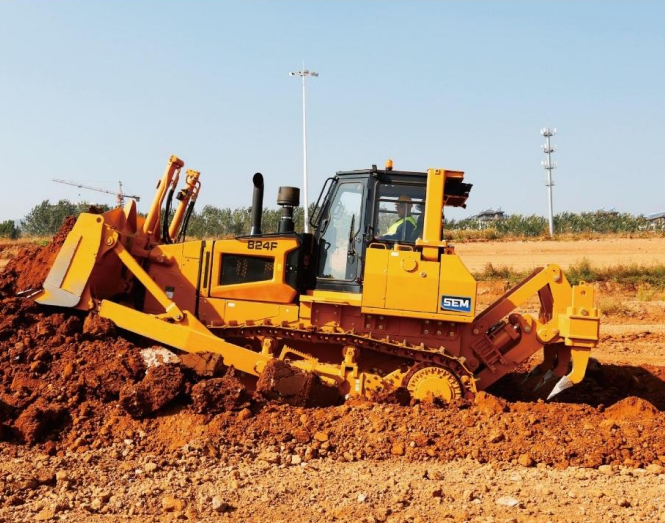
 SEM 824F ProductThe 824F features the new F Series design and is powered by a Weichai WD12T2 engine, delivering a gross power output of up to 185 kW (248 hp). The machine utilizes an electronically controlled hydrostatic transmission system, enhancing productivity and maneuverability. It offers various track shoe widths from 560 mm to 915 mm, as well as multiple blade options, including SU, S, U, Waste Handling, and Forest blades. Rear equipment options include a multi-shank ripper, single-shank ripper, and winch to meet diverse customer needs.
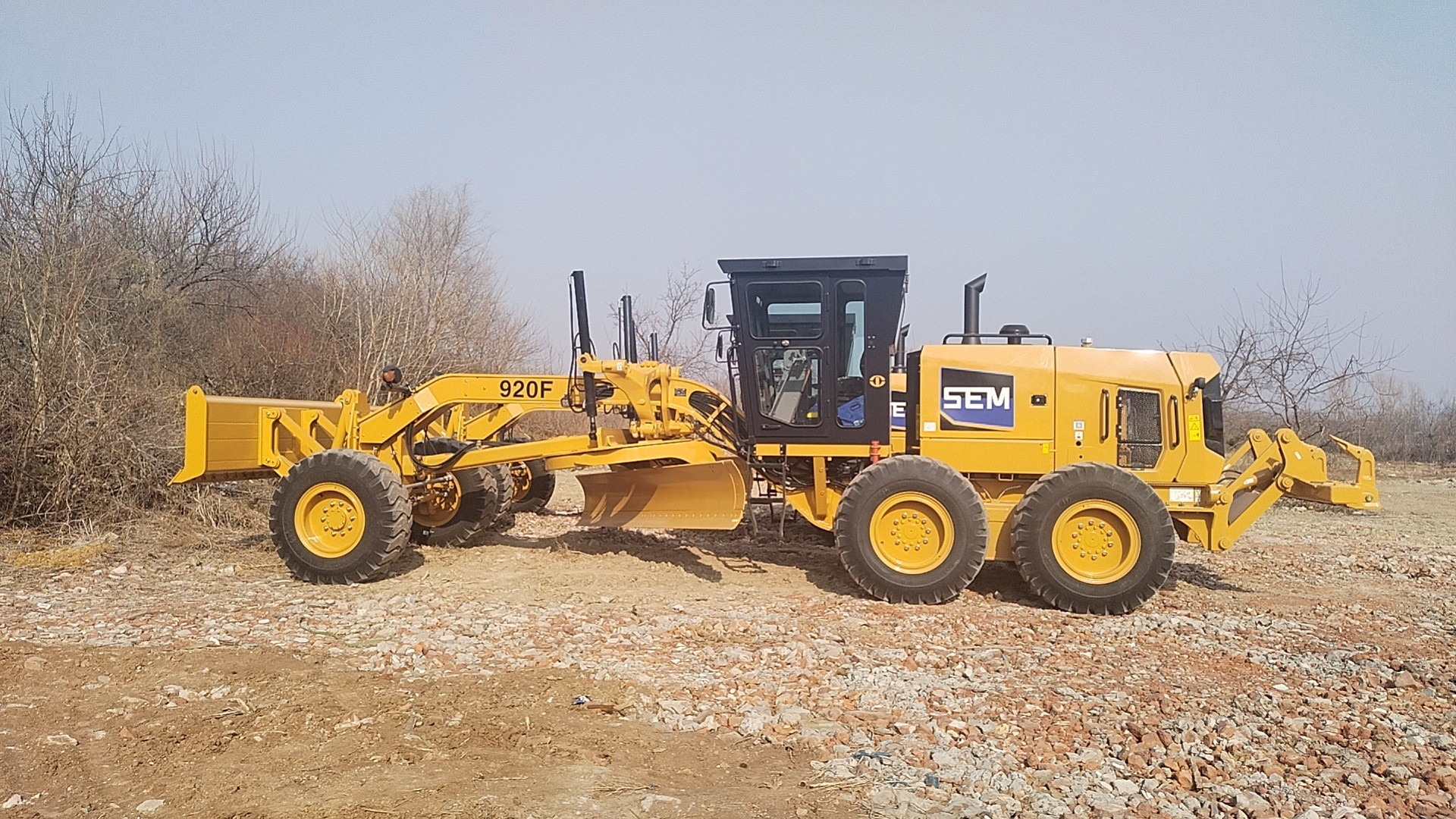
 SEM 920F Motor GraderThe SEM F Series Tier 2 Motor Grader is equipped with an SDEC engine and a PPC load-sensing hydraulic system for consistent, precise blade movement and reduced fuel consumption. The rear tandem drive is manufactured by Caterpillar and incorporates Caterpillar’s proven tandem axle design, delivering differentiated reliability, longer service life, and lower ownership and operating costs.
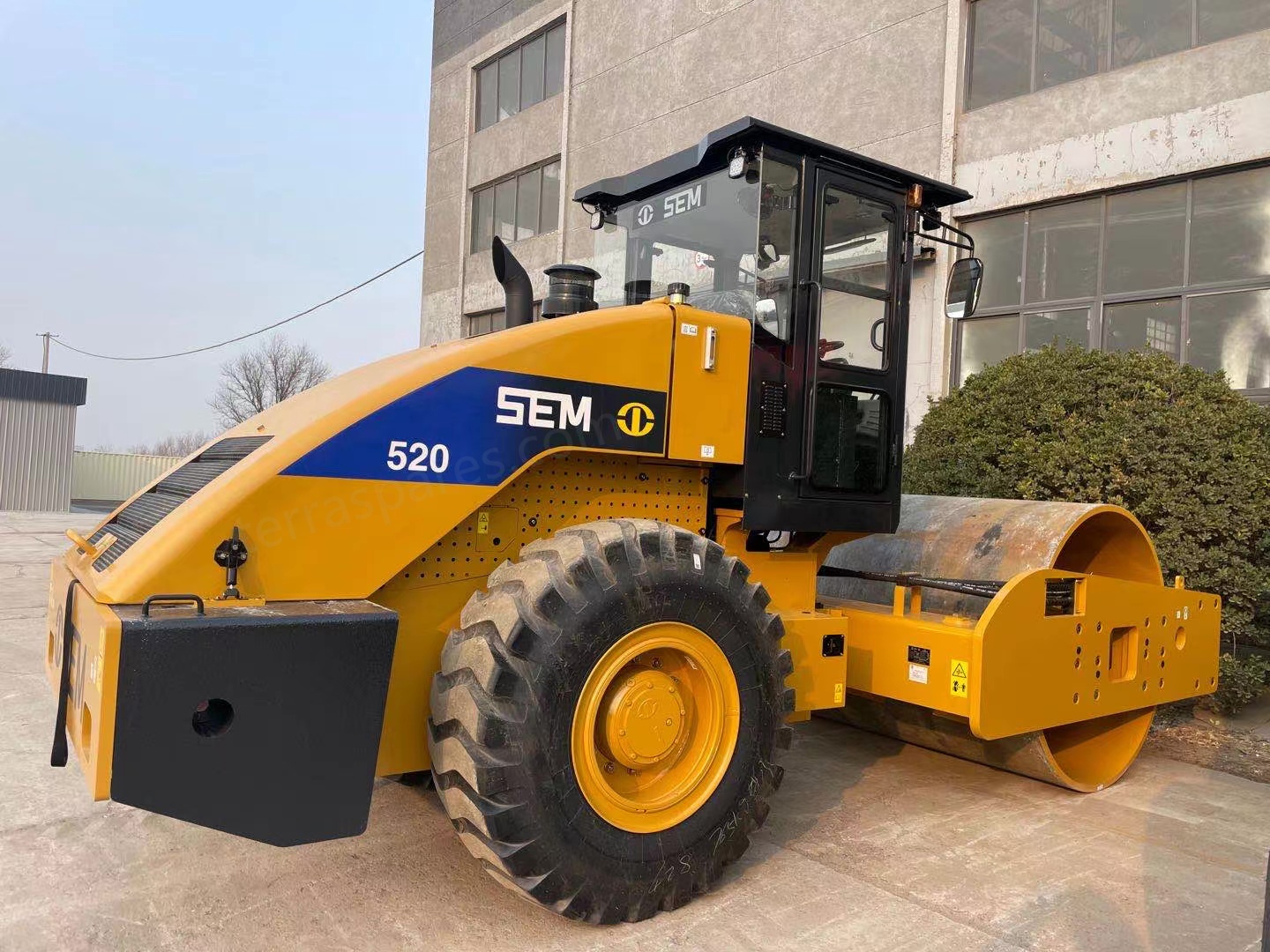
 SEM Road Roller Machines SEM 520The SEM 520 Single Drum Vibratory Road Roller is a heavy-duty compaction machine designed for large-scale road construction, highway projects and heavy earthwork tasks. Powered by a high-performance Weichai engine, it delivers steady and sufficient power for long-hour continuous operation. Equipped with the advanced pod-type sealed vibration system, it effectively resists dust and water intrusion, greatly extending the service life of core components. With powerful excitation force, optimized vibration frequency and amplitude, it achieves outstanding compaction results on soil, gravel and asphalt layers. The reinforced body structure and reliable wet brake system ensure superior stability and operational safety on various terrains. As an export-ready National II / Tier 2 model, it works well with regular fuel and features a service-friendly layout for easy daily upkeep.
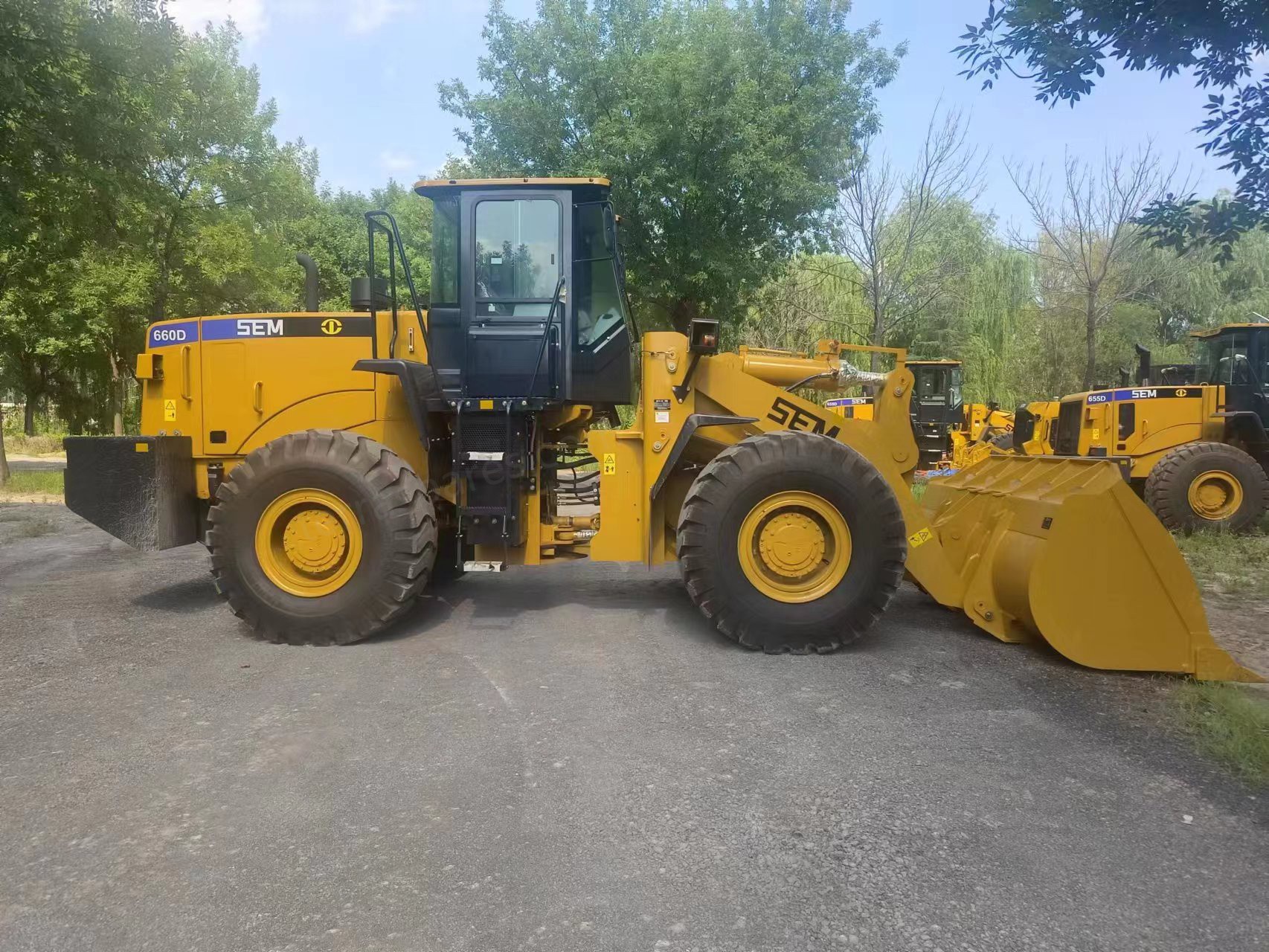
 SEM Wheel Loader Machines SEM 660D 6 Ton Wheel LoaderThe SEM 660D 6 Ton Wheel Loader is a heavy-duty, high-performance machine built to tackle the most demanding loading, stockpiling, and material handling tasks. Powered by a robust 178kW Weichai engine and paired with a durable countershaft transmission, it delivers consistent power and reliable torque for its 6-ton rated load. Equipped with advanced load-sensing hydraulics, the 660D ensures smooth, responsive operation and fast cycle times, boosting productivity on every shift. With a bucket capacity ranging from 2.8 to 5.5 m³, it adapts to a wide variety of applications, including mining, quarries, ports, and construction sites. Designed with operator comfort and low maintenance in mind, this export-ready National II / Tier 2 model runs reliably on low-quality fuel and features a simple, service-friendly layout.