


-News Center-
Soil Compactor vs Plate Compactor: Which One Suits Your Project Best?
Choosing between a SOIL COMPACTOR and a plate compactor can determine how efficiently your project achieves stable, load-bearing ground. While both machines compress soil, they suit different job scales, soil types, and site conditions, and the wrong choice can lead to uneven density, rework, and delays. For project managers, understanding these differences is essential to controlling cost, schedule, and quality. A SOIL COMPACTOR is generally better for large areas and deeper layers, while a plate compactor excels in confined spaces and thinner lifts. This guide compares their performance, applications, and costs to help you choose the right machine for your project.
The mistake is usually made before either machine arrives on site. A team picks what is available, what was used last time, or what looks powerful enough, and only discovers the problem when testing shows soft spots or settlement after the next layer goes down. Compaction is not just about pressing soil flat. It is about reaching the required density through the full depth of the lift, without overworking the surface or leaving weak zones underneath. That is why the comparison has to start with the ground itself, not the machine catalogue.
The real difference is depth, weight, and coverage
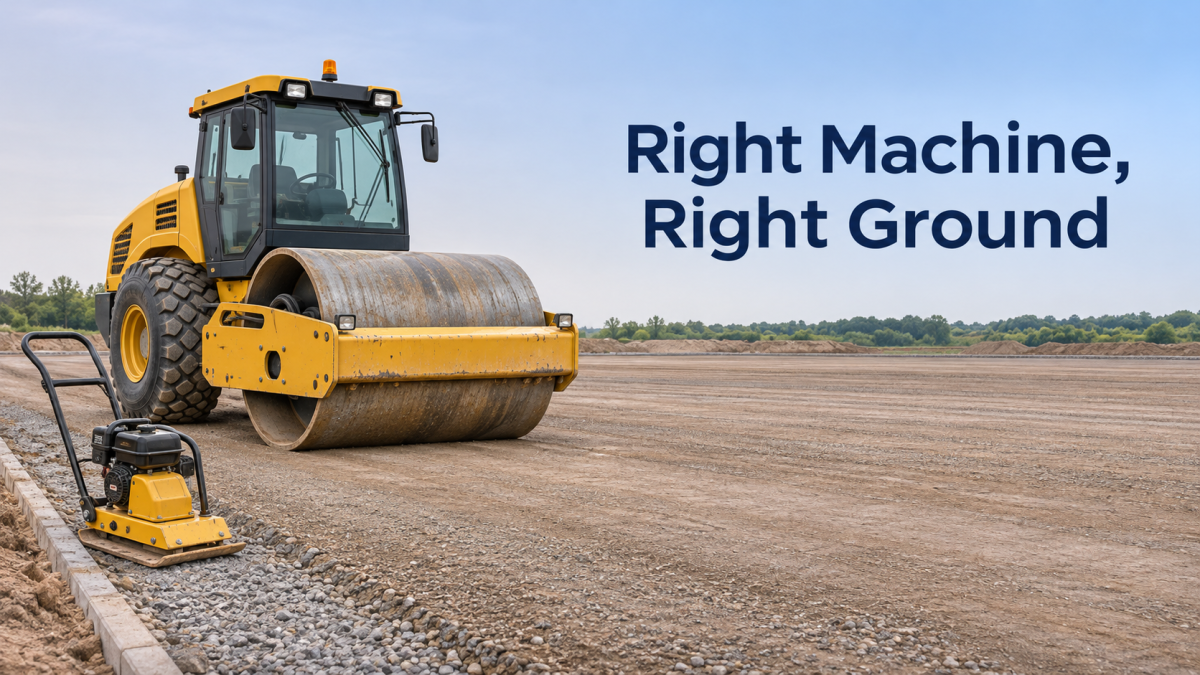
A SOIL COMPACTOR, usually a ride-on roller with a steel drum or padfoot drum, works through weight and vibration over a wide area. It is built for roads, embankments, large pads, and long trenches where the same lift has to be treated consistently across hundreds of square metres. The drum spreads the load, the vibration helps particles settle into place, and the operator can cover ground quickly while keeping a steady pattern. On cohesive soils, a padfoot drum can also knead the material, which helps when moisture and clay content make the ground harder to bind.
A plate compactor works differently. It is a walk-behind machine with a flat vibrating plate, driven by hand and steered around obstacles. Its force is concentrated in a small footprint, which makes it useful for pavements, driveways, small foundations, utility trenches, and backfill around structures. It can get close to walls, kerbs, and pipework where a roller cannot turn or would risk damage. What it cannot do as well is treat a deep lift in one pass. Trying to force it to do so often leaves the top firm and the bottom loose, a result that looks acceptable until a load test or a wet season exposes it.
Lift thickness is the practical dividing line. Thinner lifts, granular material, and small areas favour the plate. Thicker lifts, mixed or cohesive soils, and large open areas favour the roller. Moisture matters too. Soil that is too dry will not bind, and soil that is too wet will displace rather than compact. In both cases, the machine can only do so much, and the schedule needs to allow for testing and, if needed, drying or reworking a layer rather than pushing ahead.
Where a plate compactor earns its place
On a constrained site, manoeuvrability can matter more than raw compaction energy. A plate compactor can be lifted onto a truck, moved through a gate, and used in a trench without a wide turning circle. For repair work, patching, and small landscaping or paving jobs, that flexibility keeps labour and transport costs down. It also allows the crew to work in stages, compacting around services and then returning to finish an edge or corner that a larger machine would have missed.
There are limits that should not be negotiated away. If the area is large, the work becomes slow and uneven, because the operator has to make many more passes and fatigue starts to affect overlap. If the soil is heavy clay or the lift is deep, the plate may vibrate on the surface without reaching the base. A common warning sign is a surface that feels hard underfoot but deflects under a loaded wheel, or a trench that settles in a line after backfilling. When that happens, the fix is rarely another pass with the same machine. It is usually a change of method, lift thickness, or equipment.
Cost, logistics, and the hidden price of rework
On paper, a plate compactor is cheaper to hire, transport, and operate. A SOIL COMPACTOR costs more per day, needs a trained operator, and requires space for delivery, turning, and refuelling. For a small job, that gap is real and hard to ignore. For a large job, the calculation reverses. A roller can finish in hours what a plate would take days to cover, and fewer passes usually mean more consistent density and fewer test failures. The cheapest option is the one that passes testing the first time, not the one with the lowest daily rate.
Downtime is part of the same calculation. Compaction work often sits on the critical path, so a breakdown or a waiting part can hold up the next trade. TerraMech works with branded construction machinery and parts from manufacturers including Caterpillar, Komatsu, Volvo, SEM, Shantui, XCMG, SDLG, Weichai, and SDEC, and that breadth matters when a mixed fleet is on site. On projects where dozers are working alongside compaction equipment, keeping the hydraulic system in good order helps avoid unplanned stops, and genuine spares such as SHANTUI BULLDOZER SPARE PARTS 16Y-11-40000 PUMP SD22 can be part of that maintenance planning. The point is not to overstock parts, but to know what is likely to wear and what lead time it carries before the programme depends on it.
A quick way to decide before you order
Start with four questions. How large is the area, and how thick is each lift? What soil are you compacting, and what density does the specification require? What access, slopes, and nearby structures limit the machine you can use? And what happens if the first test fails? If the answers point to a large, open area with deep lifts, a roller is usually the safer choice. If the work is localised, shallow, and close to structures, a plate is often enough, and a roller would be wasteful or impractical.
It is also worth planning for both. Many projects use a SOIL COMPACTOR for the main area and a plate compactor for edges, trenches, and around manholes or foundations. That combination avoids the trap of using one machine for everything. Before ordering, confirm the required lift thickness, the test method, and the moisture condition of the material on site. Those three details will tell you more about the right choice than the headline power of either machine, and they give the crew a clear standard to work to rather than a guess.
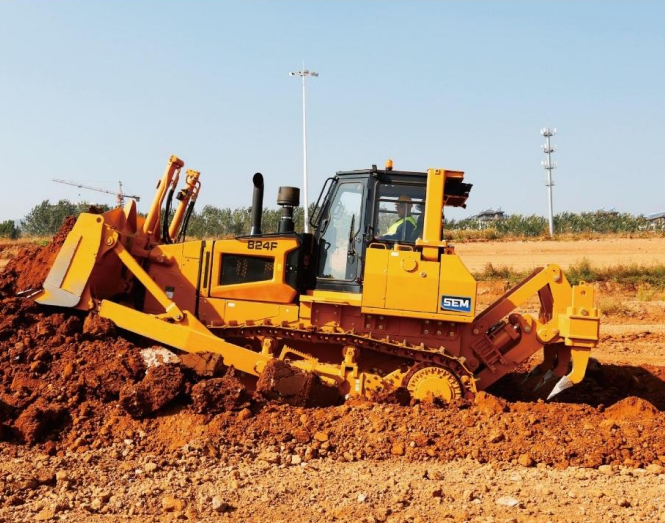
 SEM 824F ProductThe 824F features the new F Series design and is powered by a Weichai WD12T2 engine, delivering a gross power output of up to 185 kW (248 hp). The machine utilizes an electronically controlled hydrostatic transmission system, enhancing productivity and maneuverability. It offers various track shoe widths from 560 mm to 915 mm, as well as multiple blade options, including SU, S, U, Waste Handling, and Forest blades. Rear equipment options include a multi-shank ripper, single-shank ripper, and winch to meet diverse customer needs.
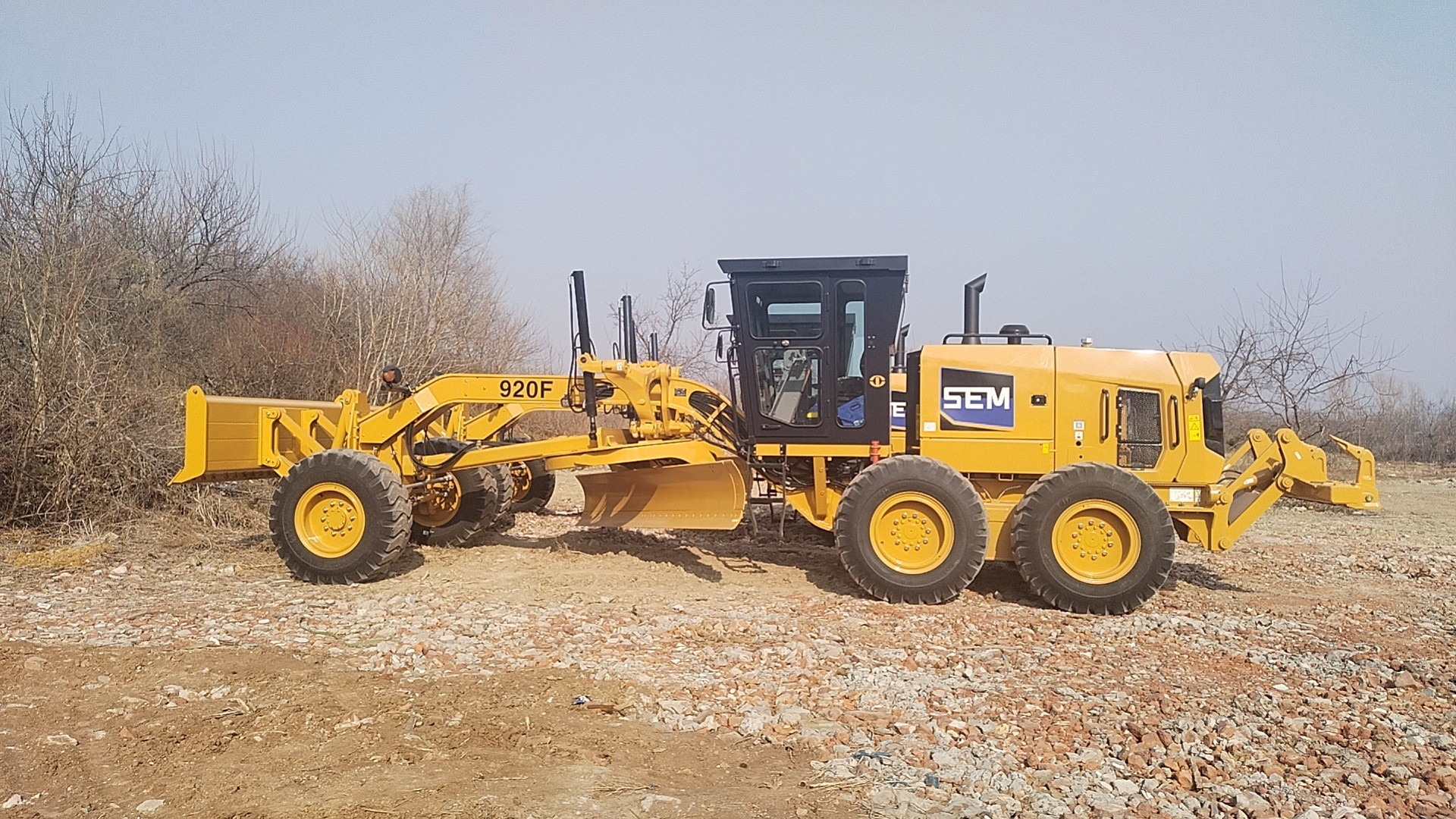
 SEM 920F Motor GraderThe SEM F Series Tier 2 Motor Grader is equipped with an SDEC engine and a PPC load-sensing hydraulic system for consistent, precise blade movement and reduced fuel consumption. The rear tandem drive is manufactured by Caterpillar and incorporates Caterpillar’s proven tandem axle design, delivering differentiated reliability, longer service life, and lower ownership and operating costs.
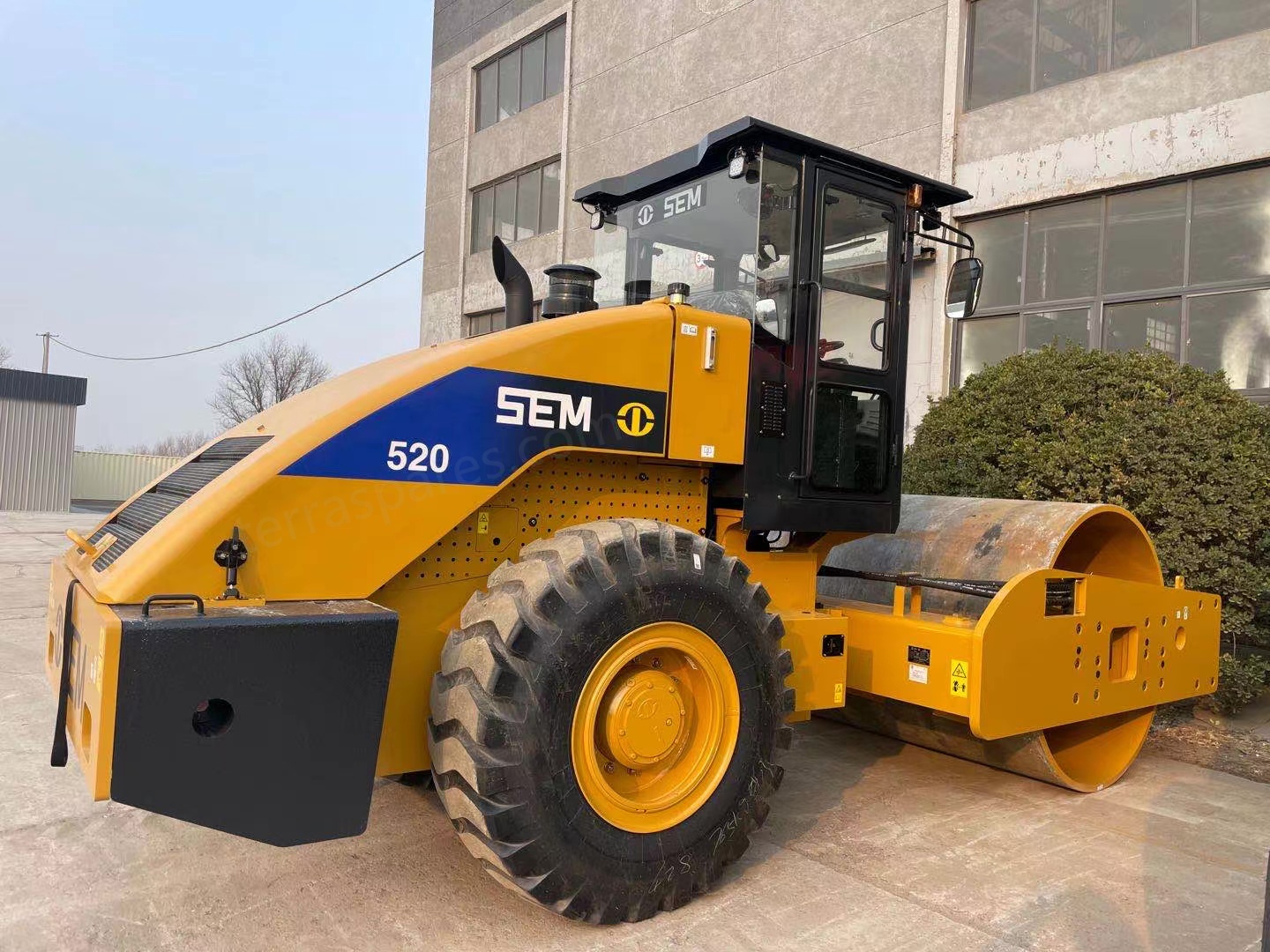
 SEM Road Roller Machines SEM 520The SEM 520 Single Drum Vibratory Road Roller is a heavy-duty compaction machine designed for large-scale road construction, highway projects and heavy earthwork tasks. Powered by a high-performance Weichai engine, it delivers steady and sufficient power for long-hour continuous operation. Equipped with the advanced pod-type sealed vibration system, it effectively resists dust and water intrusion, greatly extending the service life of core components. With powerful excitation force, optimized vibration frequency and amplitude, it achieves outstanding compaction results on soil, gravel and asphalt layers. The reinforced body structure and reliable wet brake system ensure superior stability and operational safety on various terrains. As an export-ready National II / Tier 2 model, it works well with regular fuel and features a service-friendly layout for easy daily upkeep.
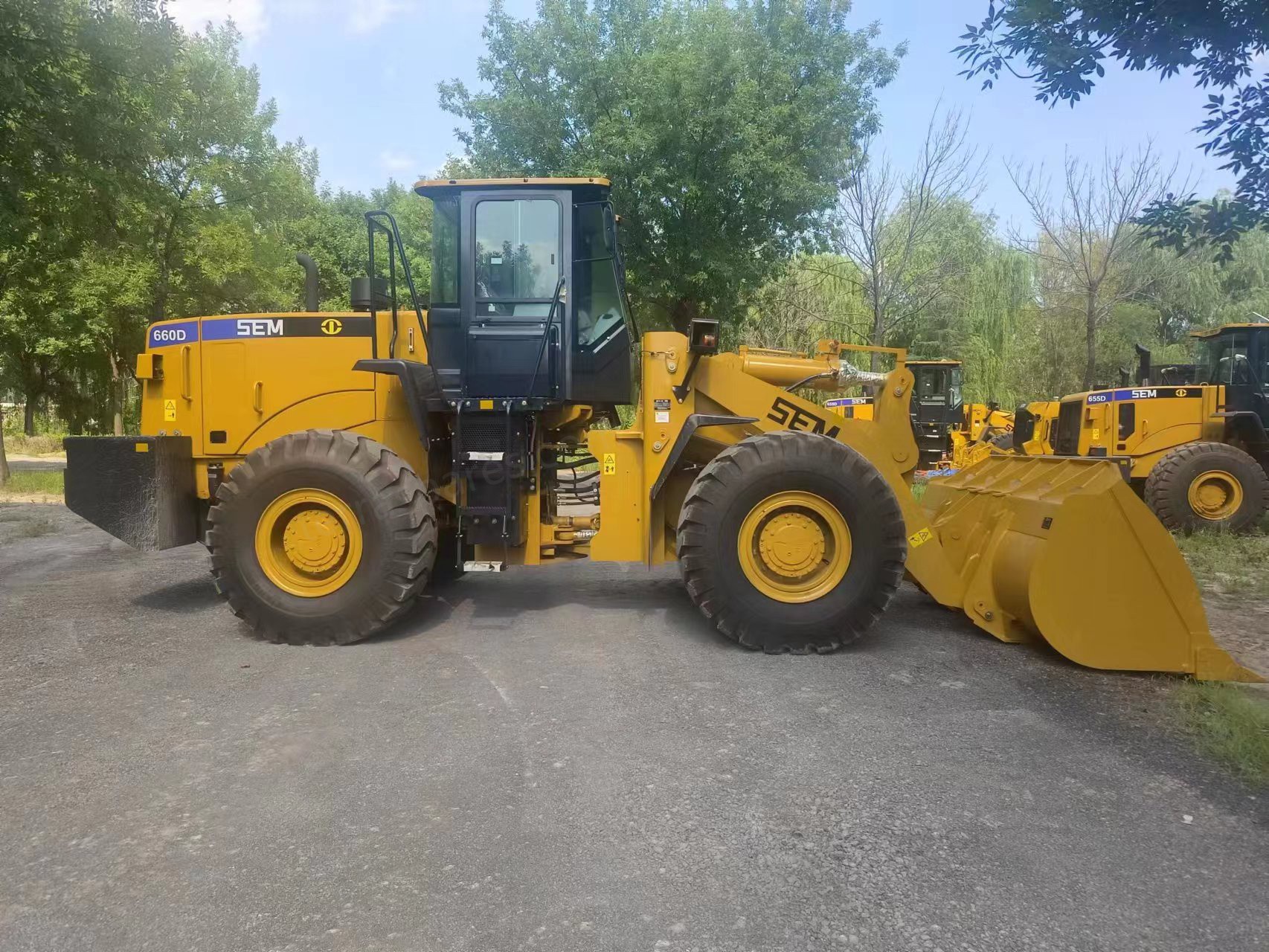
 SEM Wheel Loader Machines SEM 660D 6 Ton Wheel LoaderThe SEM 660D 6 Ton Wheel Loader is a heavy-duty, high-performance machine built to tackle the most demanding loading, stockpiling, and material handling tasks. Powered by a robust 178kW Weichai engine and paired with a durable countershaft transmission, it delivers consistent power and reliable torque for its 6-ton rated load. Equipped with advanced load-sensing hydraulics, the 660D ensures smooth, responsive operation and fast cycle times, boosting productivity on every shift. With a bucket capacity ranging from 2.8 to 5.5 m³, it adapts to a wide variety of applications, including mining, quarries, ports, and construction sites. Designed with operator comfort and low maintenance in mind, this export-ready National II / Tier 2 model runs reliably on low-quality fuel and features a simple, service-friendly layout.